


Hair Comb
Asante (Ashanti), Ghana
Early 20th c.
Provenance: Roy Sieber collection, Bloomington, IN
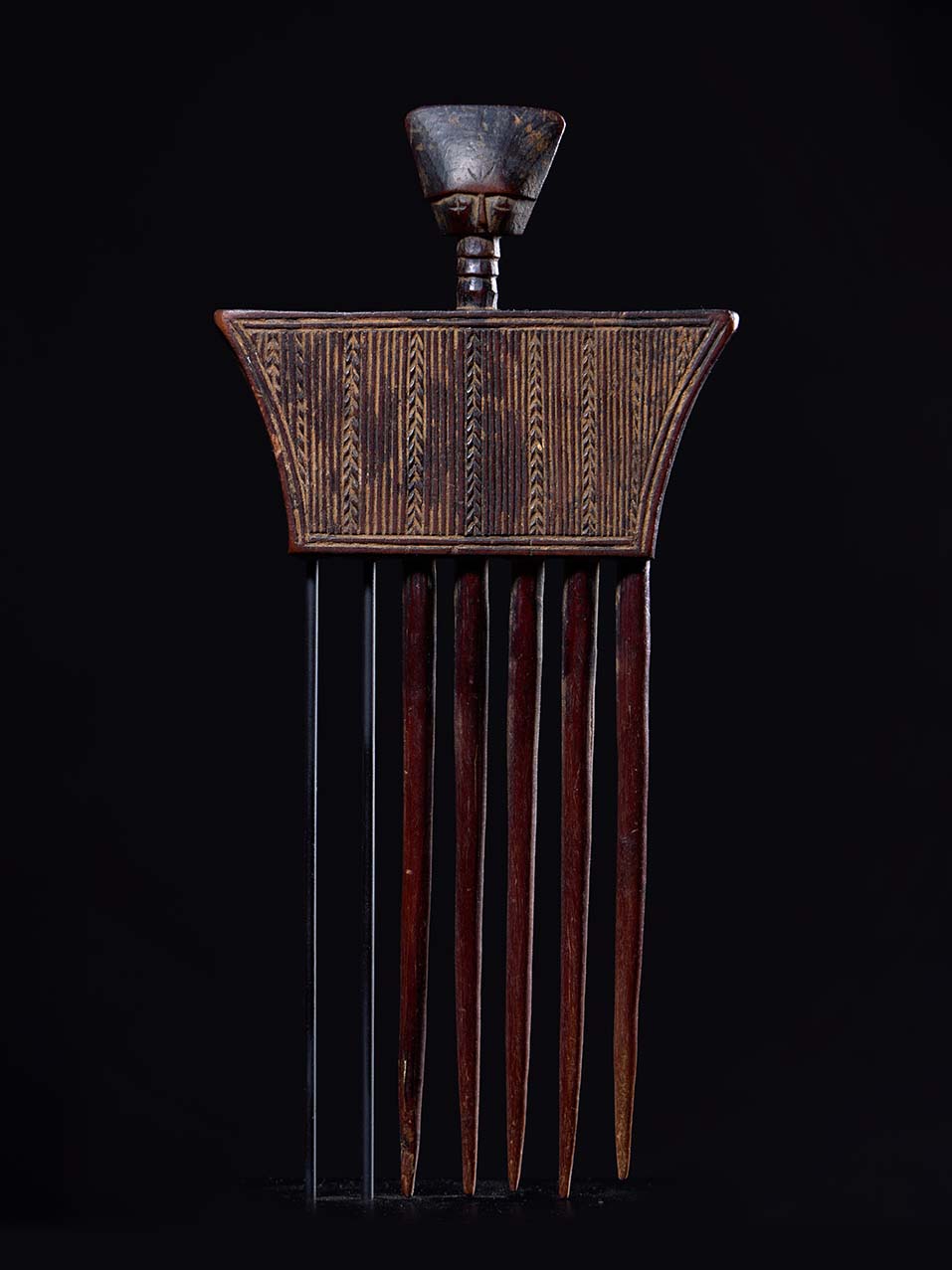
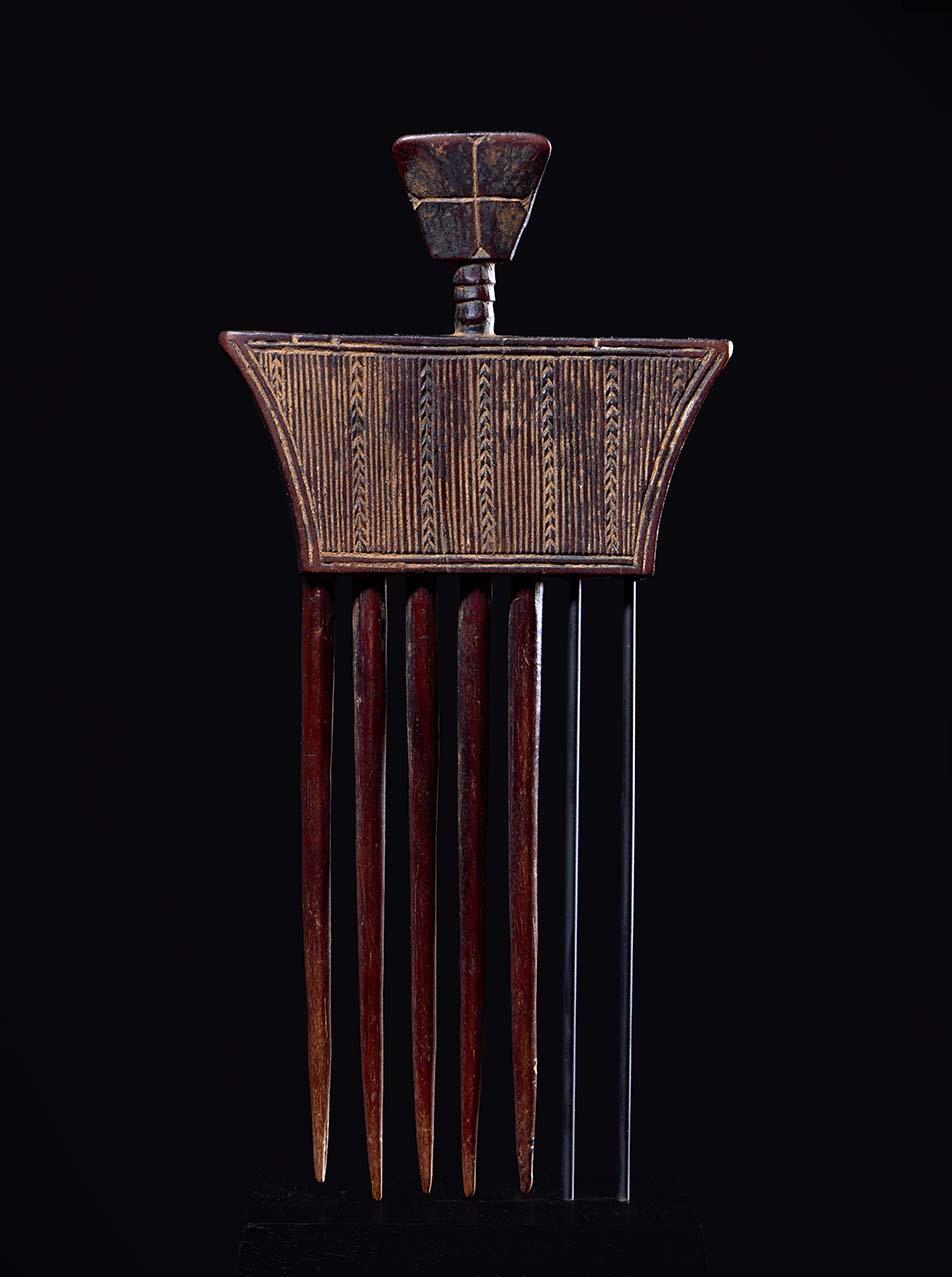
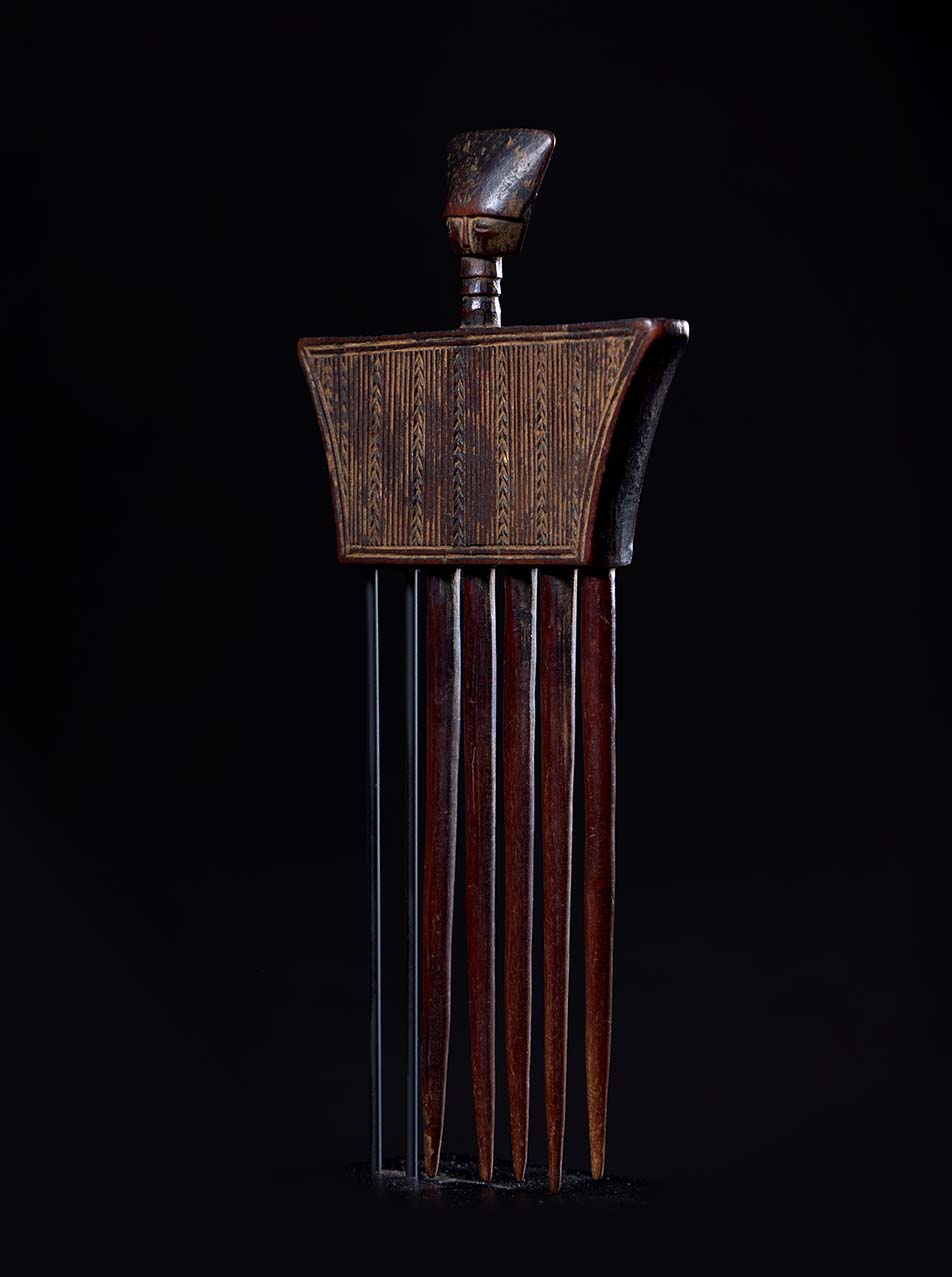
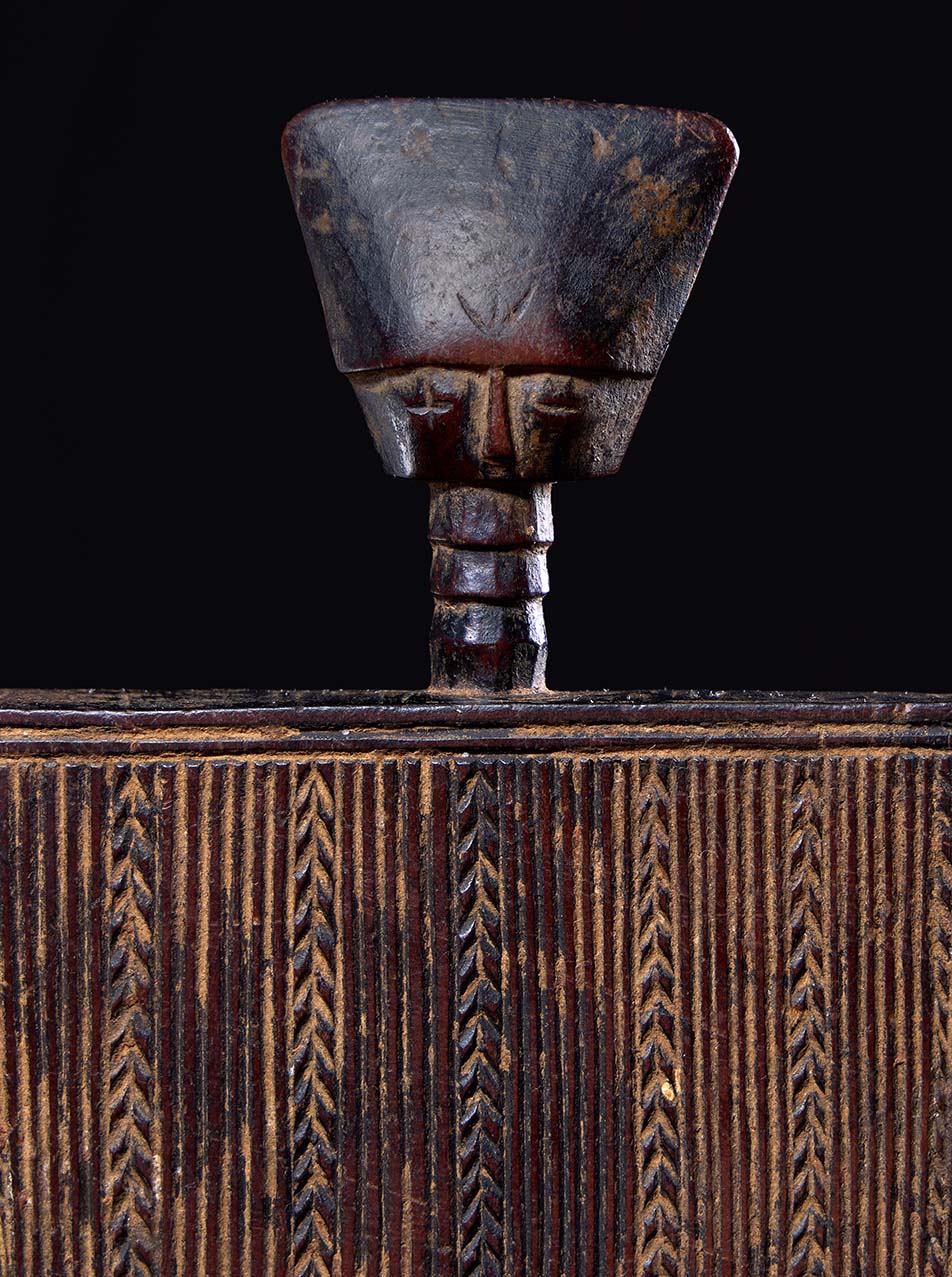
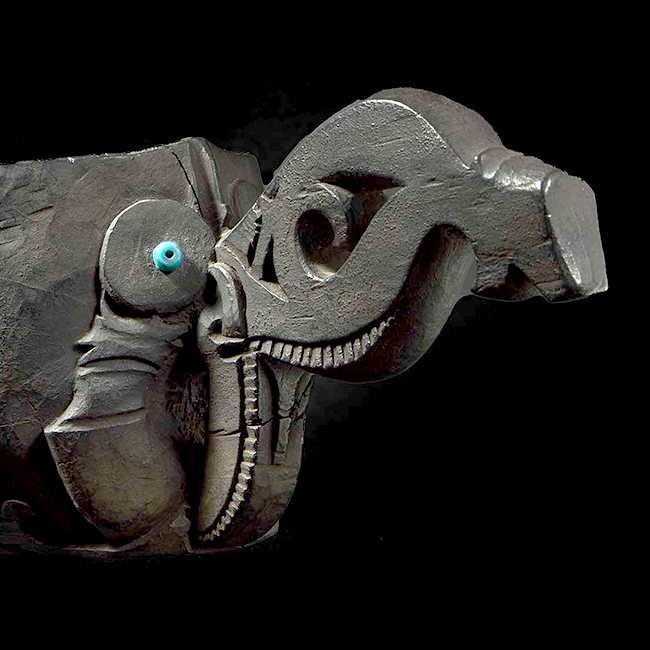
This refined Asante comb is conceived as a strikingly architectural composition, where function gives way to sculptural presence. Rising above a series of long, tapering tines, the broad, flaring panel forms a commanding central field, densely incised with fine vertical bands that create a subtle rhythm across the surface. Atop this structured plane, a small, abstracted head emerges, set on a short, segmented neck—its compressed geometry and quiet asymmetry lending the piece a sense of balance and restraint. The interplay between the rigid, almost textile-like patterning and the sculptural projection of the finial gives the object a dynamic tension, while the deep, warm patina—softened through handling—speaks to long use and careful preservation. Two of the original wooden tines are now missing, having been detached long ago, a condition consistent with age and use.
Among the Asante, combs were not merely utilitarian grooming tools but markers of identity, status, and aesthetic refinement. Worn in elaborately arranged hairstyles, such objects could signal social standing, personal taste, and cultural belonging, often echoing the visual language found in textiles, regalia, and goldweights.
Hair Comb
Asante (Ashanti), Ghana
Early 20th c.
Provenance: Roy Sieber collection, Bloomington, IN
This refined Asante comb is conceived as a strikingly architectural composition, where function gives way to sculptural presence. Rising above a series of long, tapering tines, the broad, flaring panel forms a commanding central field, densely incised with fine vertical bands that create a subtle rhythm across the surface. Atop this structured plane, a small, abstracted head emerges, set on a short, segmented neck—its compressed geometry and quiet asymmetry lending the piece a sense of balance and restraint. The interplay between the rigid, almost textile-like patterning and the sculptural projection of the finial gives the object a dynamic tension, while the deep, warm patina—softened through handling—speaks to long use and careful preservation. Two of the original wooden tines are now missing, having been detached long ago, a condition consistent with age and use.
Among the Asante, combs were not merely utilitarian grooming tools but markers of identity, status, and aesthetic refinement. Worn in elaborately arranged hairstyles, such objects could signal social standing, personal taste, and cultural belonging, often echoing the visual language found in textiles, regalia, and goldweights.