


Ceremonial Mask
Bidayuh, West Borneo, Indonesia
Early 20th century
Wood, white pigment
Among the Bidayuh of West Borneo, masks were carved for ceremonies that brought the human and spirit worlds into contact. Worn during communal rituals, they could embody ancestral beings, protective spirits, or supernatural forces called upon to safeguard the village, restore balance, or accompany seasonal celebrations. Rather than serving as portraits, these masks transformed the wearer into another presence, allowing the individual to temporarily assume a spiritual identity.
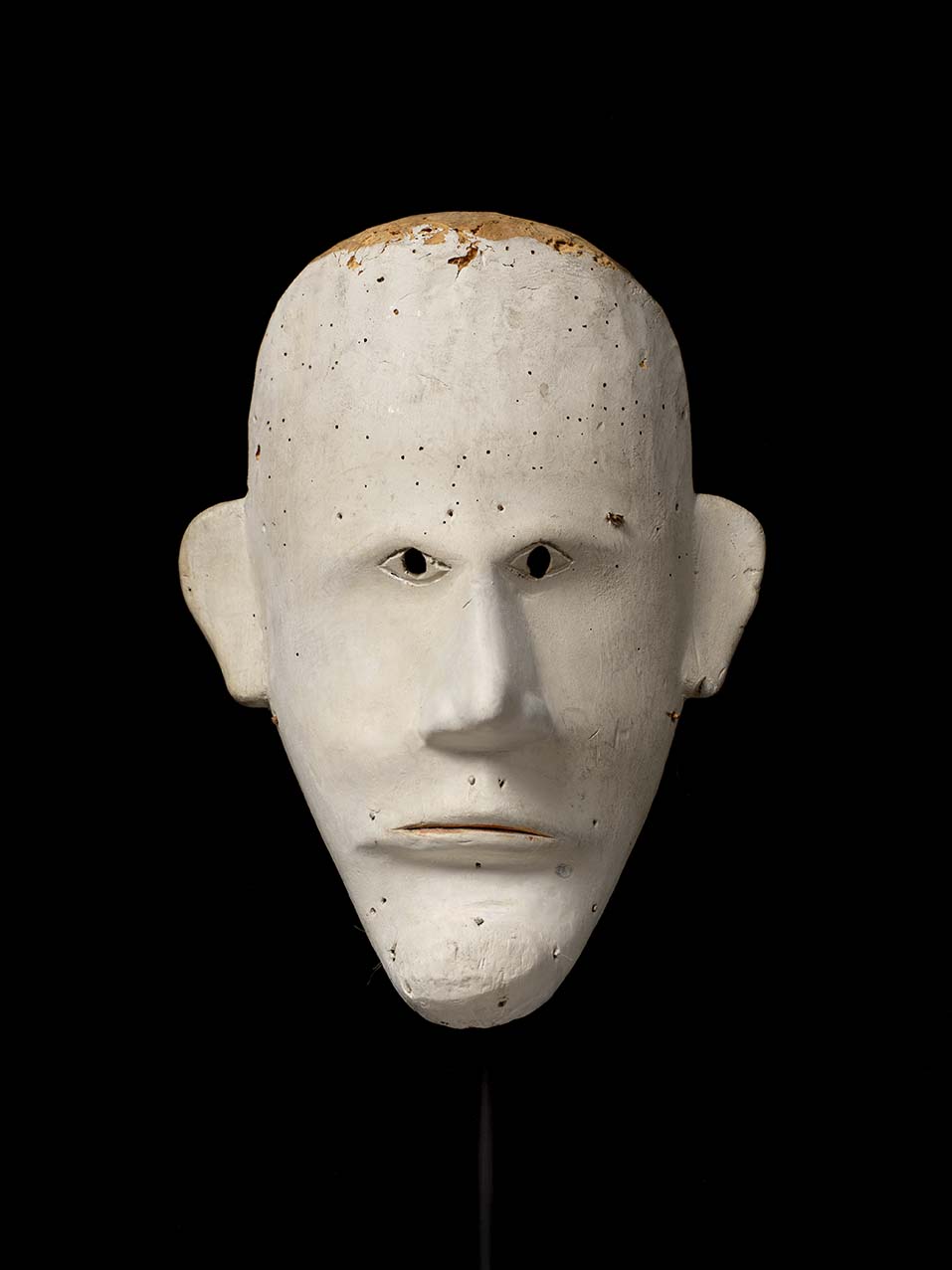
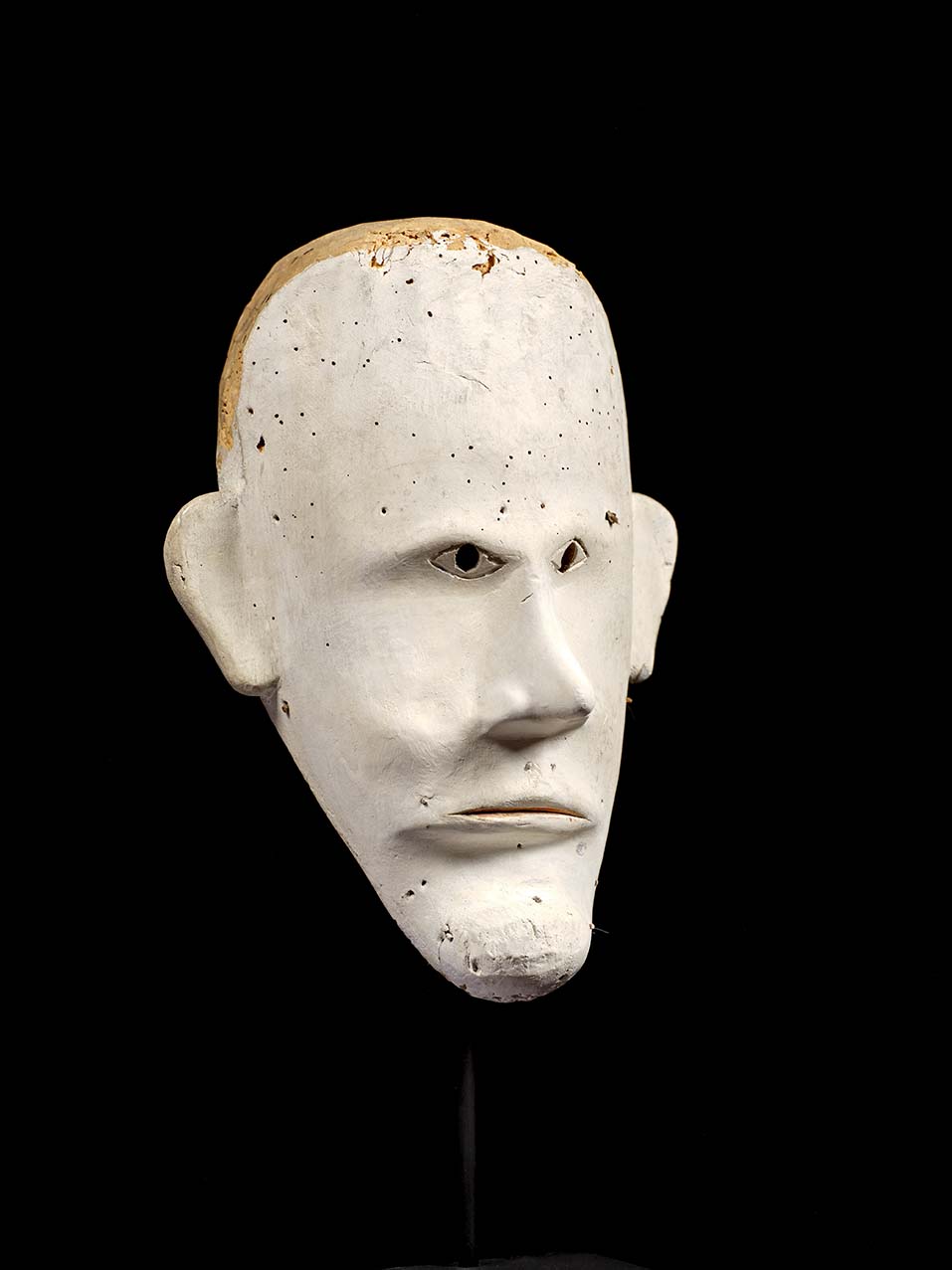
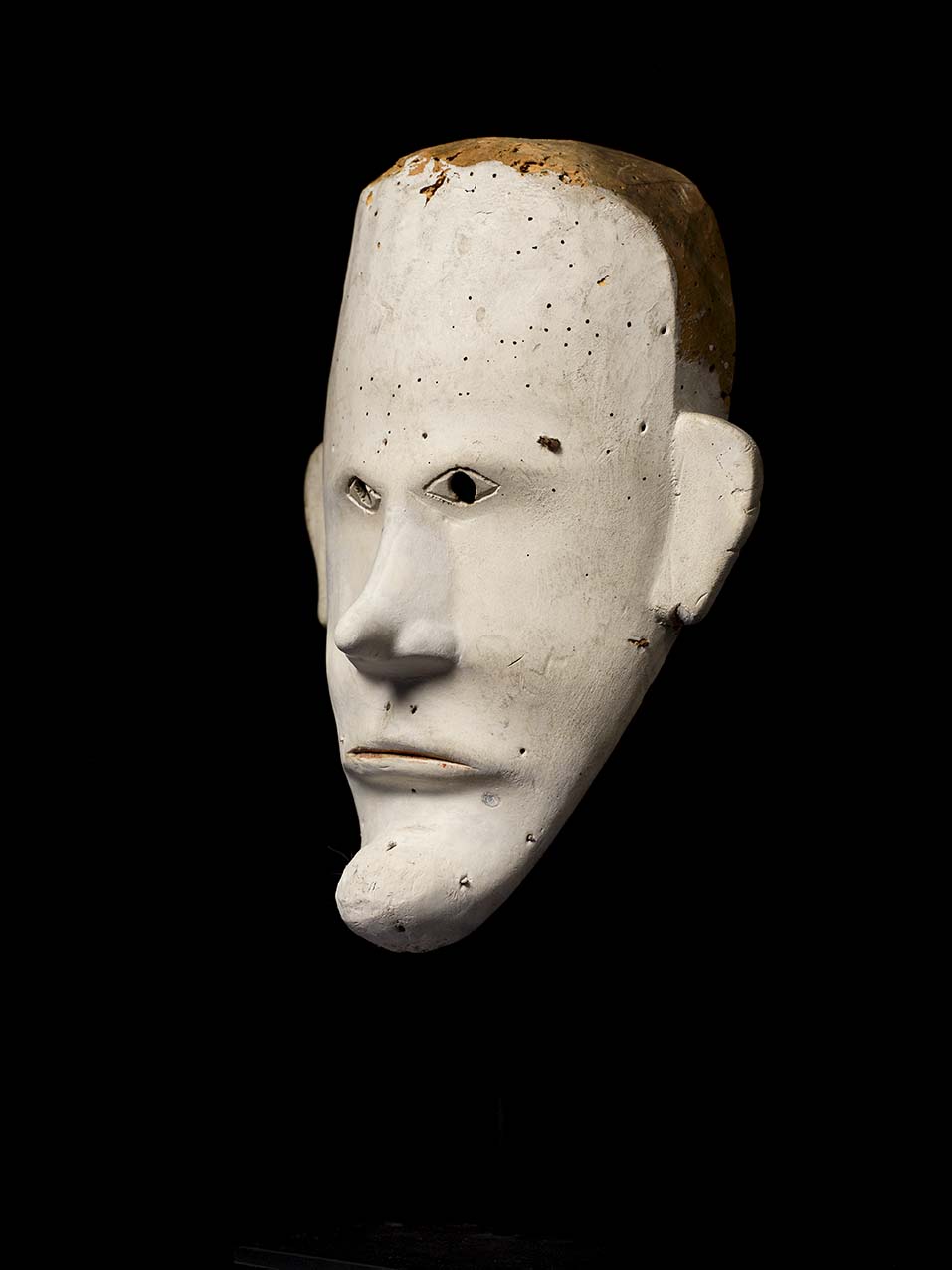
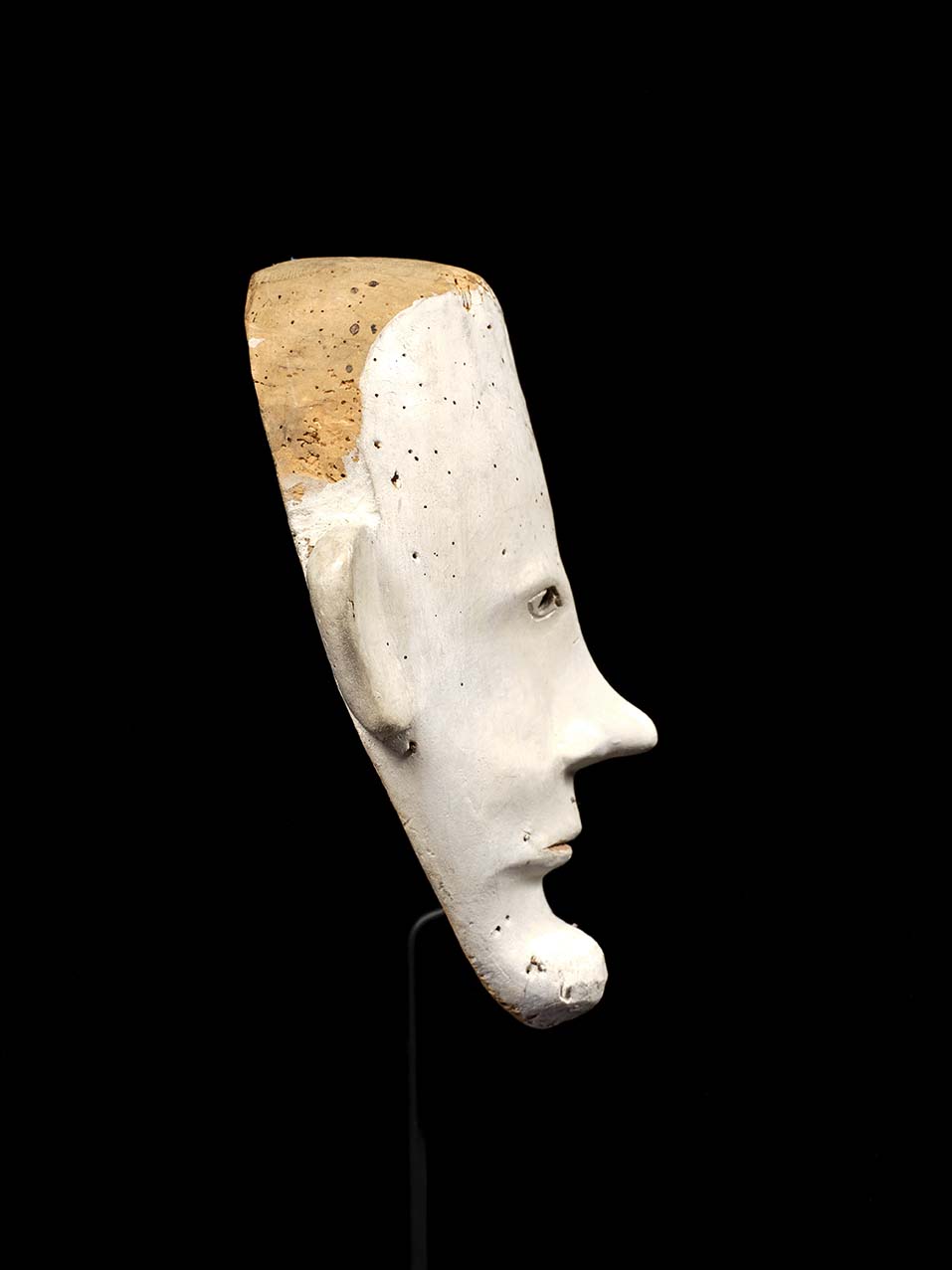
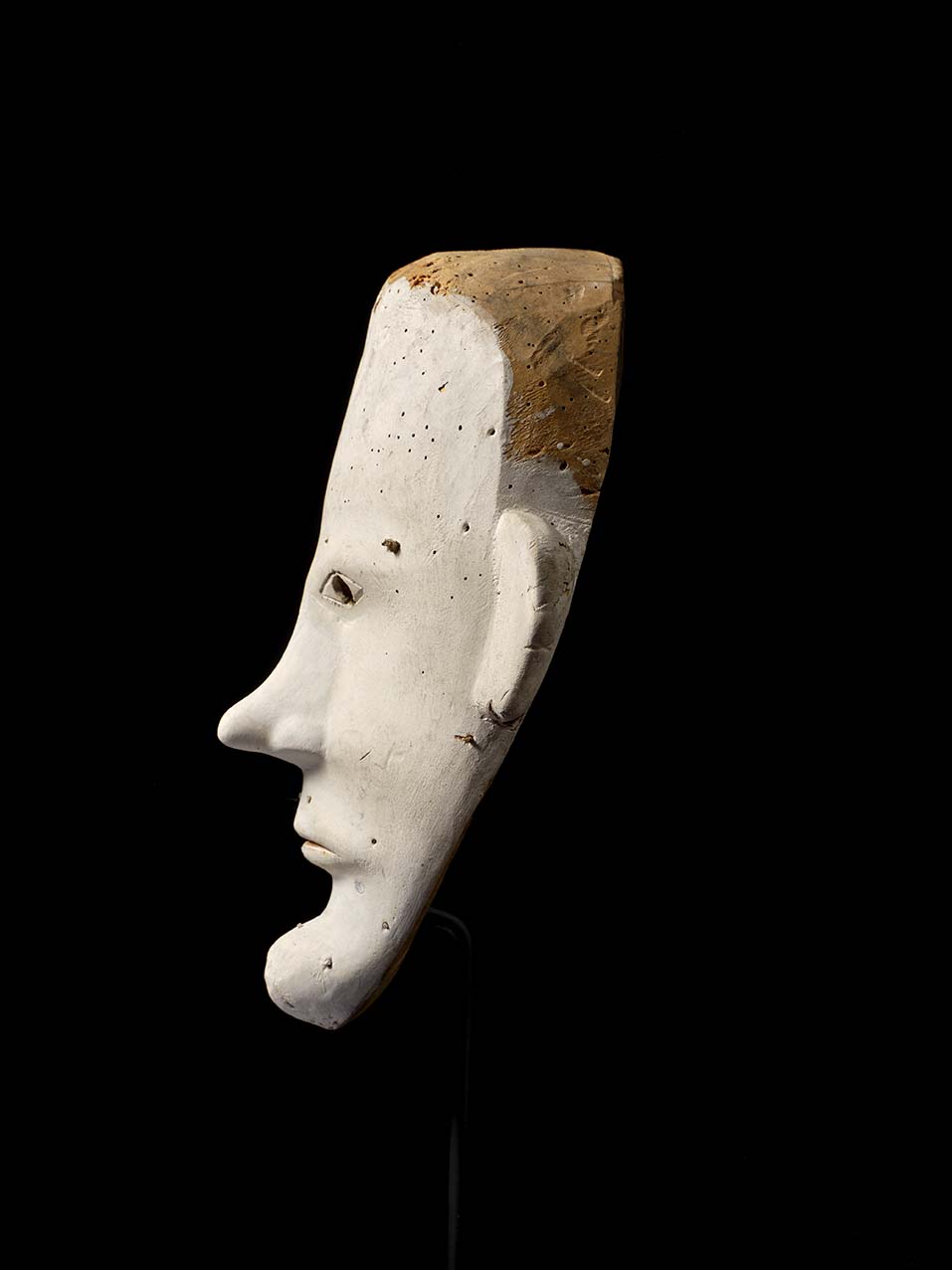
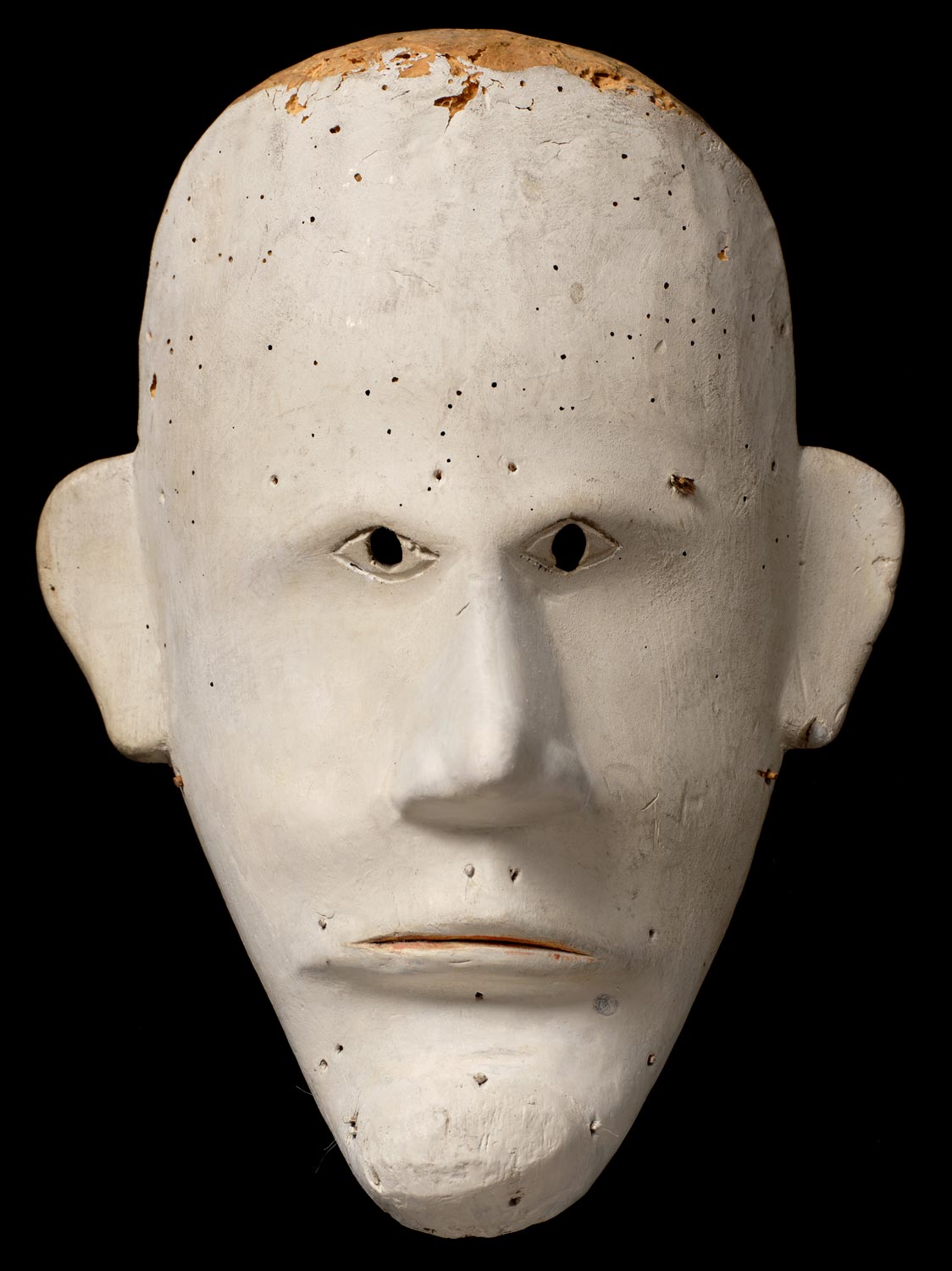
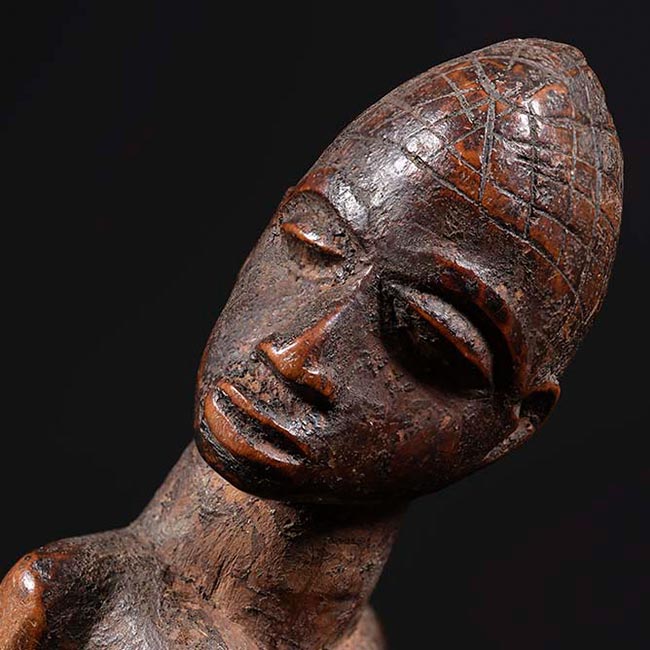
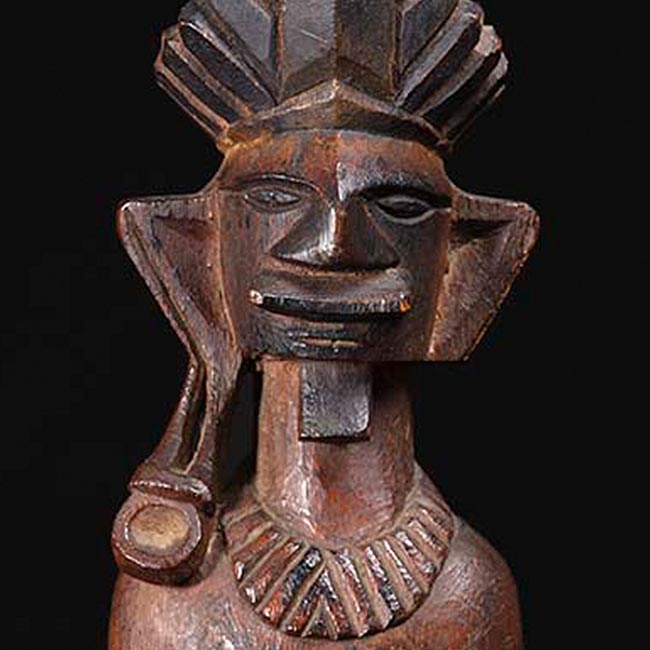
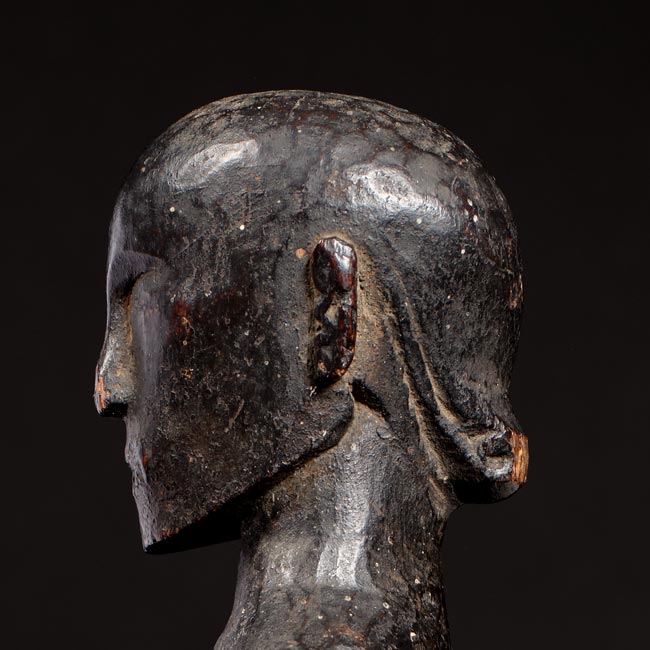
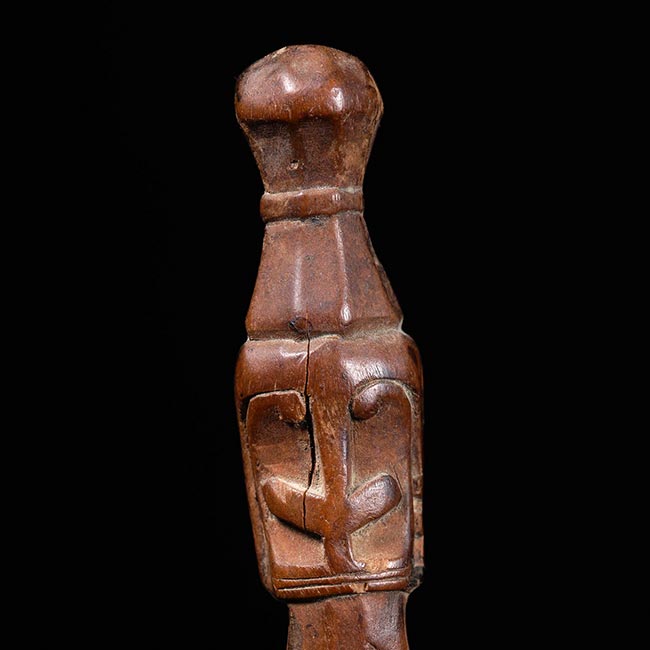
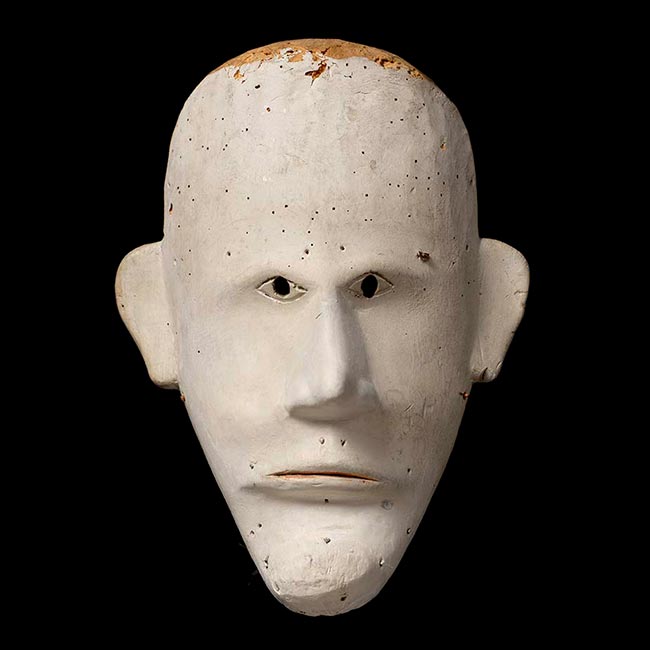
The quiet power of this example lies in its remarkable restraint. Its elongated oval face is reduced to a few carefully observed forms: almond-shaped eyes, a long, finely modeled nose, thin compressed lips, and a prominent chin that lends the mask a thoughtful, almost solemn expression. Large projecting ears balance the composition, while the smooth, uninterrupted planes of the face create an elegance that borders on the modern. The sculptor achieved this effect not through elaborate ornament, but through an exceptional understanding of proportion and subtle contour.
The surface retains extensive traces of its original white pigment. Throughout Borneo, white was commonly associated with the spiritual realm, purity, and the presence of ancestral or benevolent supernatural beings. During ritual performances, the luminous white surface would have heightened the mask’s otherworldly appearance, particularly in the dim interior of a communal longhouse or by the flickering light of torches.
One of the curious features of this mask is the series of small wooden pegs that survive around the perimeter of the face. These remnants almost certainly once secured attachments of plant fiber, bark, or other organic materials that framed the mask. Such additions would have animated the mask in performance.
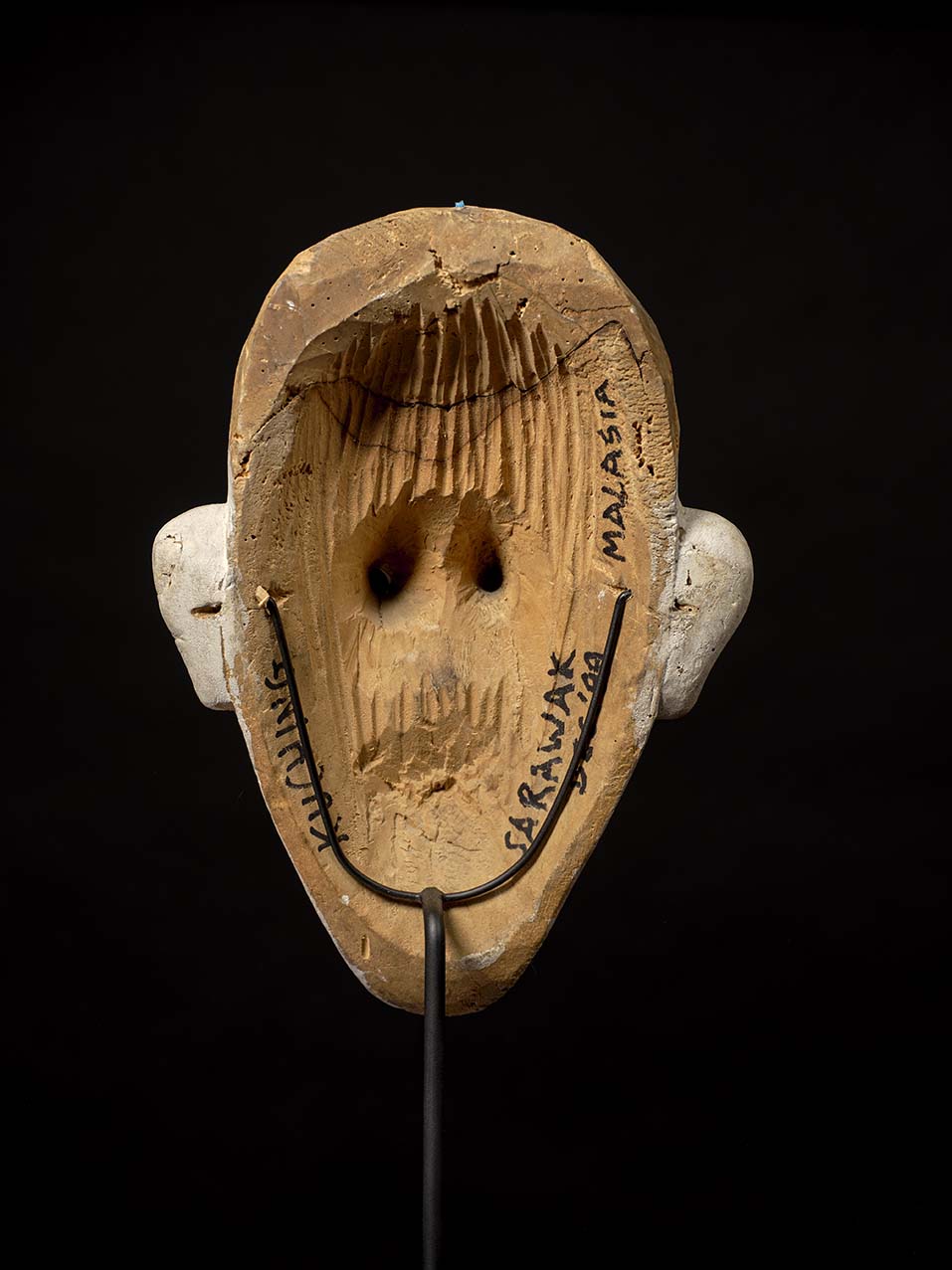
The reverse reveals a deeply hollowed interior with hand-carved tool marks that speak to its traditional method of construction. The openings for the eyes are carefully positioned to provide visibility while maintaining the integrity of the sculptural form, and the interior retains the honest wear expected of a mask intended to be worn rather than simply displayed. The inscription “Dec 1999” was the year the mask was collected in Borneo.
Size
Height: 9 ½ in / 24.1 cm
Item
IN 9-6-26 / Price: $950
Gallery
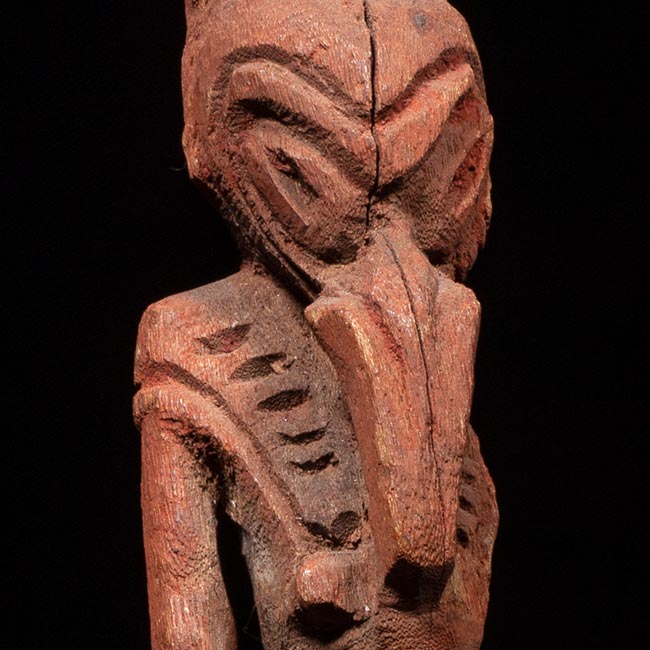
Ceremonial Mask
Bidayuh, West Borneo, Indonesia
Early 20th century
Wood, white pigment
Among the Bidayuh of West Borneo, masks were carved for ceremonies that brought the human and spirit worlds into contact. Worn during communal rituals, they could embody ancestral beings, protective spirits, or supernatural forces called upon to safeguard the village, restore balance, or accompany seasonal celebrations. Rather than serving as portraits, these masks transformed the wearer into another presence, allowing the individual to temporarily assume a spiritual identity.
The quiet power of this example lies in its remarkable restraint. Its elongated oval face is reduced to a few carefully observed forms: almond-shaped eyes, a long, finely modeled nose, thin compressed lips, and a prominent chin that lends the mask a thoughtful, almost solemn expression. Large projecting ears balance the composition, while the smooth, uninterrupted planes of the face create an elegance that borders on the modern. The sculptor achieved this effect not through elaborate ornament, but through an exceptional understanding of proportion and subtle contour.
The surface retains extensive traces of its original white pigment. Throughout Borneo, white was commonly associated with the spiritual realm, purity, and the presence of ancestral or benevolent supernatural beings. During ritual performances, the luminous white surface would have heightened the mask’s otherworldly appearance, particularly in the dim interior of a communal longhouse or by the flickering light of torches.
One of the curious features of this mask is the series of small wooden pegs that survive around the perimeter of the face. These remnants almost certainly once secured attachments of plant fiber, bark, or other organic materials that framed the mask. Such additions would have animated the mask in performance.
The reverse reveals a deeply hollowed interior with hand-carved tool marks that speak to its traditional method of construction. The openings for the eyes are carefully positioned to provide visibility while maintaining the integrity of the sculptural form, and the interior retains the honest wear expected of a mask intended to be worn rather than simply displayed. The inscription “Dec 1999” was the year the mask was collected in Borneo.
Size
Height: 9 ½ in / 24.1 cm
Item
IN 9-6-26 / Price: $950
Gallery