


Nkumba Figure
Lega people, Democratic Republic of the Congo
Early 20th c.
Wood, pigment
Provenance: Guy and Nathalie Porre, Paris
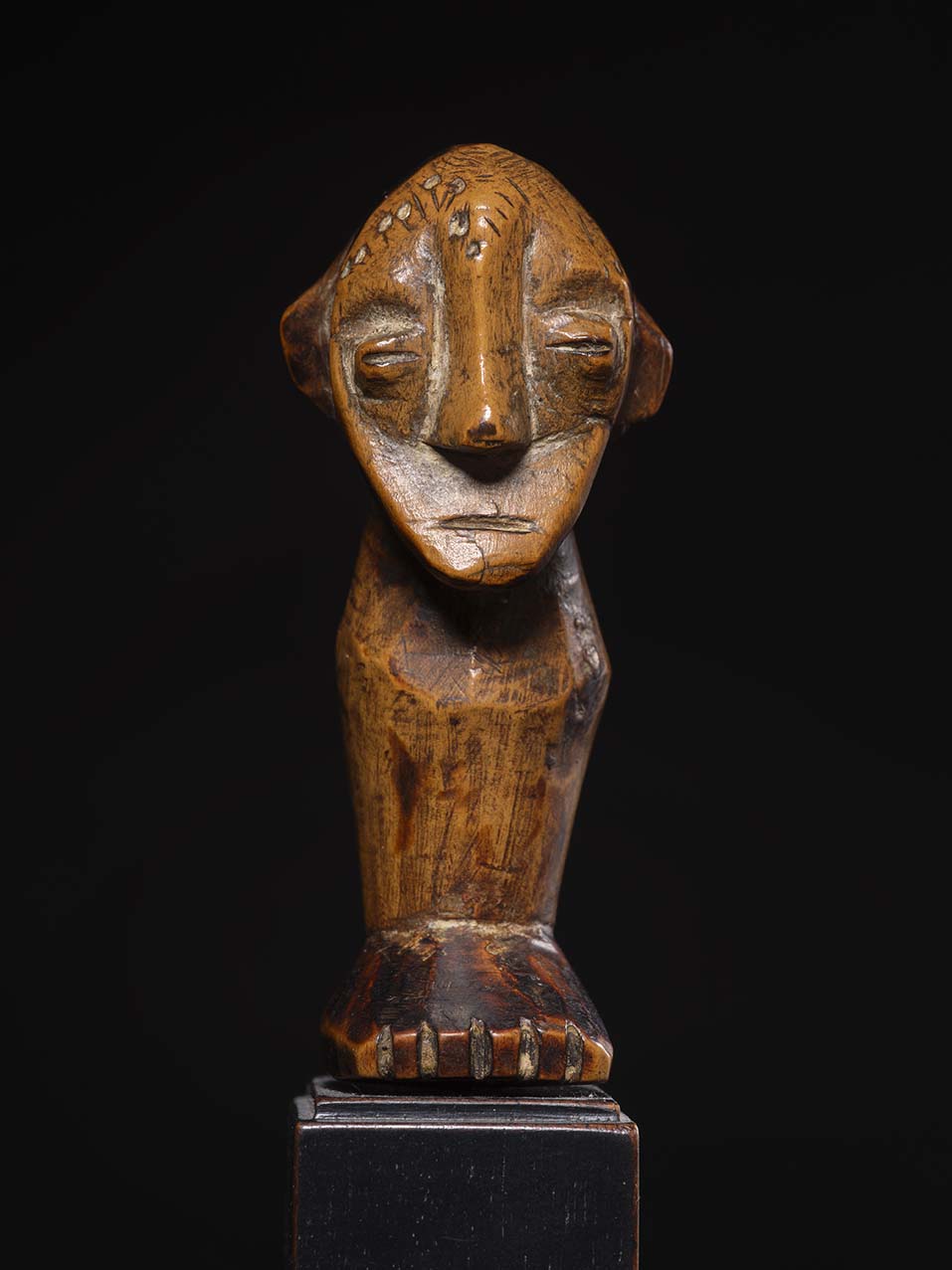
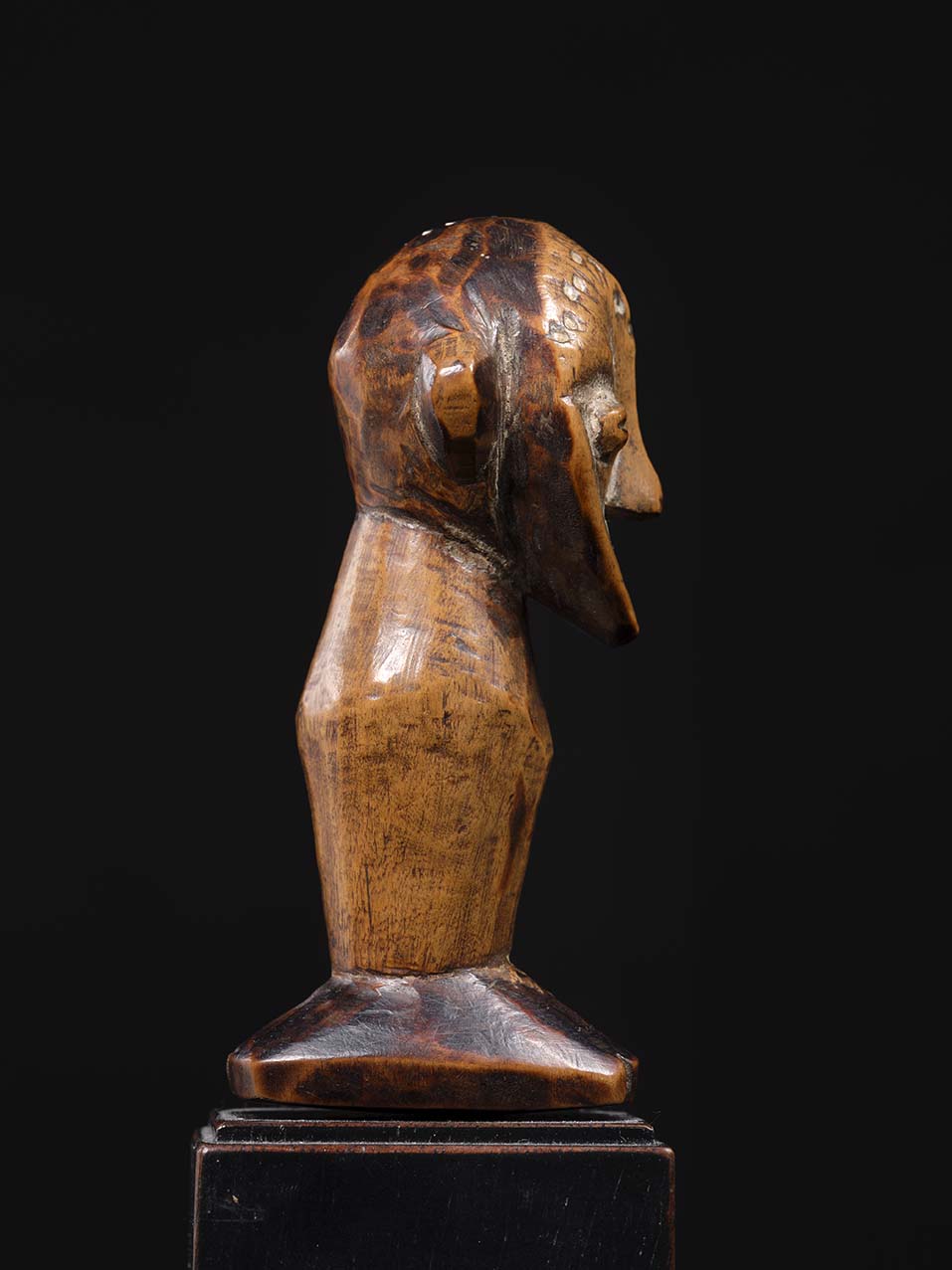
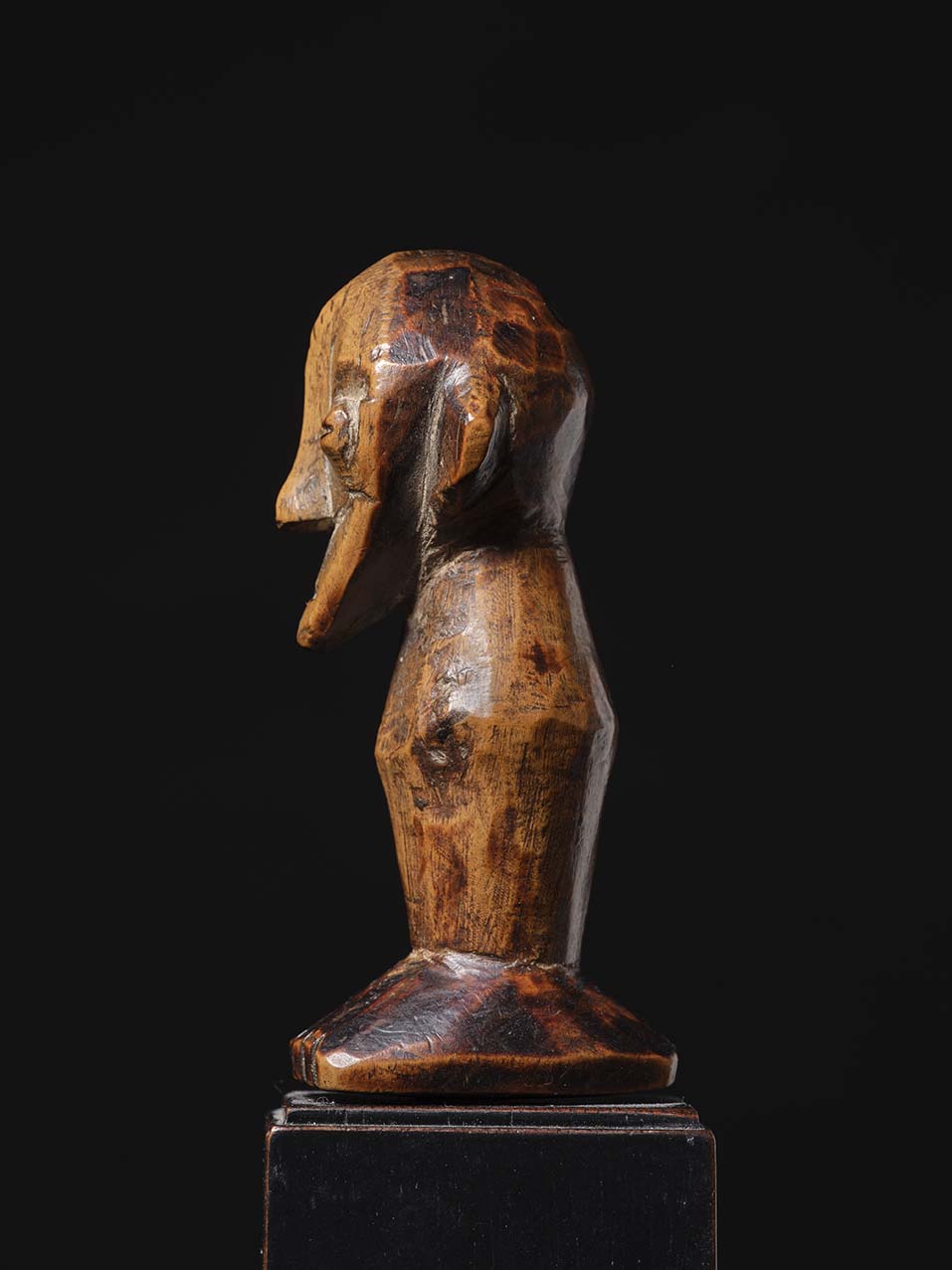
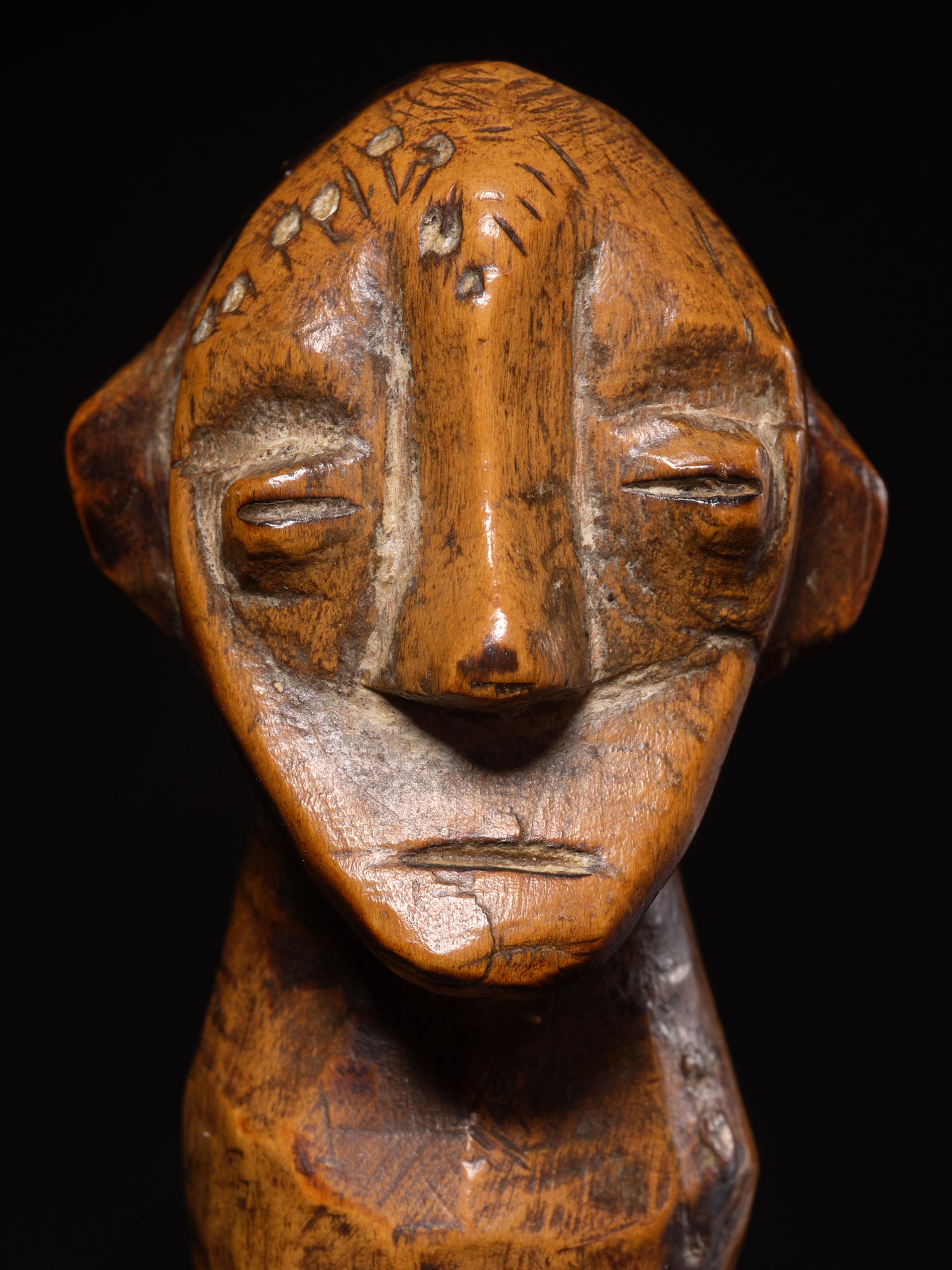
This finely carved nkumba figure was created by the Lega people of the eastern Democratic Republic of the Congo, where such sculptures played an important role within the Bwami initiation society. Rather than serving as idols, these figures functioned as visual teaching aids, brought out during initiation ceremonies to illustrate moral principles, social responsibilities, and the virtues expected of members.
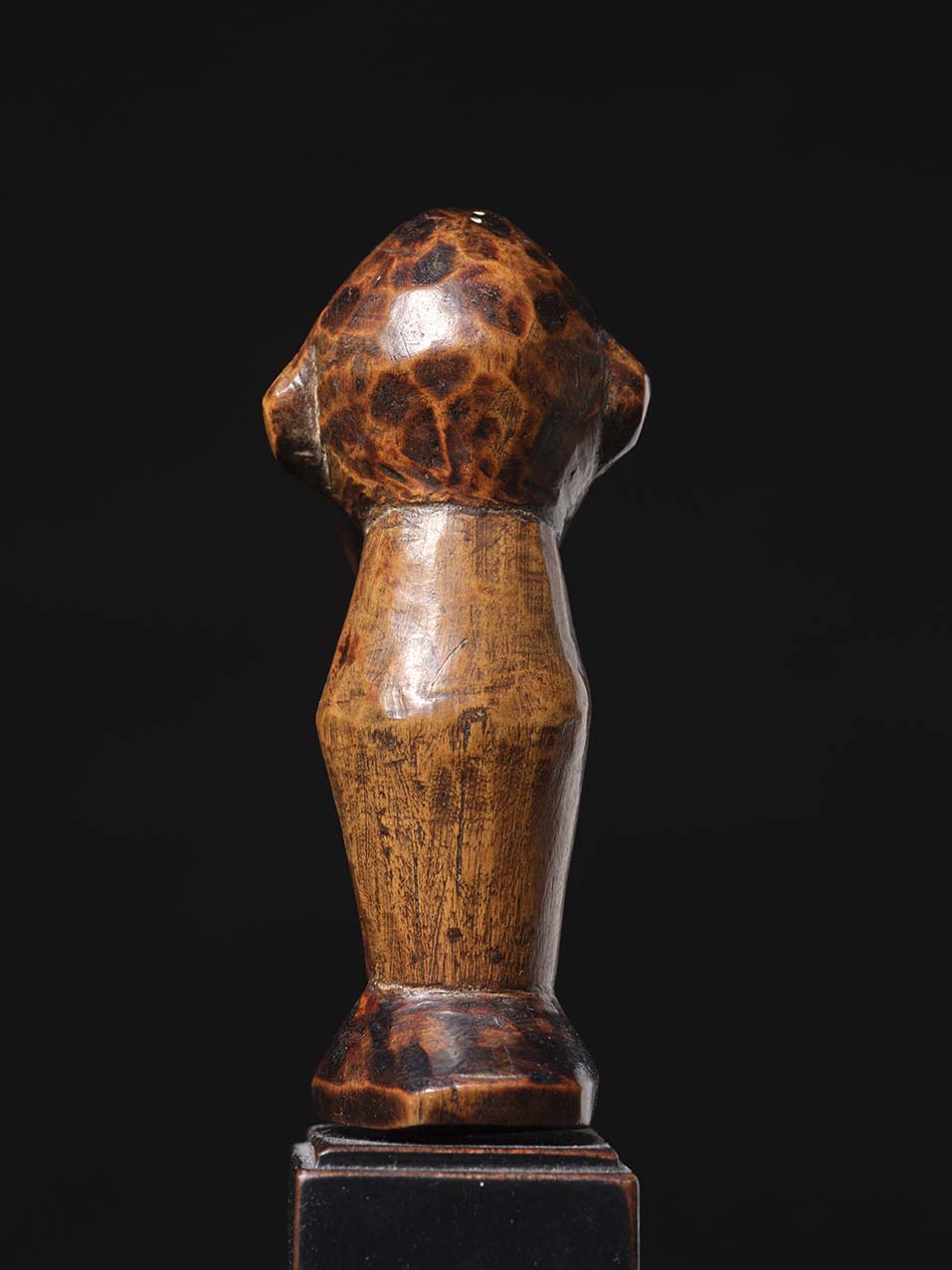
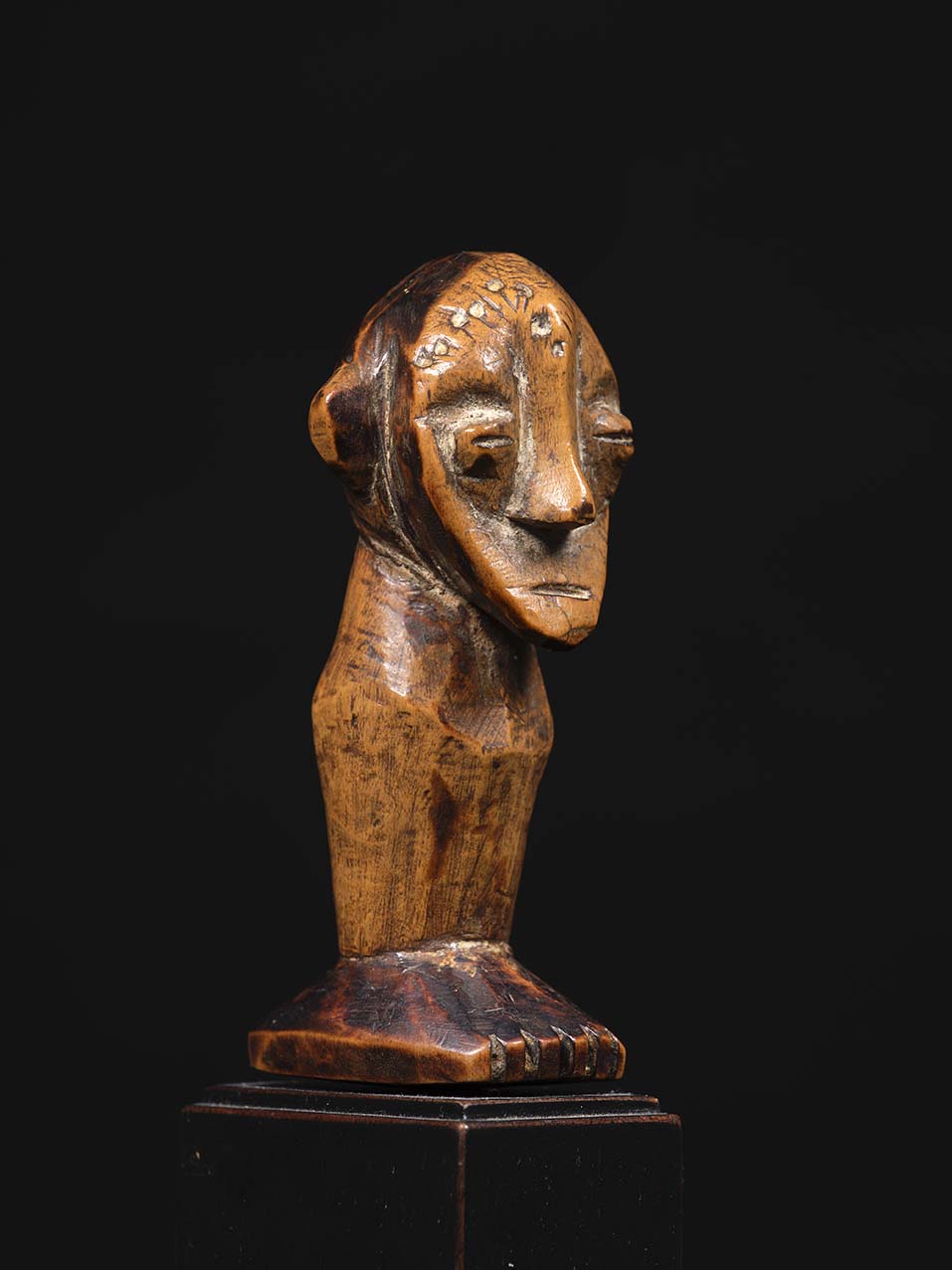
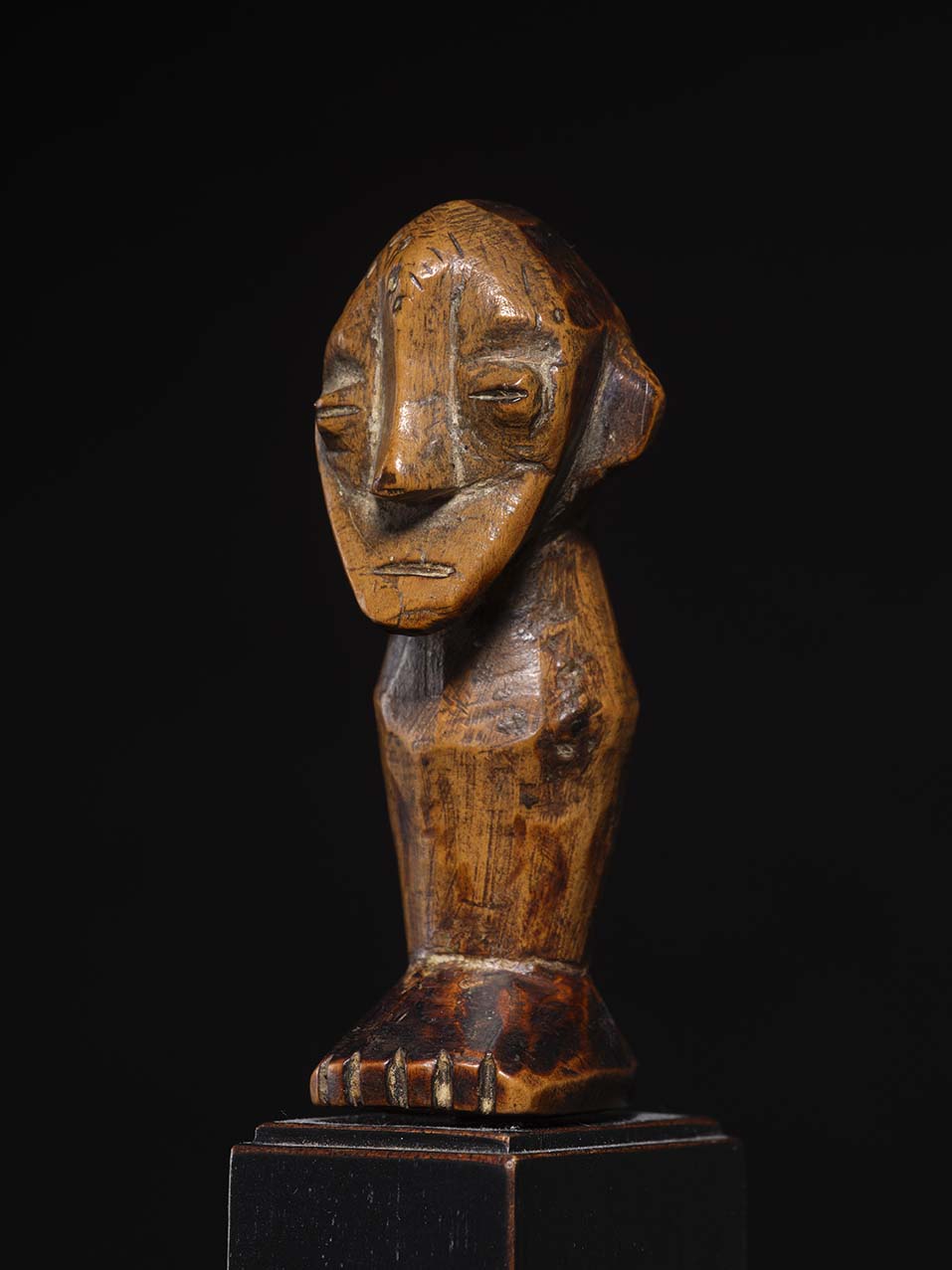
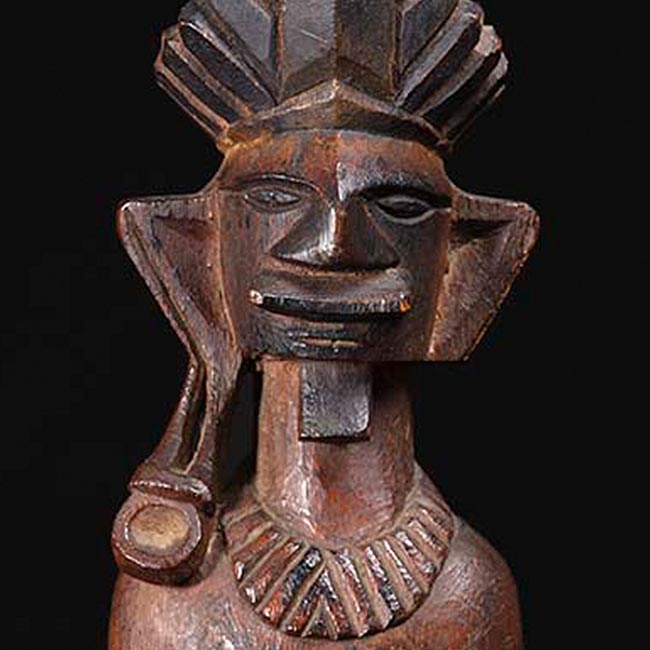
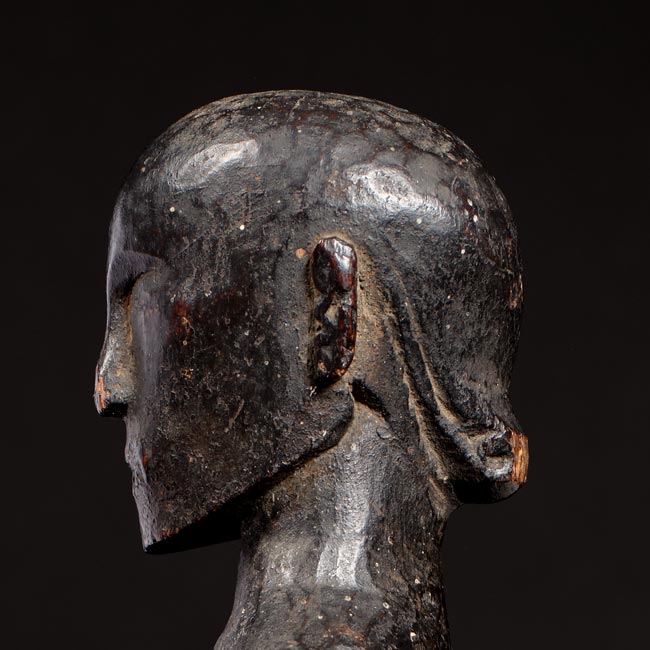
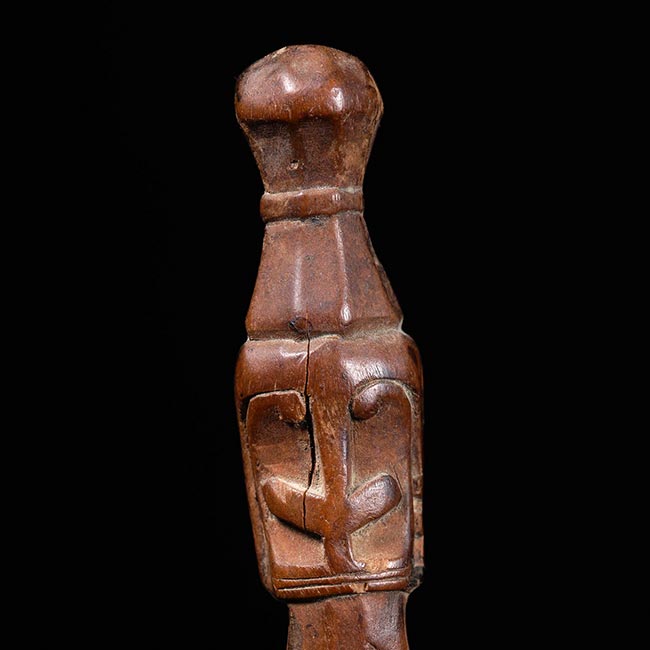
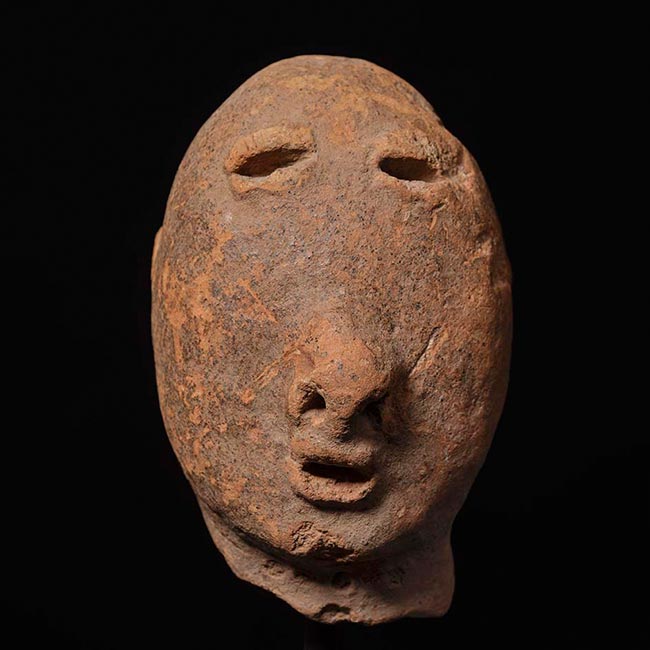
This example is notable for its restrained elegance and expressive simplicity. The disproportionately large head, with its broad angular nose, heavy-lidded almond-shaped eyes, and small closed mouth, conveys a contemplative, introspective character. Elongated ears frame the face, while the compact body, carved without arms and standing firmly on broad feet, emphasizes the symbolic rather than naturalistic intent of the sculpture. Delicate incised motifs across the forehead and crown add visual interest and may represent scarification or coiffure.
The warm, honey-brown surface displays a rich, lustrous patina developed through years of ritual handling, an indication that the figure was actively used within the Bwami society rather than made solely for display.
Nkumba Figure
Lega people, Democratic Republic of the Congo
Early 20th c.
Wood, pigment
Provenance: Guy and Nathalie Porre, Paris
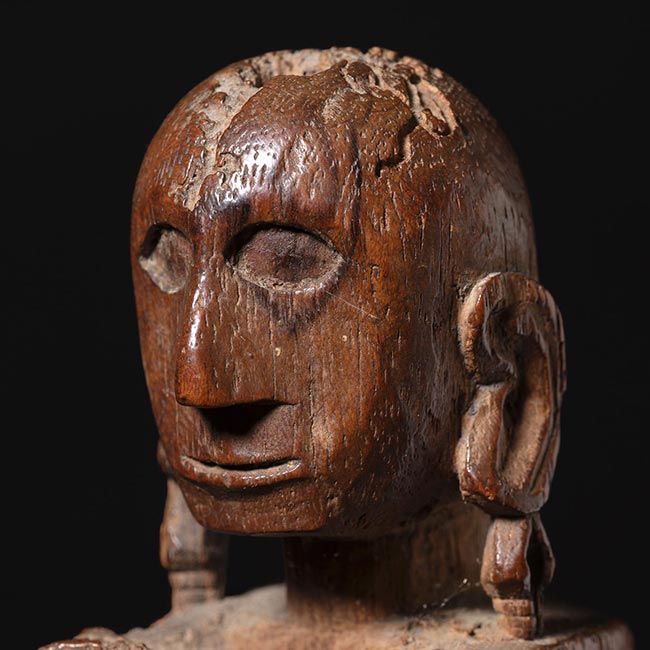
This finely carved nkumba figure was created by the Lega people of the eastern Democratic Republic of the Congo, where such sculptures played an important role within the Bwami initiation society. Rather than serving as idols, these figures functioned as visual teaching aids, brought out during initiation ceremonies to illustrate moral principles, social responsibilities, and the virtues expected of members.
This example is notable for its restrained elegance and expressive simplicity. The disproportionately large head, with its broad angular nose, heavy-lidded almond-shaped eyes, and small closed mouth, conveys a contemplative, introspective character. Elongated ears frame the face, while the compact body, carved without arms and standing firmly on broad feet, emphasizes the symbolic rather than naturalistic intent of the sculpture. Delicate incised motifs across the forehead and crown add visual interest and may represent scarification or coiffure.
The warm, honey-brown surface displays a rich, lustrous patina developed through years of ritual handling, an indication that the figure was actively used within the Bwami society rather than made solely for display.