


Debata Idup Ancestor Figure
Batak Toba, North Sumatra, Indonesia
19th century
Wood
Provenance: Acquired from Brant Mackey in the 1990’s
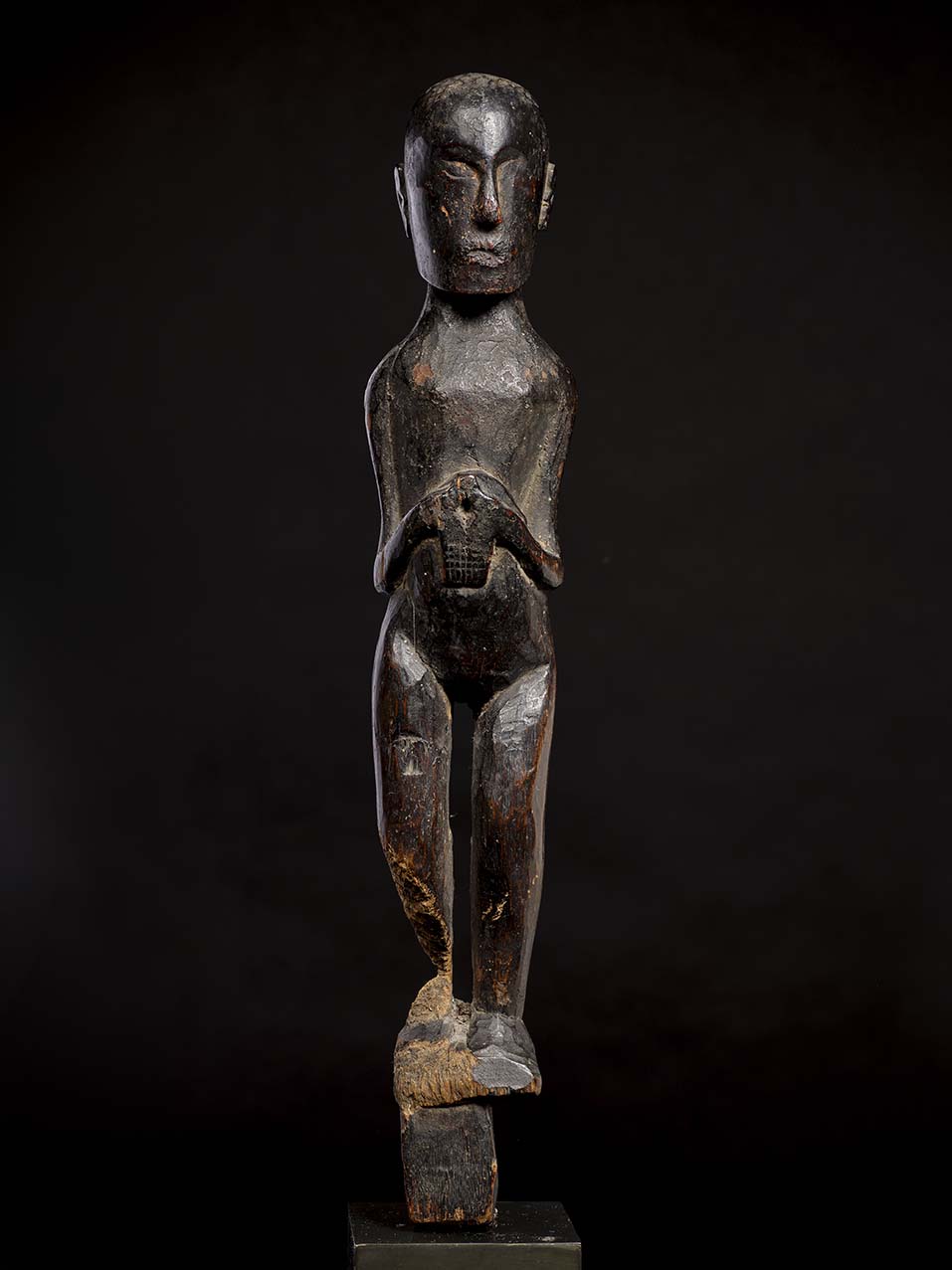
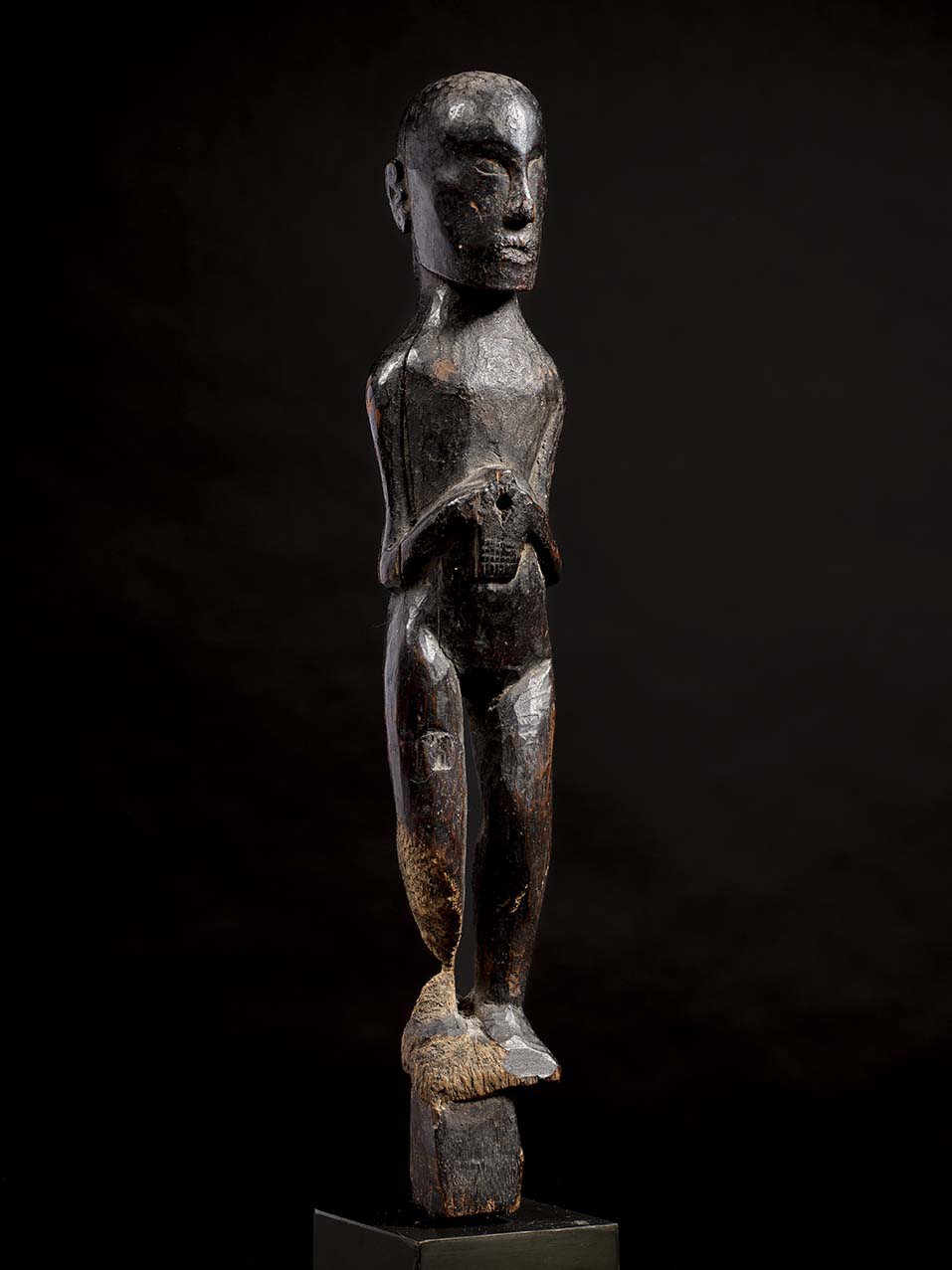
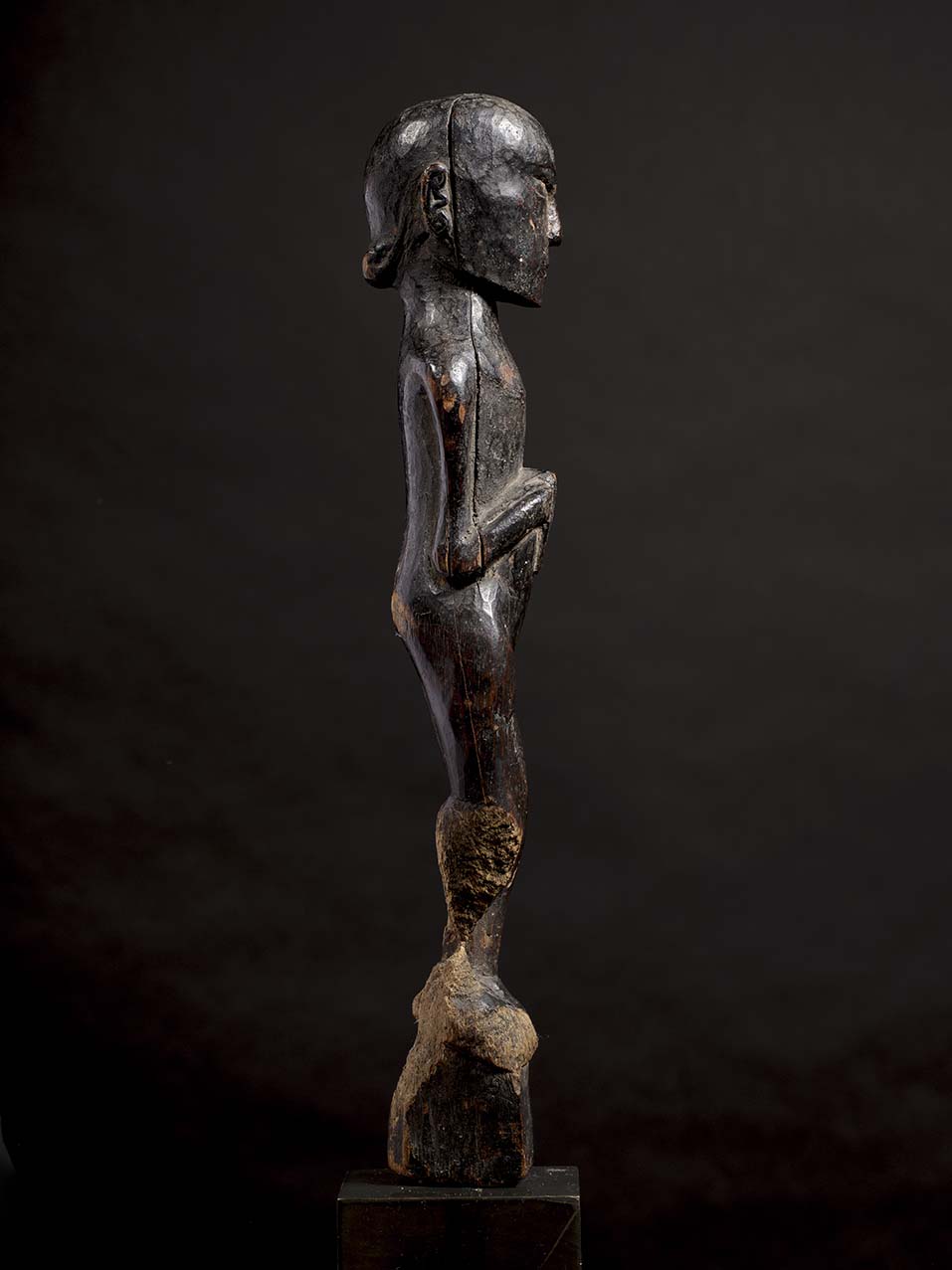
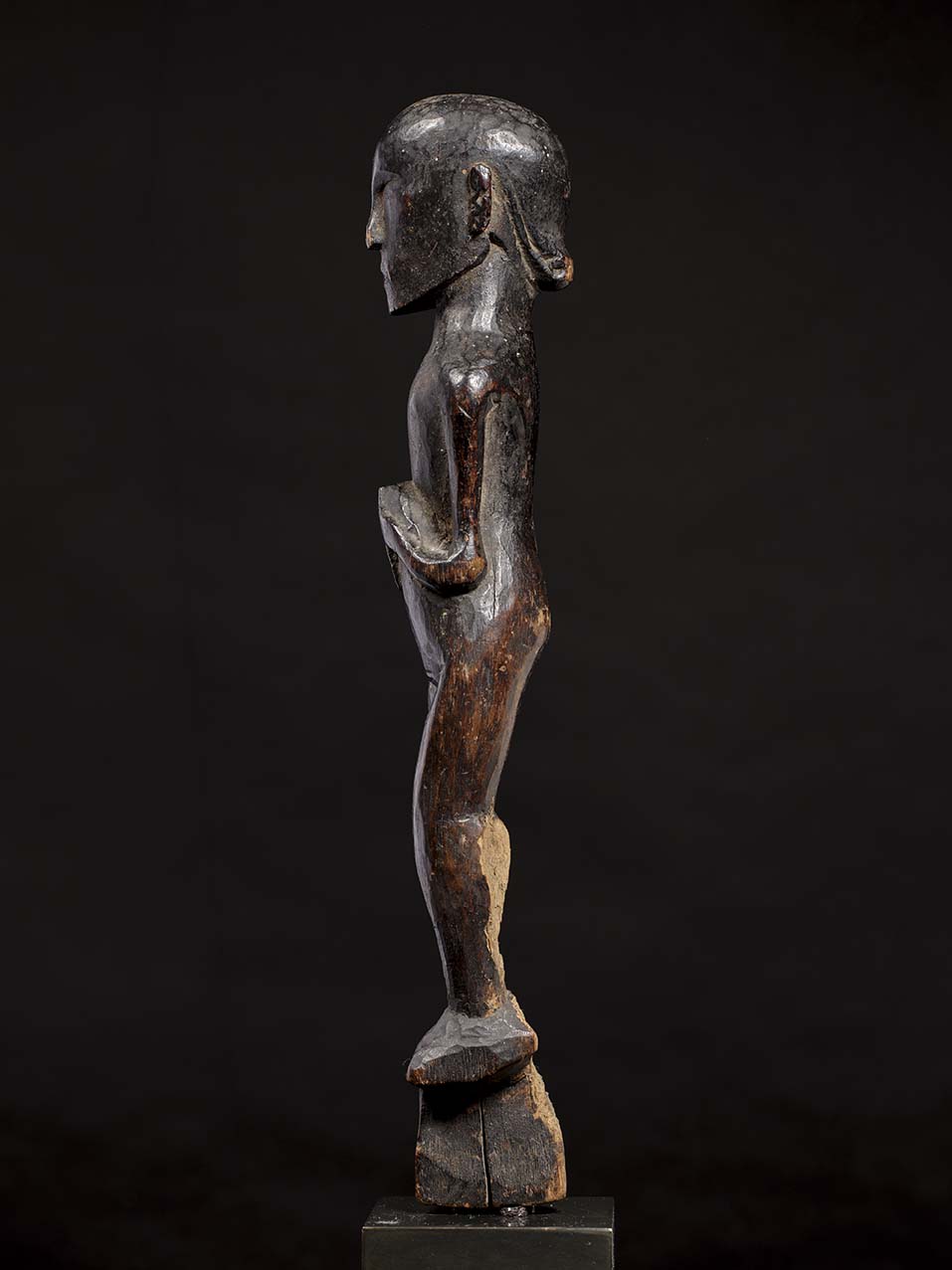
This compelling Batak sculpture is most likely a Debata Idup—a representation of the “Living Deity” or primordial ancestor revered by the Batak Toba. Such figures served as intermediaries between the human and spirit worlds, embodying ancestral protection, guidance, and supernatural power.
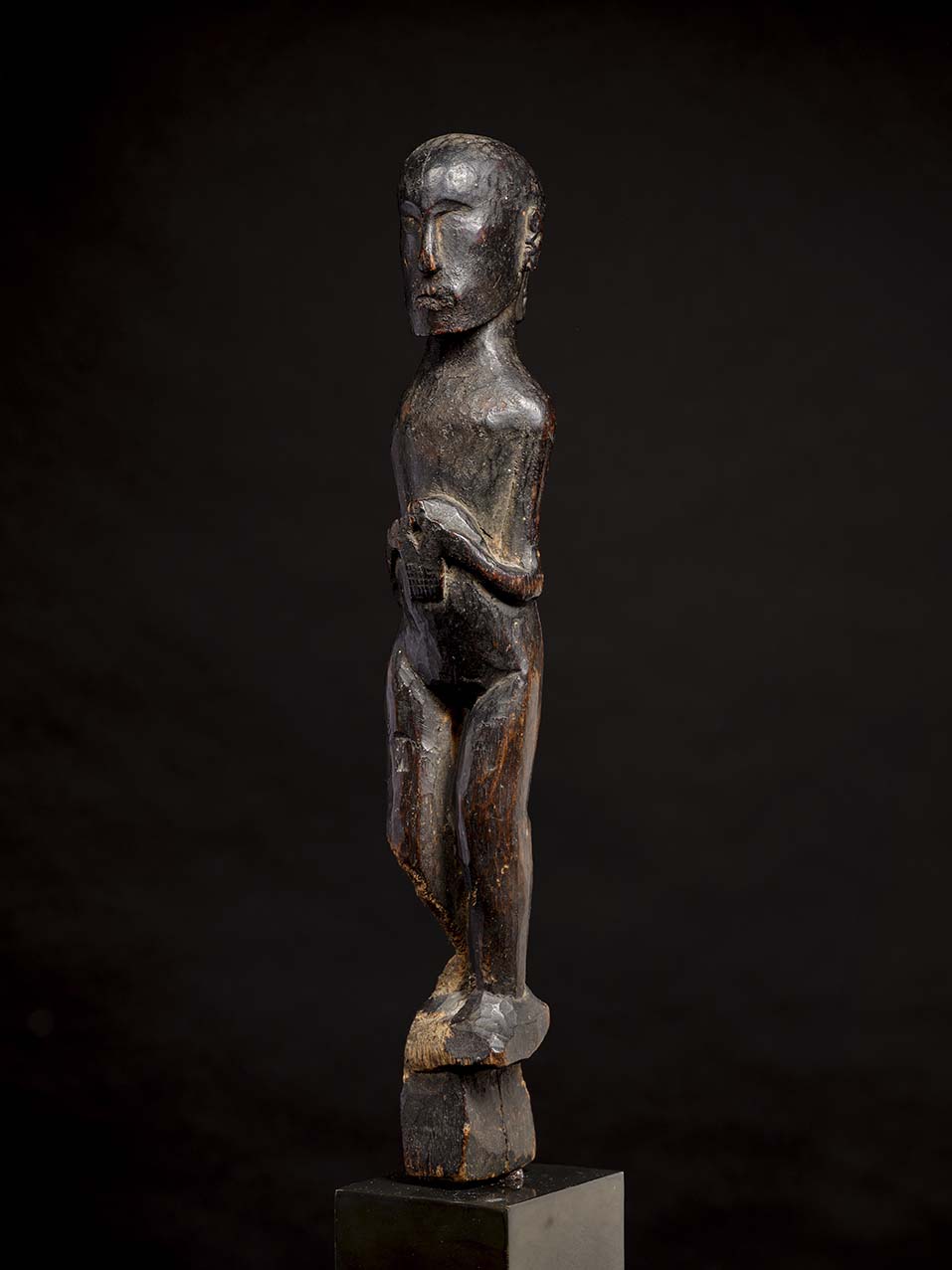
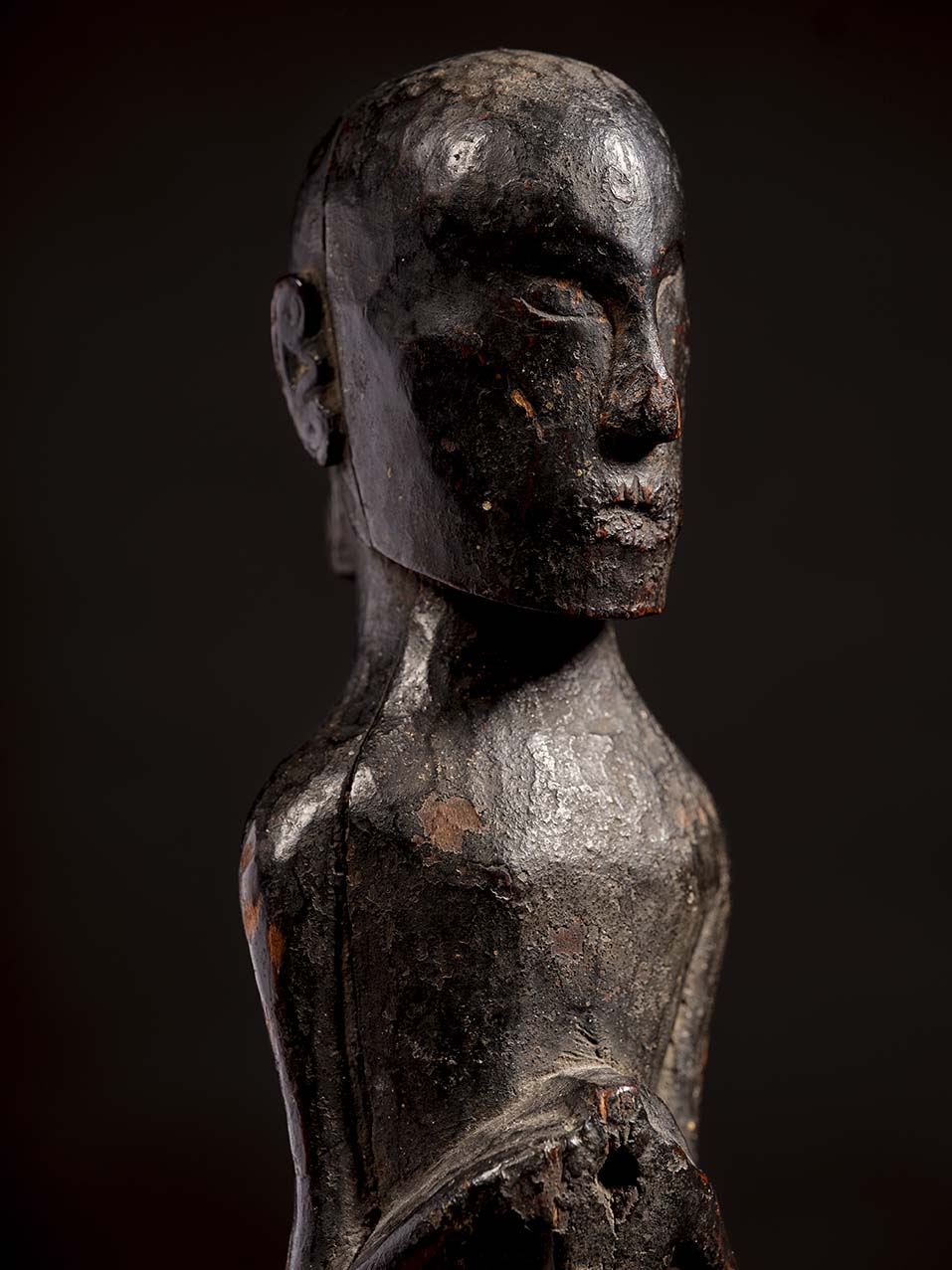
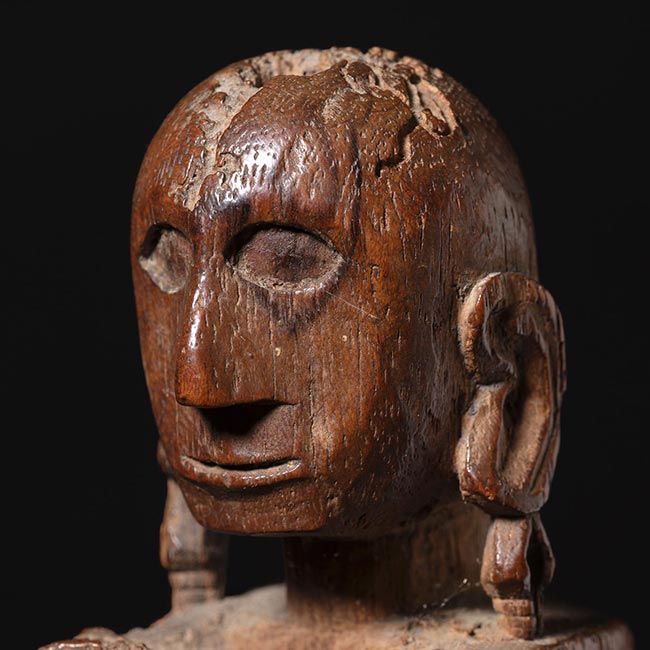
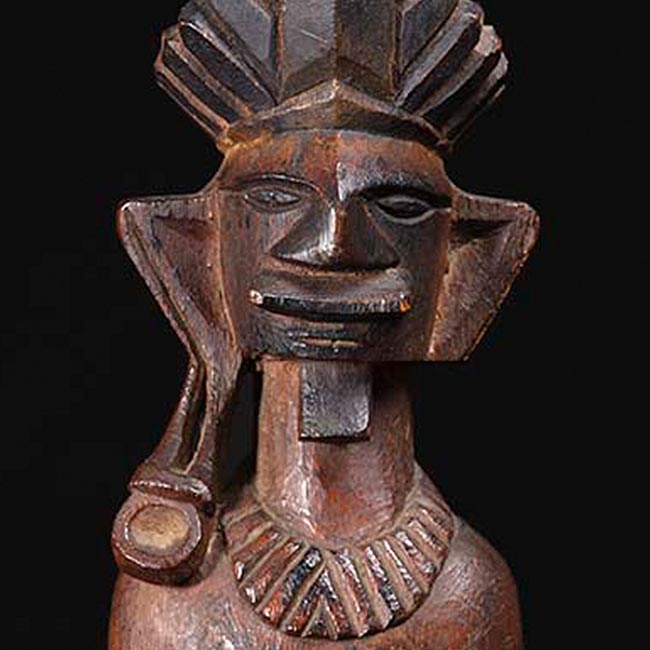
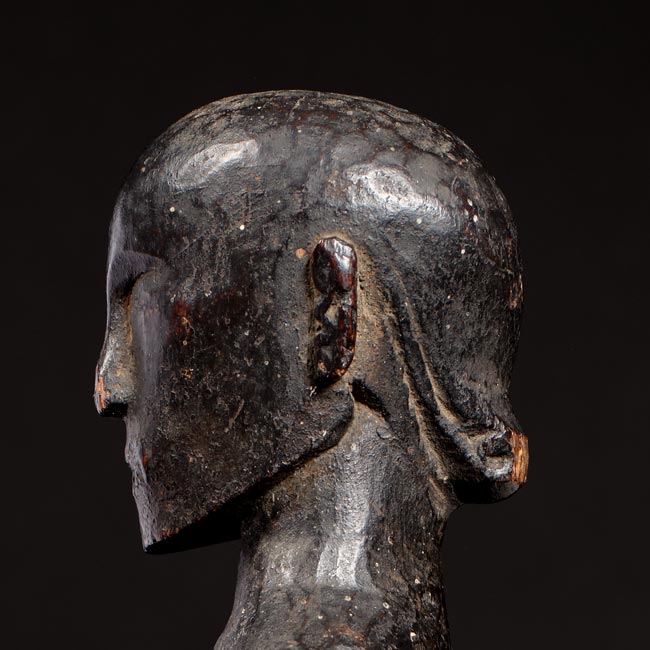
The broad, helmet-like head, deeply recessed eyes, angular nose, and elongated neck create an imposing yet contemplative presence. Particularly striking is the mouth, where remnants of dark organic material remain embedded within the lips. These deposits are almost certainly the result of repeated ritual feedings and libations, tangible evidence that the figure was once actively venerated and empowered through ceremonial offerings.
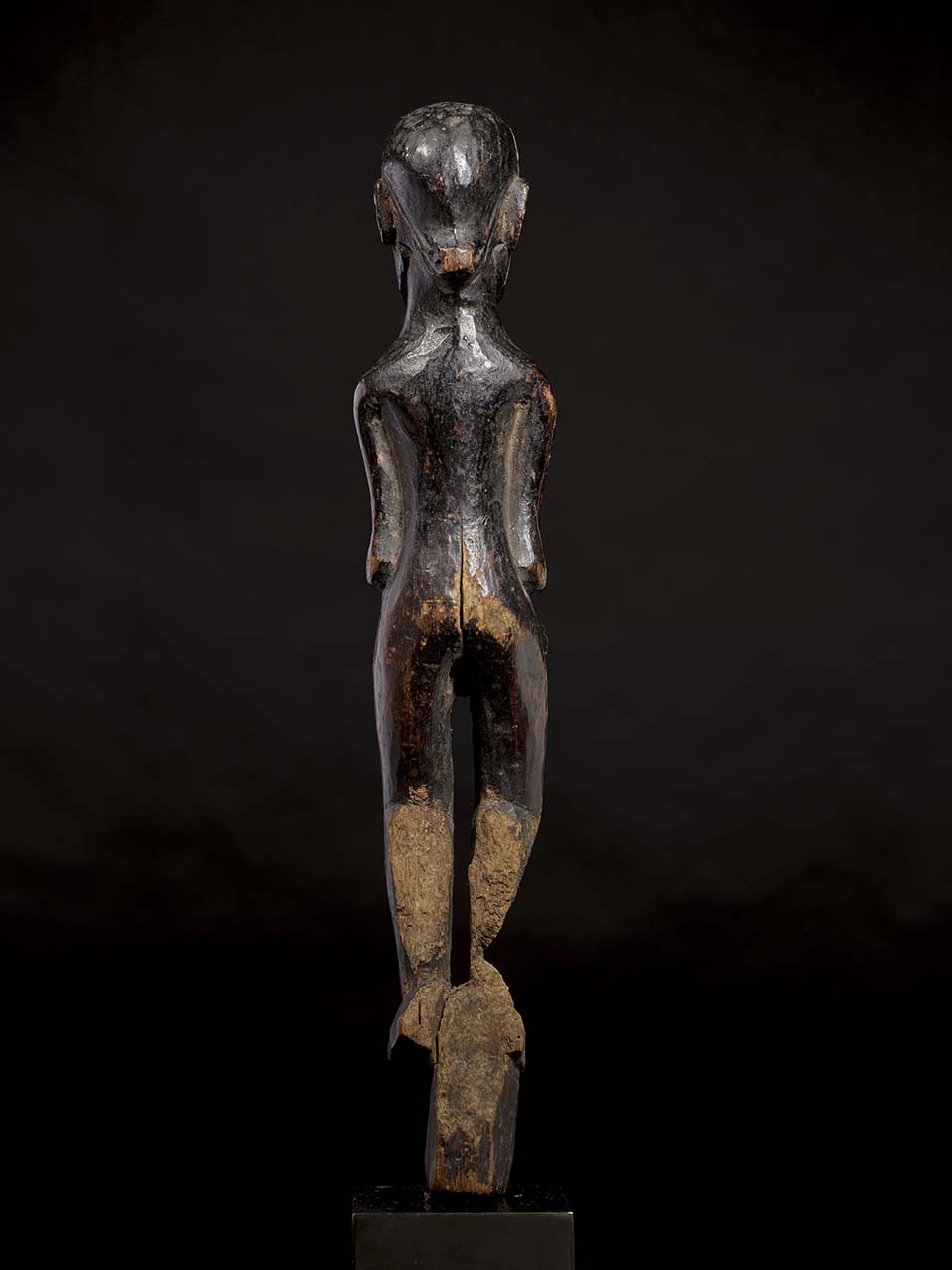
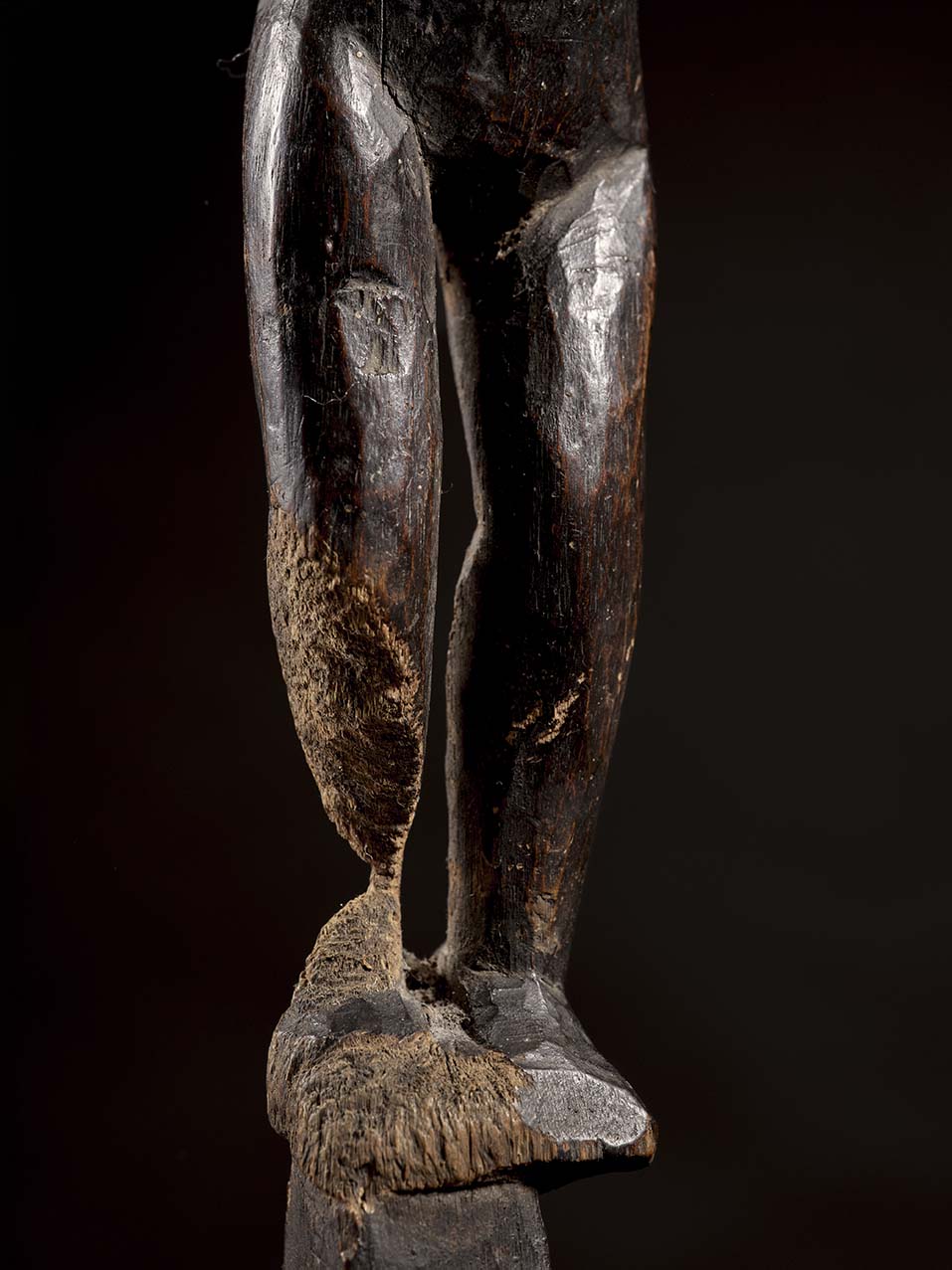
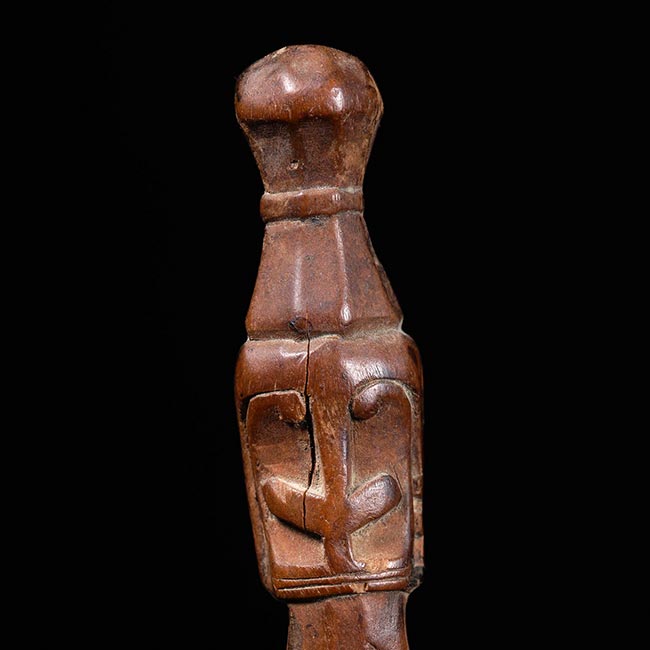
The folded arms and stylized hands are carved in the classic Batak manner, while the surface displays a rich, heavily encrusted ritual patina accumulated over generations of use. Equally evocative is the lower left leg, where centuries of wear have reduced much of the original carving. Rather than detracting from the sculpture, this poetic erosion reinforces its authenticity and long ritual life, giving the figure an extraordinary sense of presence and history.
Size
Height: 14 ½ in / 36.8 cm
Item
IN 9-4-26 / Price on request
Gallery
Debata Idup Ancestor Figure
Batak Toba, North Sumatra, Indonesia
19th century
Wood
Provenance: Acquired from Brant Mackey in the 1990’s
This compelling Batak sculpture is most likely a Debata Idup—a representation of the “Living Deity” or primordial ancestor revered by the Batak Toba. Such figures served as intermediaries between the human and spirit worlds, embodying ancestral protection, guidance, and supernatural power.
The broad, helmet-like head, deeply recessed eyes, angular nose, and elongated neck create an imposing yet contemplative presence. Particularly striking is the mouth, where remnants of dark organic material remain embedded within the lips. These deposits are almost certainly the result of repeated ritual feedings and libations, tangible evidence that the figure was once actively venerated and empowered through ceremonial offerings.
The folded arms and stylized hands are carved in the classic Batak manner, while the surface displays a rich, heavily encrusted ritual patina accumulated over generations of use. Equally evocative is the lower left leg, where centuries of wear have reduced much of the original carving. Rather than detracting from the sculpture, this poetic erosion reinforces its authenticity and long ritual life, giving the figure an extraordinary sense of presence and history.
Size
Height: 14 ½ in / 36.8 cm
Item
IN 9-4-26 / Price on request
Gallery