


Headhunter’s Sword (Mandau)
Bidayuh Dayak, West Borneo, Indonesia
Early 20th c.
Provenance: Rodger Dashow Collection
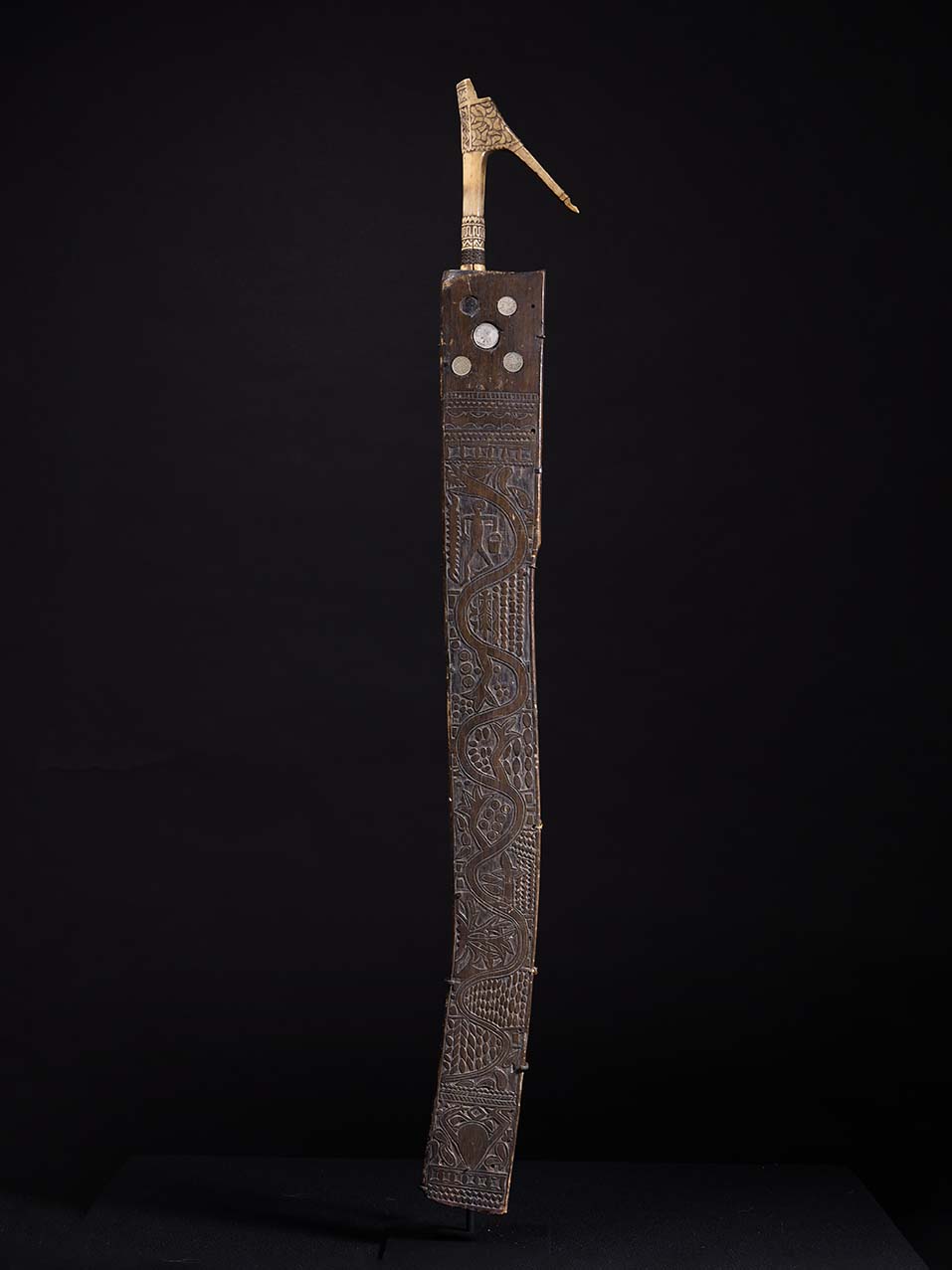
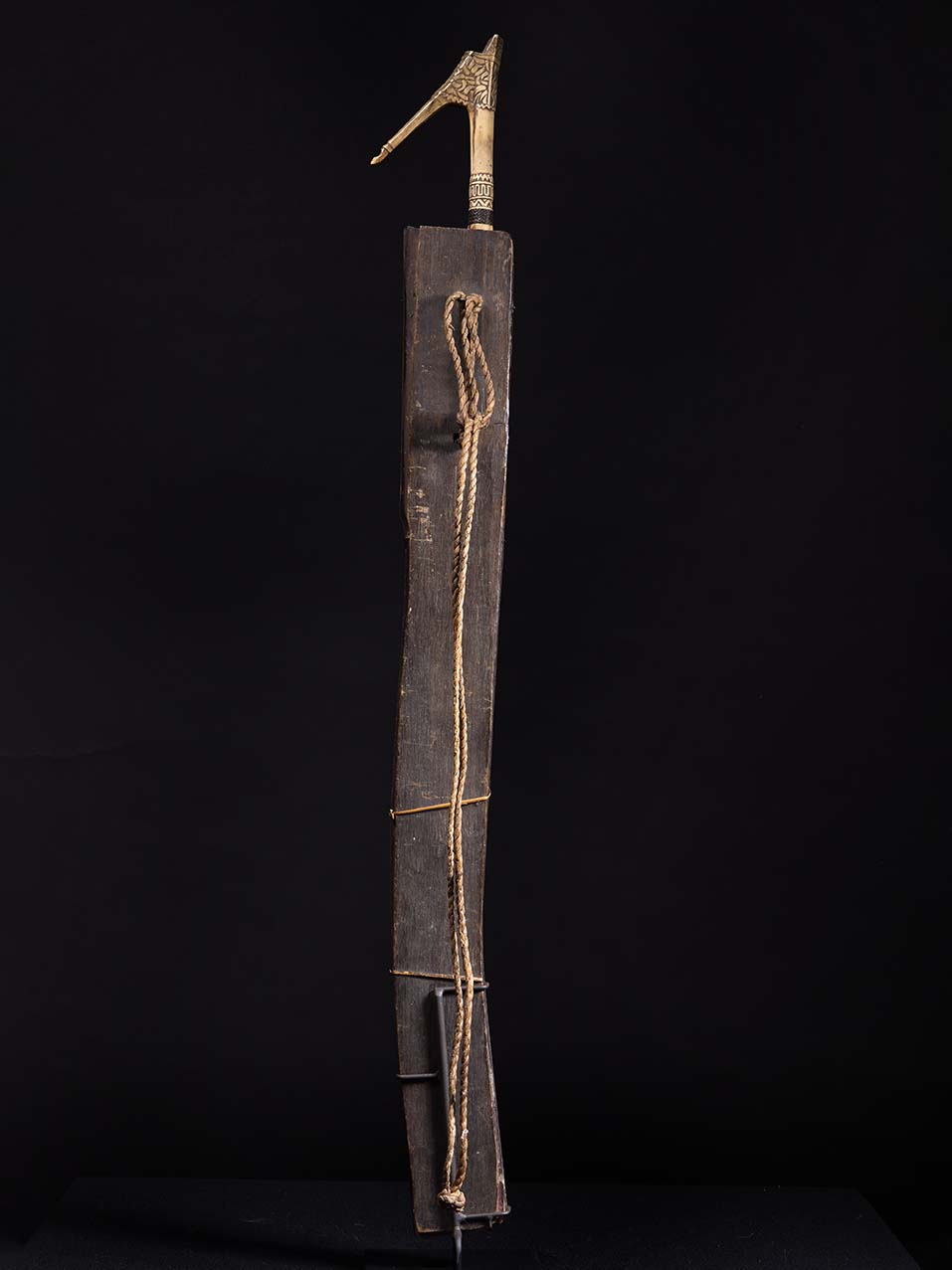
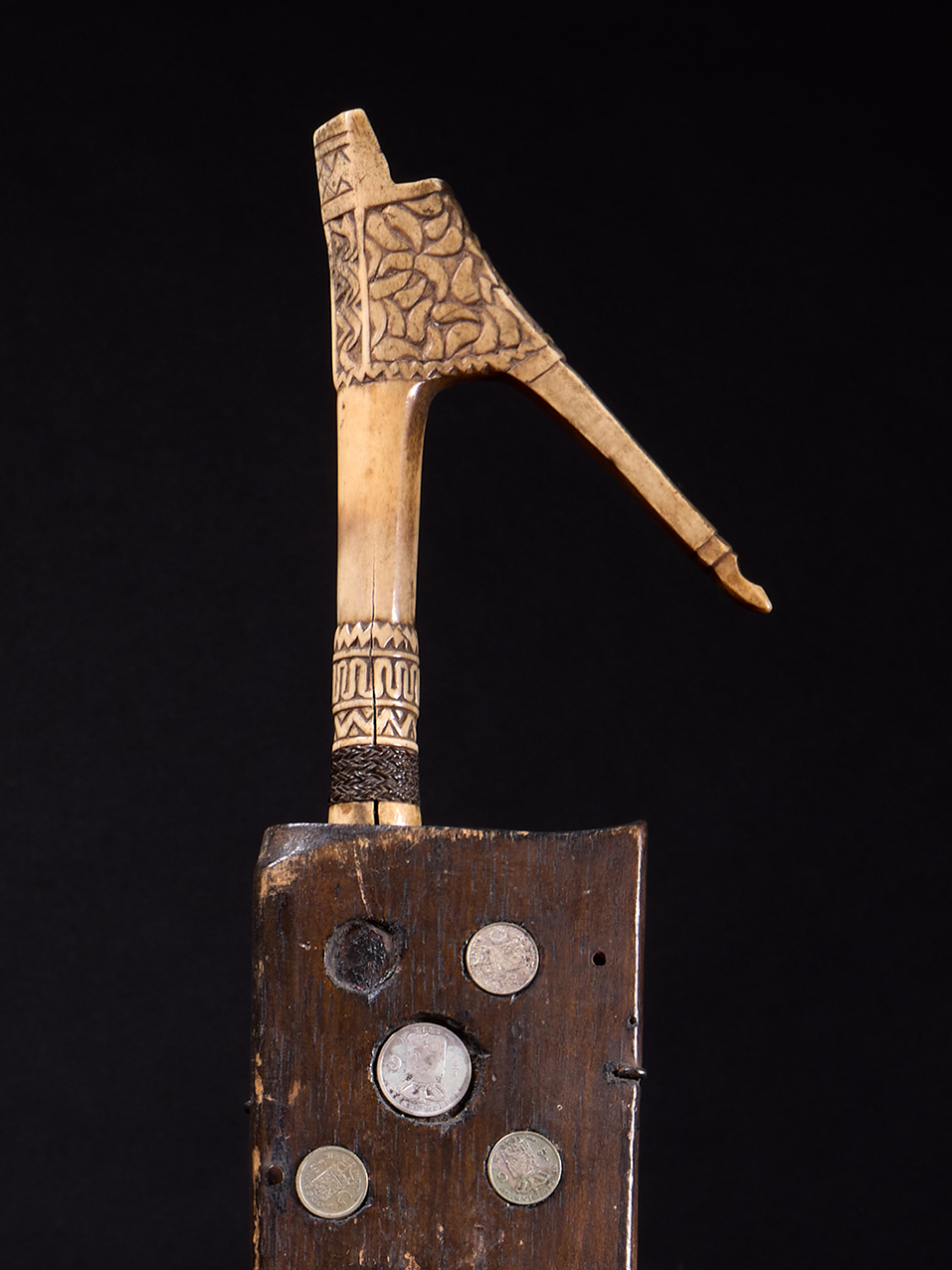
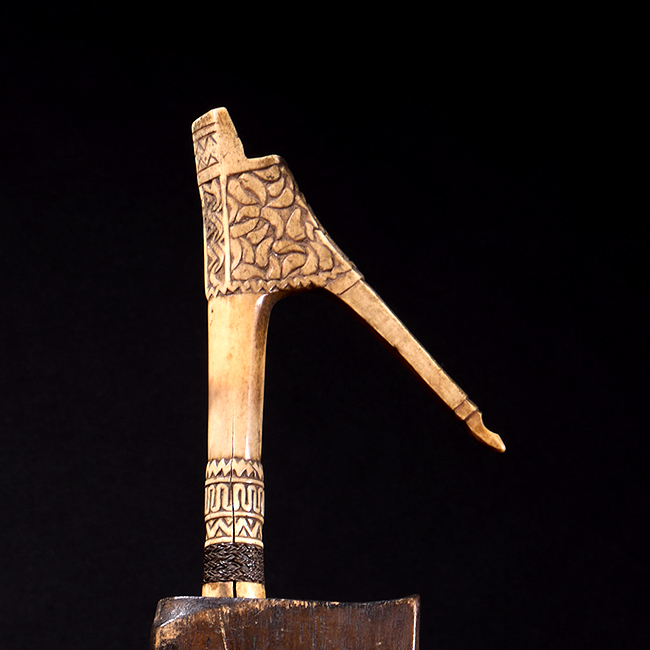
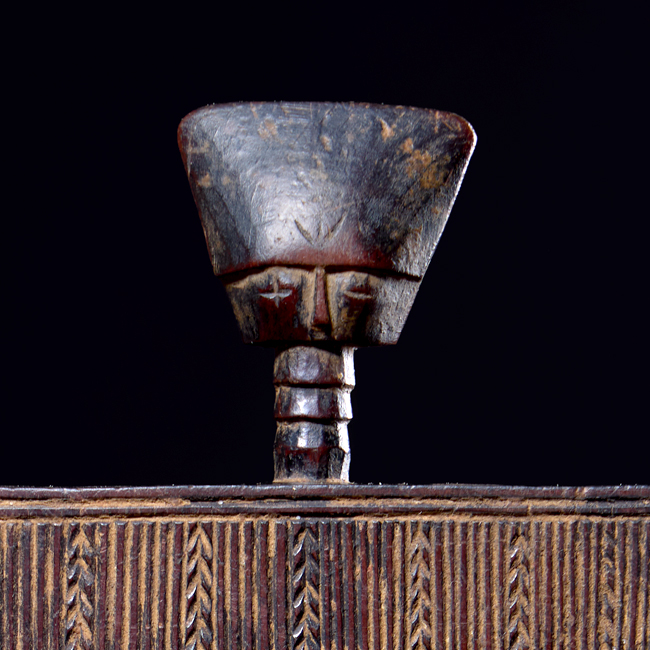
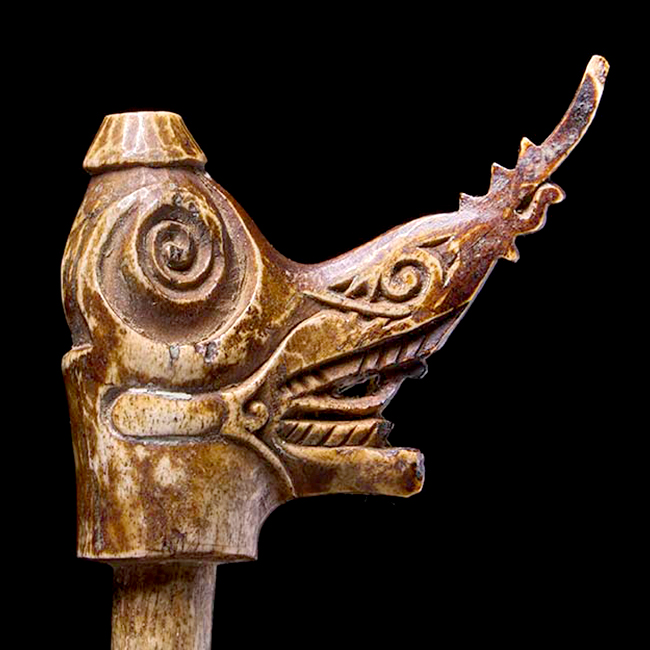
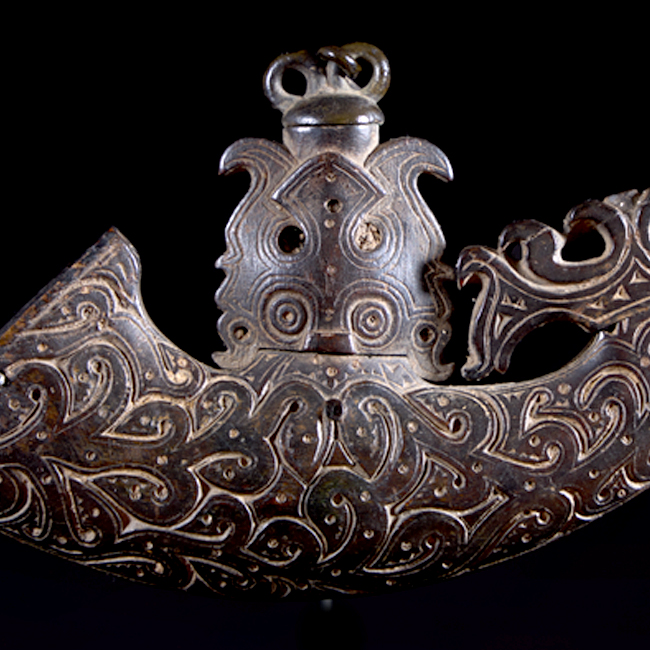
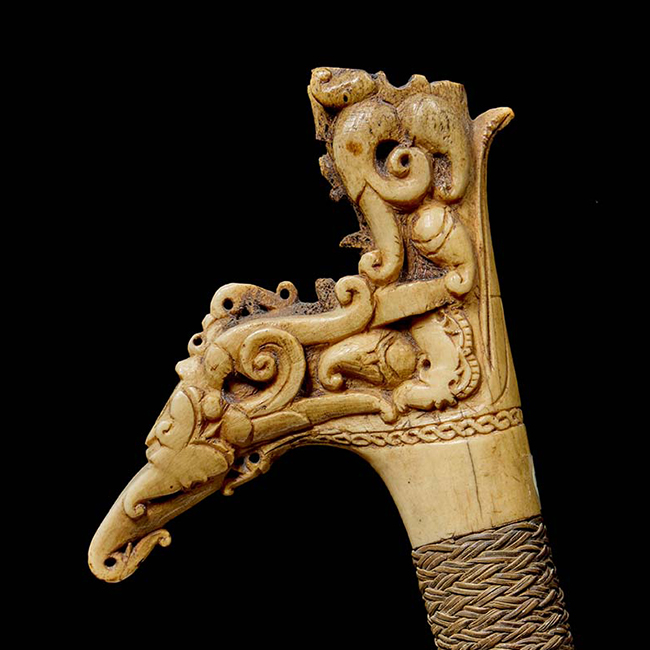
This imposing mandau embodies the seamless fusion of weapon, status object, and cosmological vessel. The elongated hardwood sheath is richly carved in low relief, its surface animated by a powerful, undulating serpentine form that travels the full length of the scabbard. The pale deer antler hilt—finely worked and sharply angled—creates a striking visual contrast, its hooked projection echoing the forward, predatory thrust of the blade itself. Among the Dayak, the taking of a head was not merely an act of warfare, but the highest measure of personal and spiritual achievement. A sheath of this complexity and narrative density would have belonged to a warrior of distinction—likely a leader whose status was earned through success in battle and ritual authority.
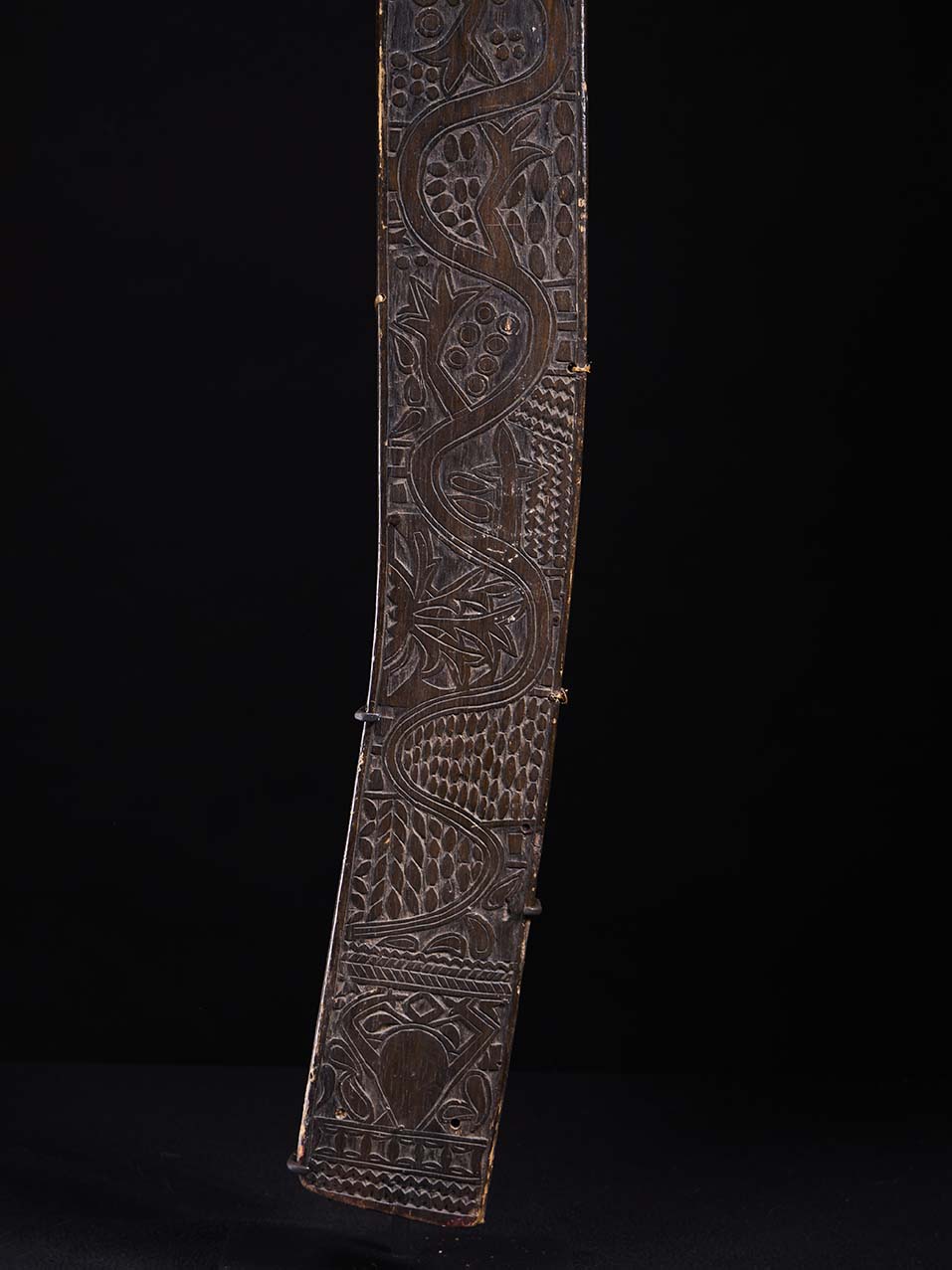
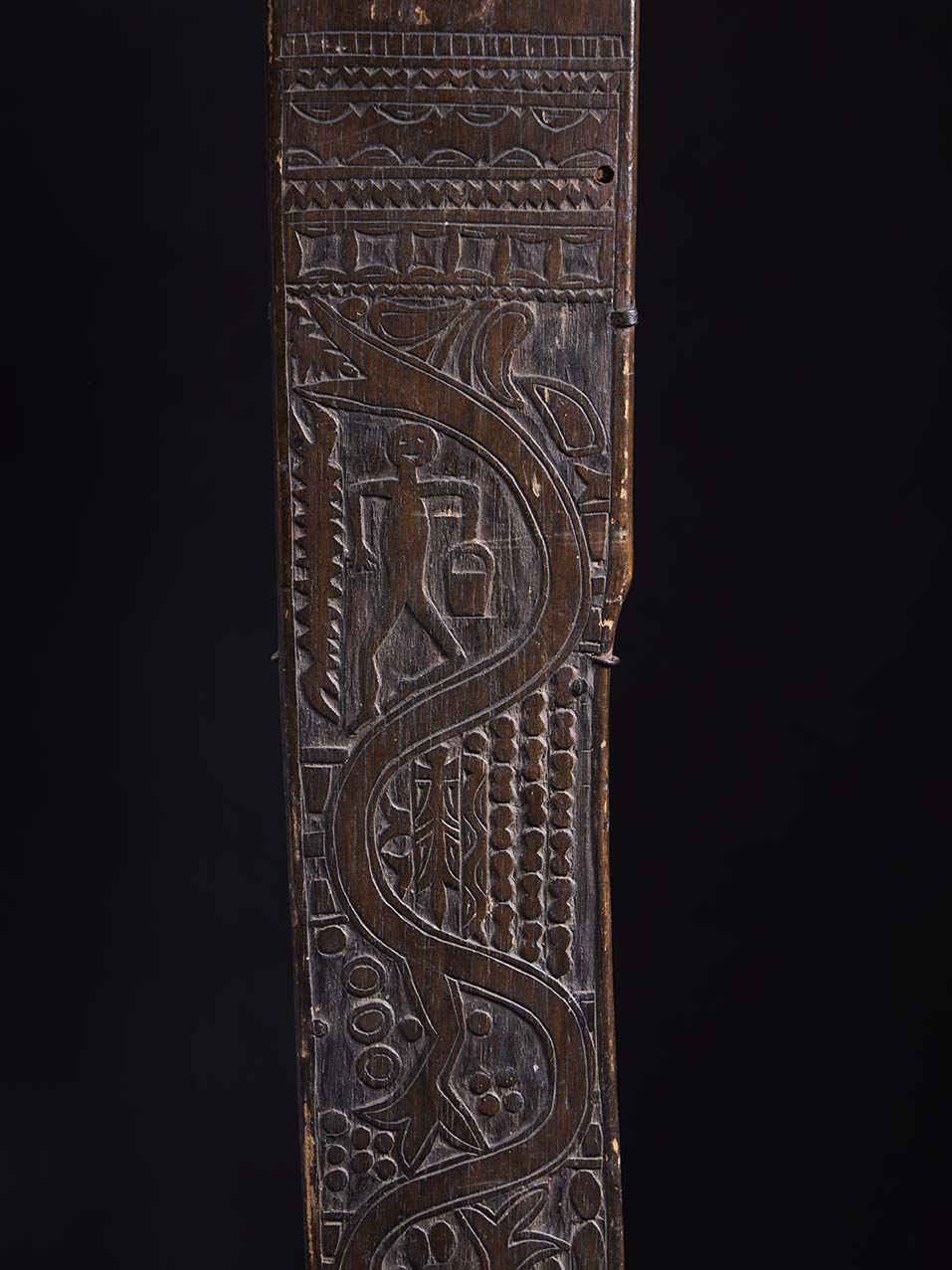
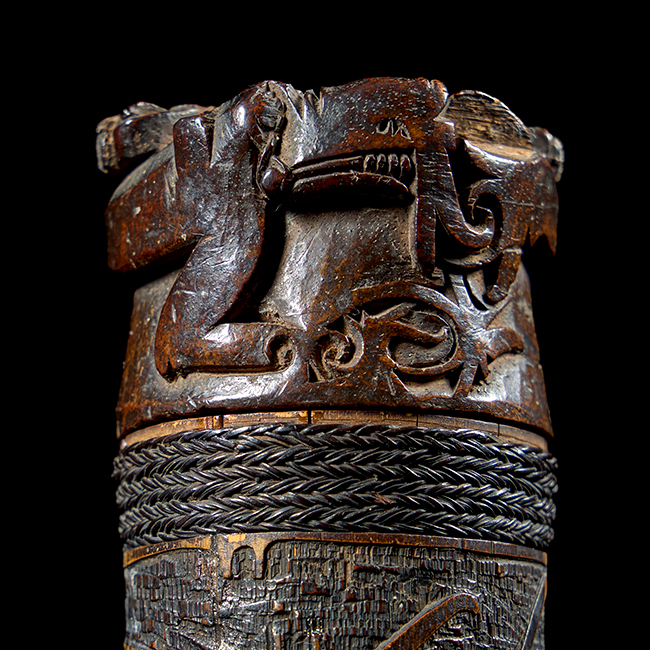
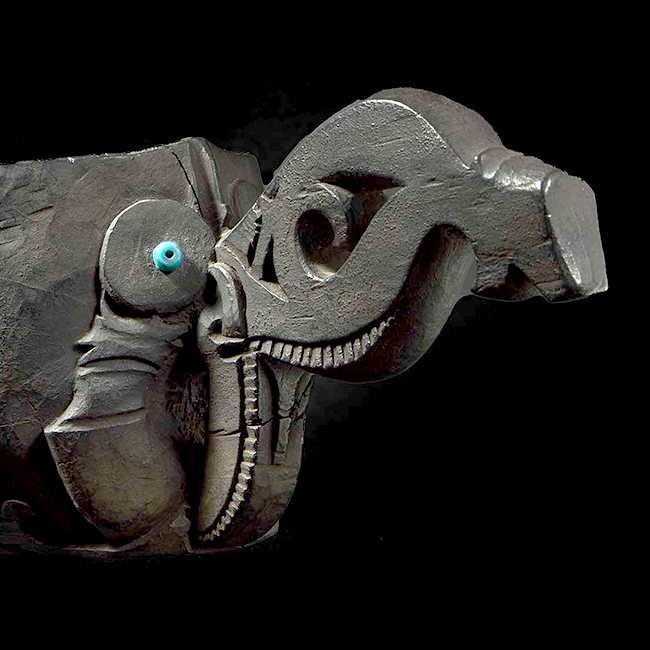
Running along the borders are motifs associated with rice in various stages of growth, evoking fertility, sustenance, and the cyclical renewal of life. Dominating the composition is a monumental underworld serpent, a potent mythic being in Dayak cosmology. This creature functions as both guardian of the land of the dead and agent of regeneration—its sinuous body binding the entire surface into a unified, living field. In myth, such beings must be fed to harness their power; here, the serpent’s open mouth consumes a bird, a vivid expression of sacrifice and transformation.
Leech forms appear throughout the design, subtle but intentional. As creatures that draw blood to survive, they serve as metaphors for sustenance through vitality—mirroring the belief that the mandau itself required the taking of heads to fulfill its spiritual potency. Below the serpent’s head, a small figure carries a basket containing a freshly taken enemy head, making explicit the connection between warfare, ritual practice, and the acquisition of power. The surface bears a deep, lustrous patina, softened through time and handling, with wear along the raised elements that accentuates the carving’s rhythmic interplay of line and form.
Size
Height: 34 inches / 86.4 cm
Item
IN 5-2-26 / Price on request
Gallery

Headhunter’s Sword (Mandau)
Bidayuh Dayak, West Borneo, Indonesia
Early 20th c.
Provenance: Rodger Dashow Collection
This imposing mandau embodies the seamless fusion of weapon, status object, and cosmological vessel. The elongated hardwood sheath is richly carved in low relief, its surface animated by a powerful, undulating serpentine form that travels the full length of the scabbard. The pale deer antler hilt—finely worked and sharply angled—creates a striking visual contrast, its hooked projection echoing the forward, predatory thrust of the blade itself. Among the Dayak, the taking of a head was not merely an act of warfare, but the highest measure of personal and spiritual achievement. A sheath of this complexity and narrative density would have belonged to a warrior of distinction—likely a leader whose status was earned through success in battle and ritual authority.
Running along the borders are motifs associated with rice in various stages of growth, evoking fertility, sustenance, and the cyclical renewal of life. Dominating the composition is a monumental underworld serpent, a potent mythic being in Dayak cosmology. This creature functions as both guardian of the land of the dead and agent of regeneration—its sinuous body binding the entire surface into a unified, living field. In myth, such beings must be fed to harness their power; here, the serpent’s open mouth consumes a bird, a vivid expression of sacrifice and transformation.
Leech forms appear throughout the design, subtle but intentional. As creatures that draw blood to survive, they serve as metaphors for sustenance through vitality—mirroring the belief that the mandau itself required the taking of heads to fulfill its spiritual potency. Below the serpent’s head, a small figure carries a basket containing a freshly taken enemy head, making explicit the connection between warfare, ritual practice, and the acquisition of power. The surface bears a deep, lustrous patina, softened through time and handling, with wear along the raised elements that accentuates the carving’s rhythmic interplay of line and form.
Size
Height: 34 inches / 86.4 cm
Item
IN 5-2-26 / Price on request
Gallery