



Figural Terracotta Vessel
Benin Kingdom, Nigeria
19th–early 20th c.
Terracotta
Provenance: Eric Robertson, NYC
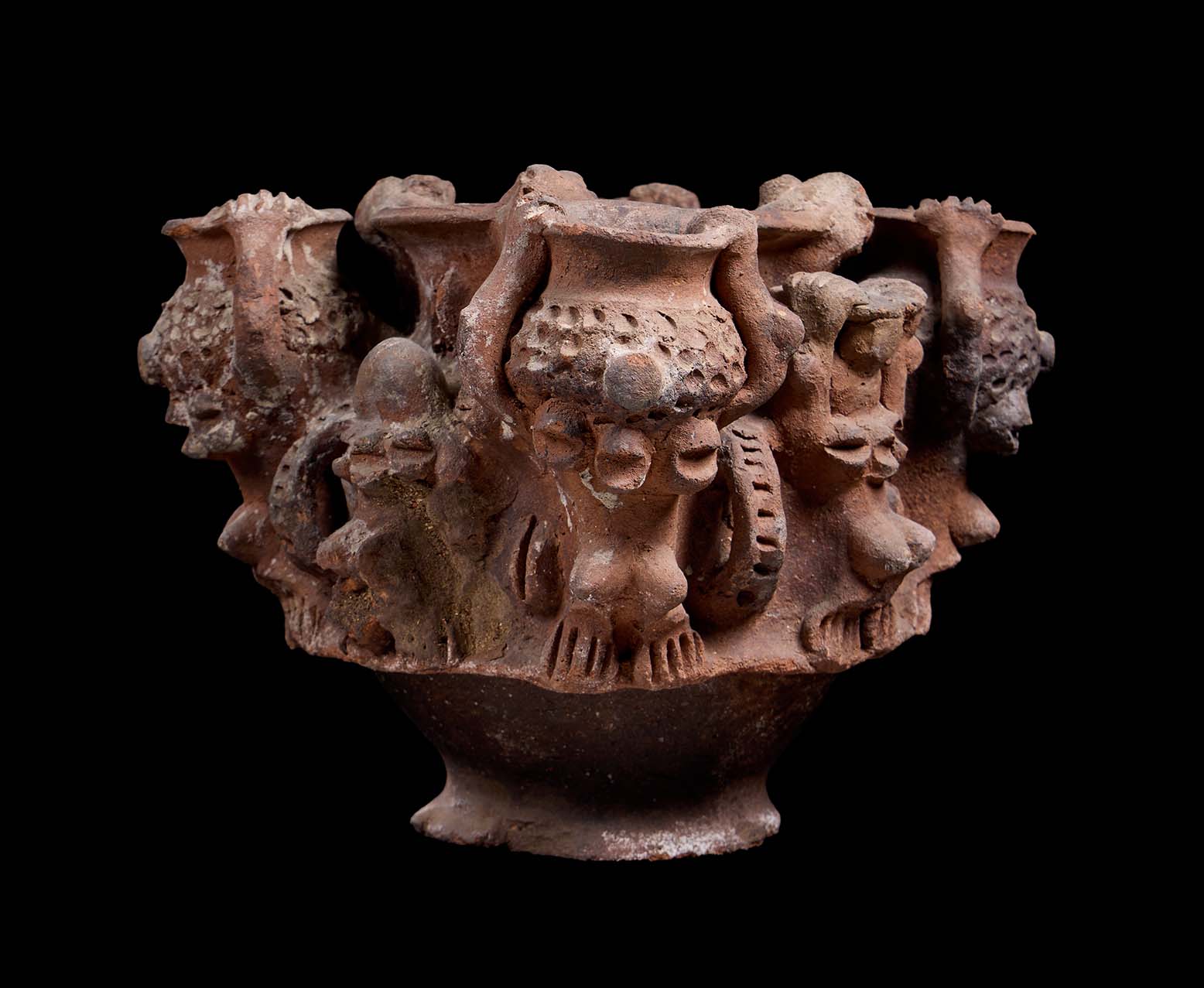
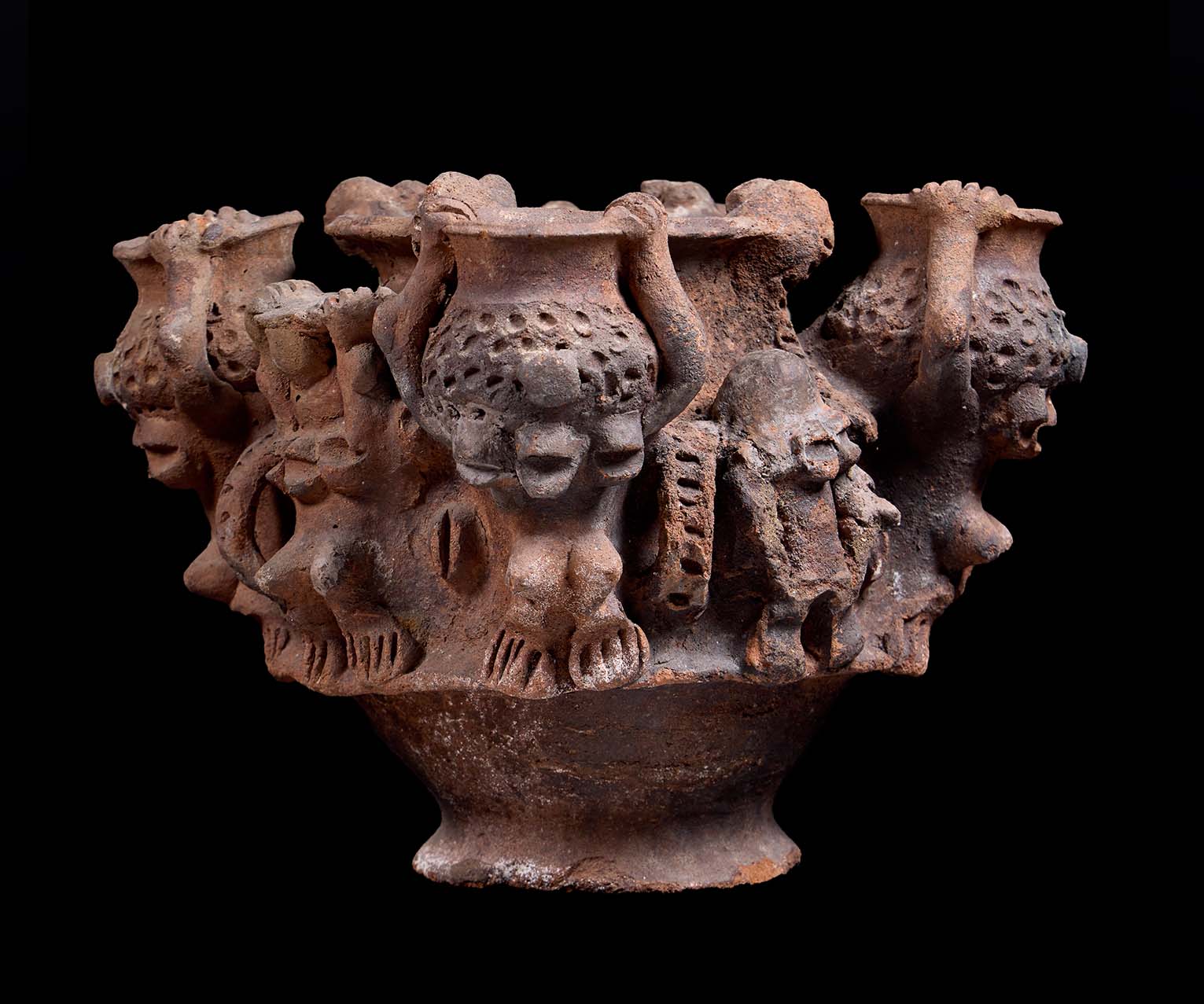
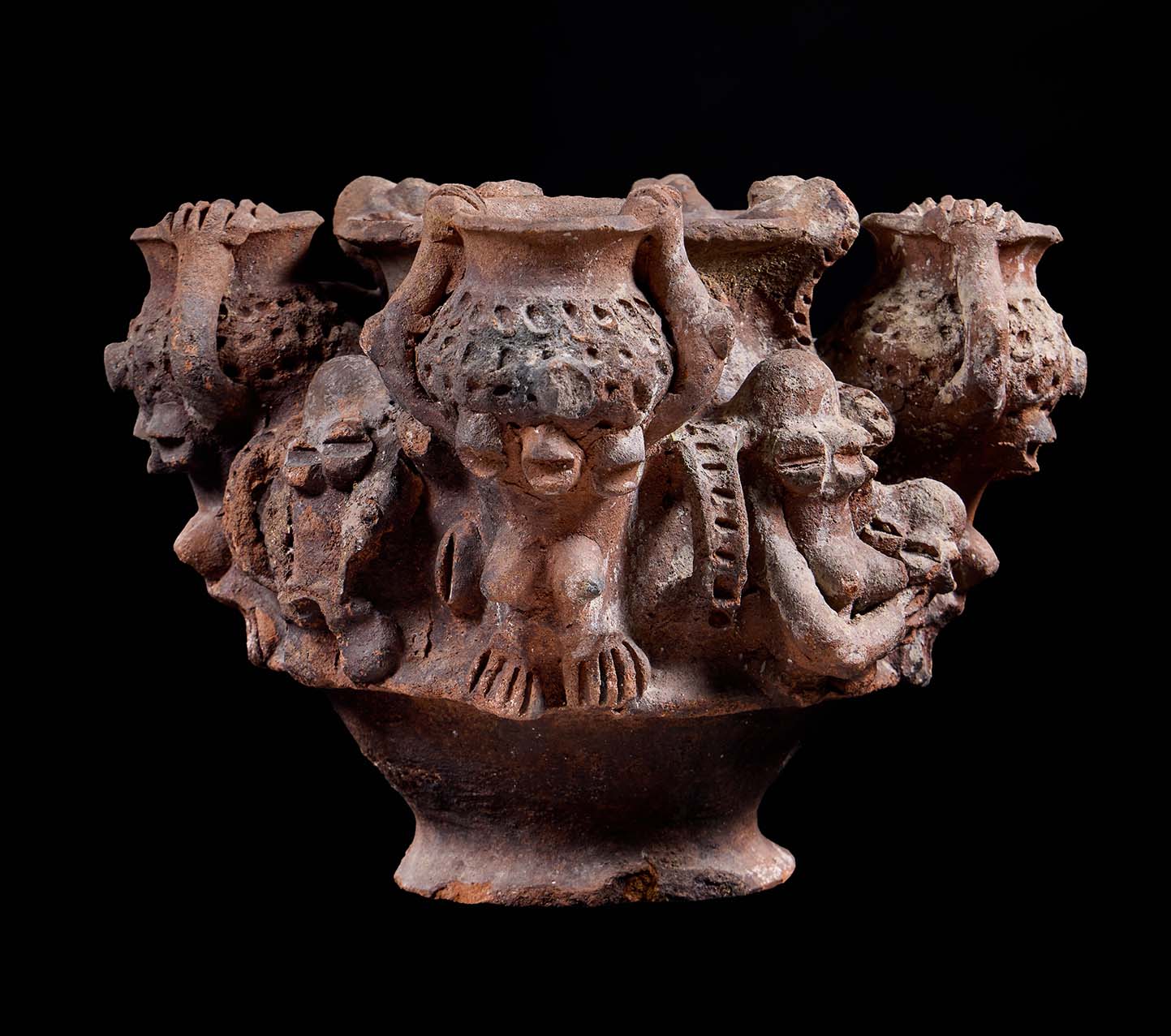
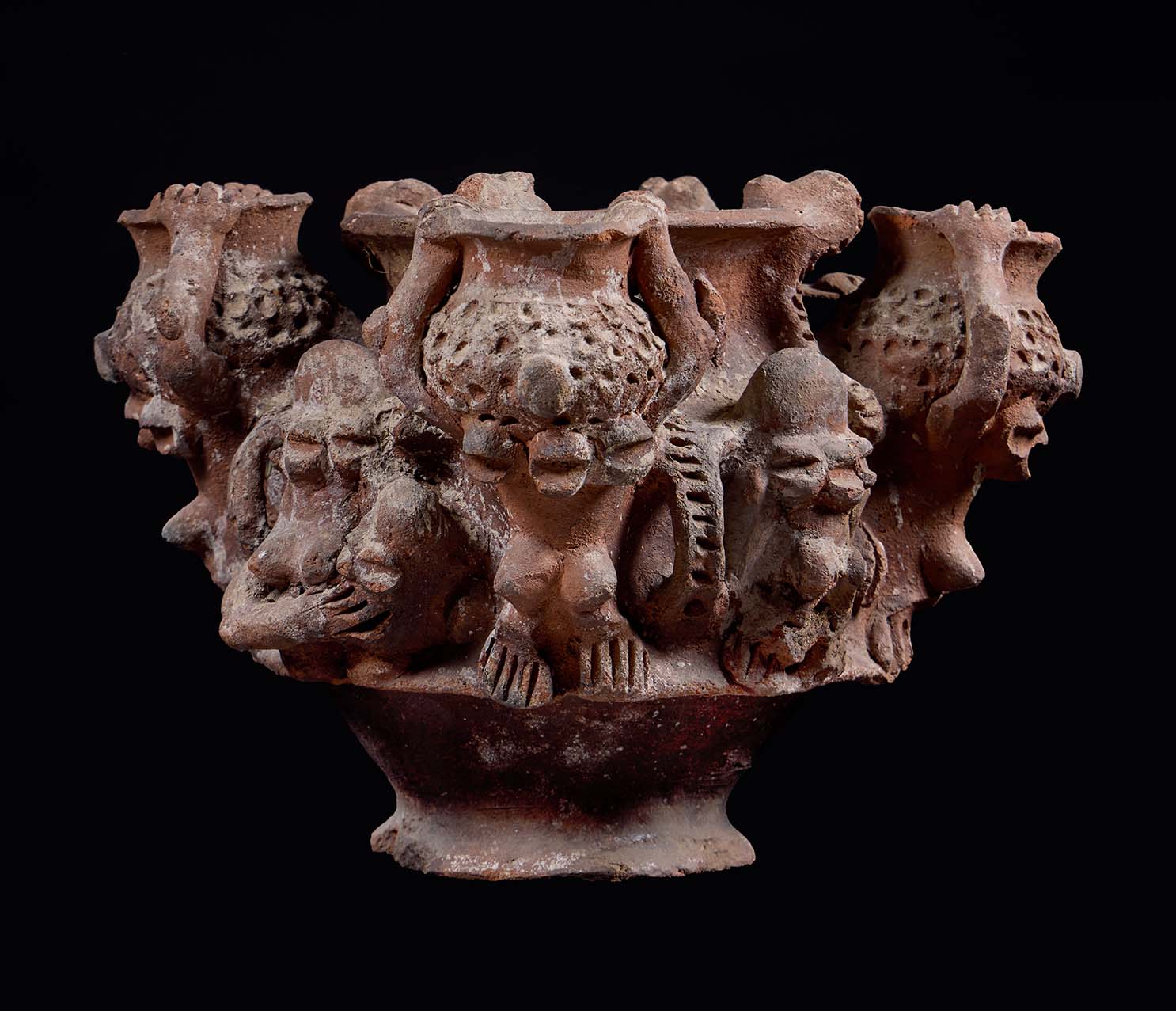
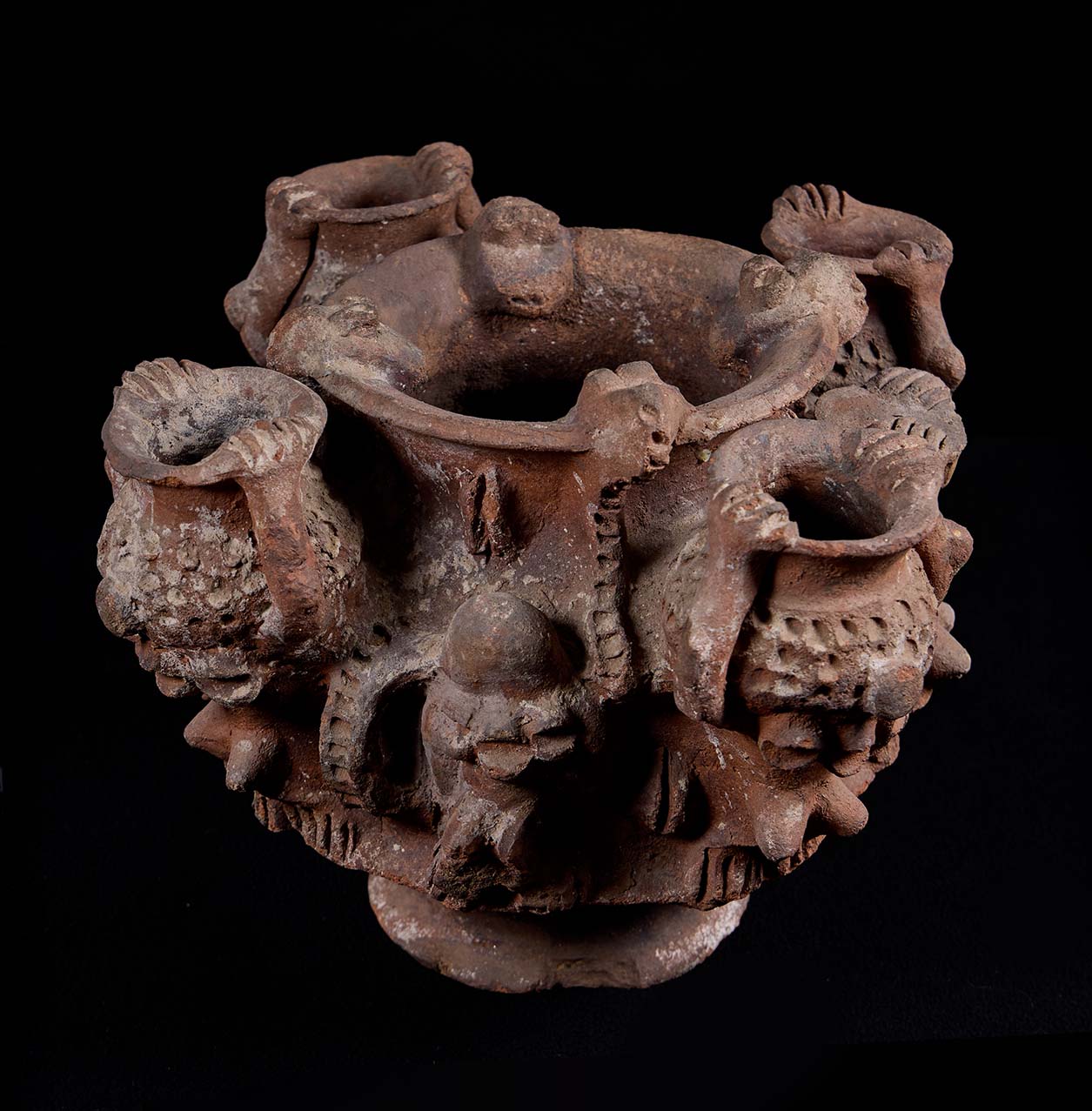
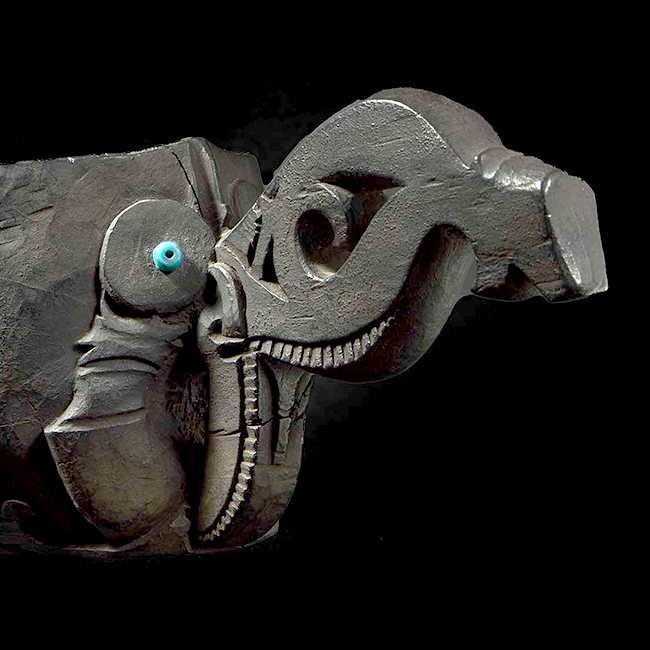
This striking Benin terracotta vessel transforms a utilitarian form into a densely animated sculptural tableau. The circular body rises from a flared foot into a wide, open mouth, but its surface is anything but plain. Encircling the vessel is a continuous band of modeled figures—human forms rendered in high relief, each supporting or framed by smaller pot-like elements that project outward from the rim. The figures are compact and rhythmic, their heads enlarged, limbs abbreviated, and features stylized into bold, legible forms. Repeated textures—stippling, incised lines, and patterned coiffures—create a lively surface that catches light across the warm, earthen patina. The composition is both architectural and organic, as the figures merge into the structure of the pot, blurring the boundary between vessel and sculpture.
Such vessels were likely made for ritual or ceremonial use, rather than everyday domestic function. In the Benin Kingdom, terracotta objects often played roles in shrine contexts, where they could serve as containers for offerings, medicines, or symbolic substances tied to ancestral veneration and spiritual practice. The surrounding figures may represent attendants, devotees, or ancestral presences.
Height: 8 in / 20.3 cm

Figural Terracotta Vessel
Benin Kingdom, Nigeria
19th–early 20th c.
Terracotta
Provenance: Eric Robertson, NYC
This striking Benin terracotta vessel transforms a utilitarian form into a densely animated sculptural tableau. The circular body rises from a flared foot into a wide, open mouth, but its surface is anything but plain. Encircling the vessel is a continuous band of modeled figures—human forms rendered in high relief, each supporting or framed by smaller pot-like elements that project outward from the rim. The figures are compact and rhythmic, their heads enlarged, limbs abbreviated, and features stylized into bold, legible forms. Repeated textures—stippling, incised lines, and patterned coiffures—create a lively surface that catches light across the warm, earthen patina. The composition is both architectural and organic, as the figures merge into the structure of the pot, blurring the boundary between vessel and sculpture.
Such vessels were likely made for ritual or ceremonial use, rather than everyday domestic function. In the Benin Kingdom, terracotta objects often played roles in shrine contexts, where they could serve as containers for offerings, medicines, or symbolic substances tied to ancestral veneration and spiritual practice. The surrounding figures may represent attendants, devotees, or ancestral presences.
Height: 8 in / 20.3 cm