


Shrine Figure
Baule, Ivory Coast
19th-early 20th c.
Provenance: Roy Sieber collection, Bloomington, IN
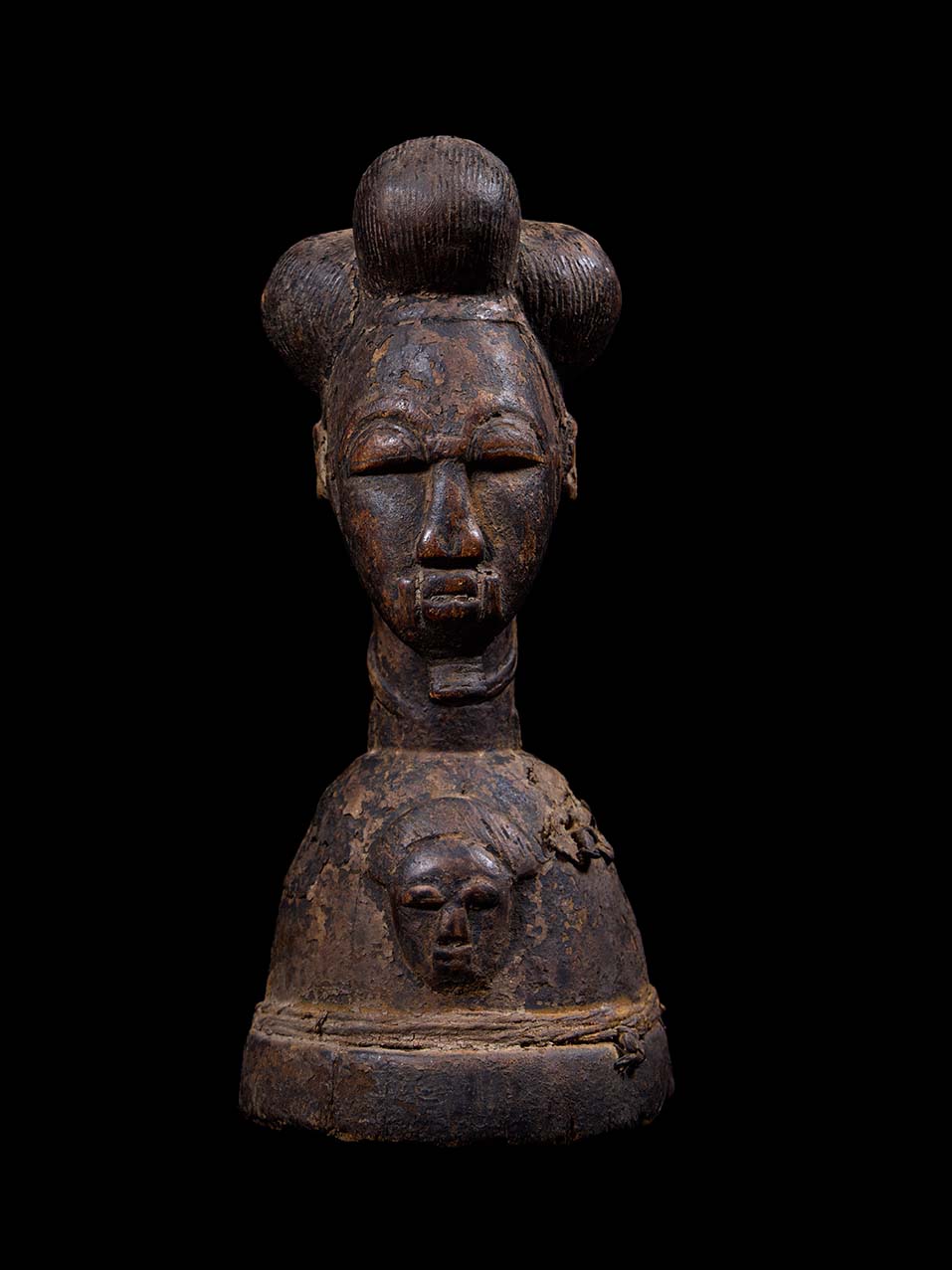
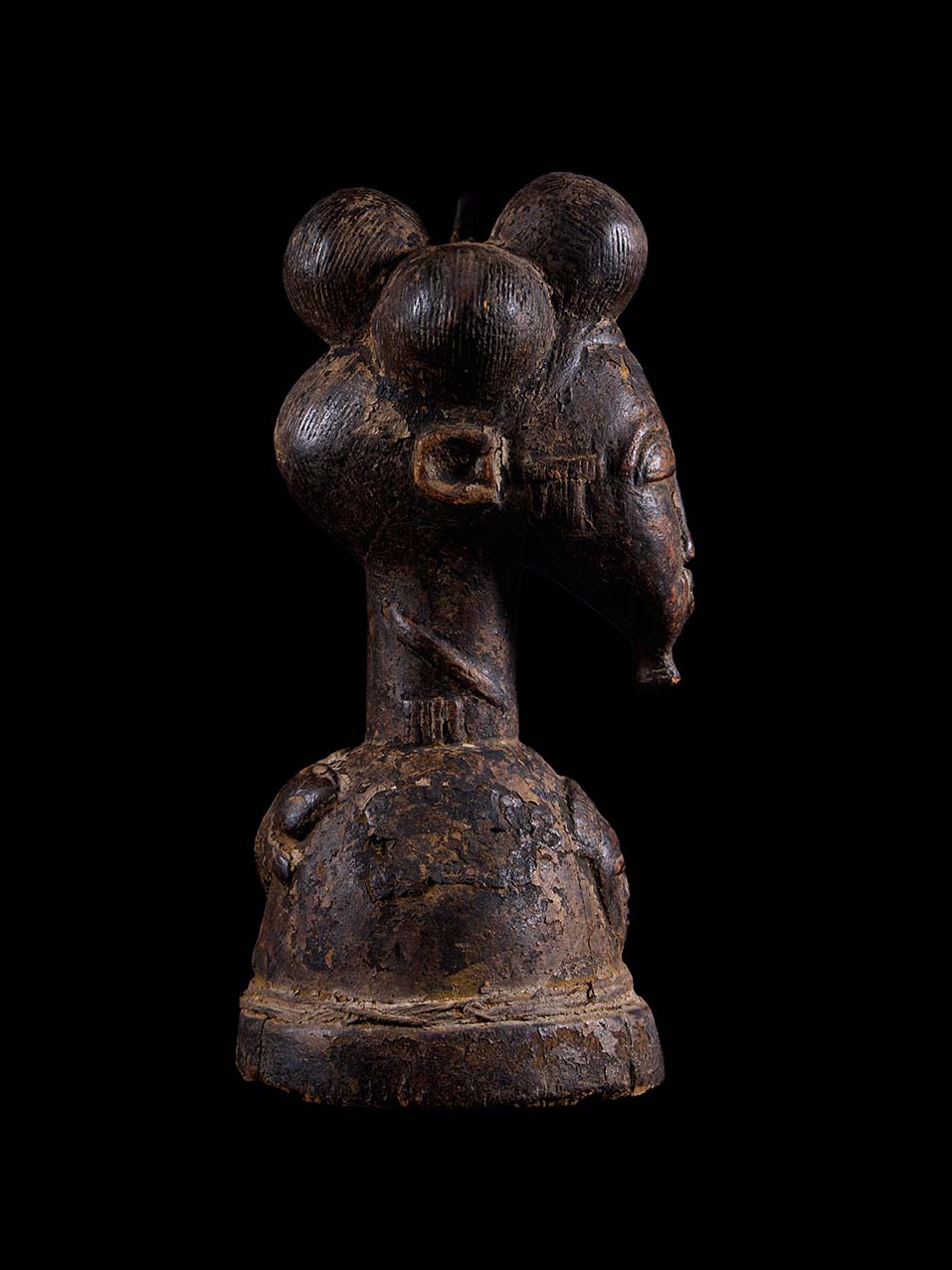
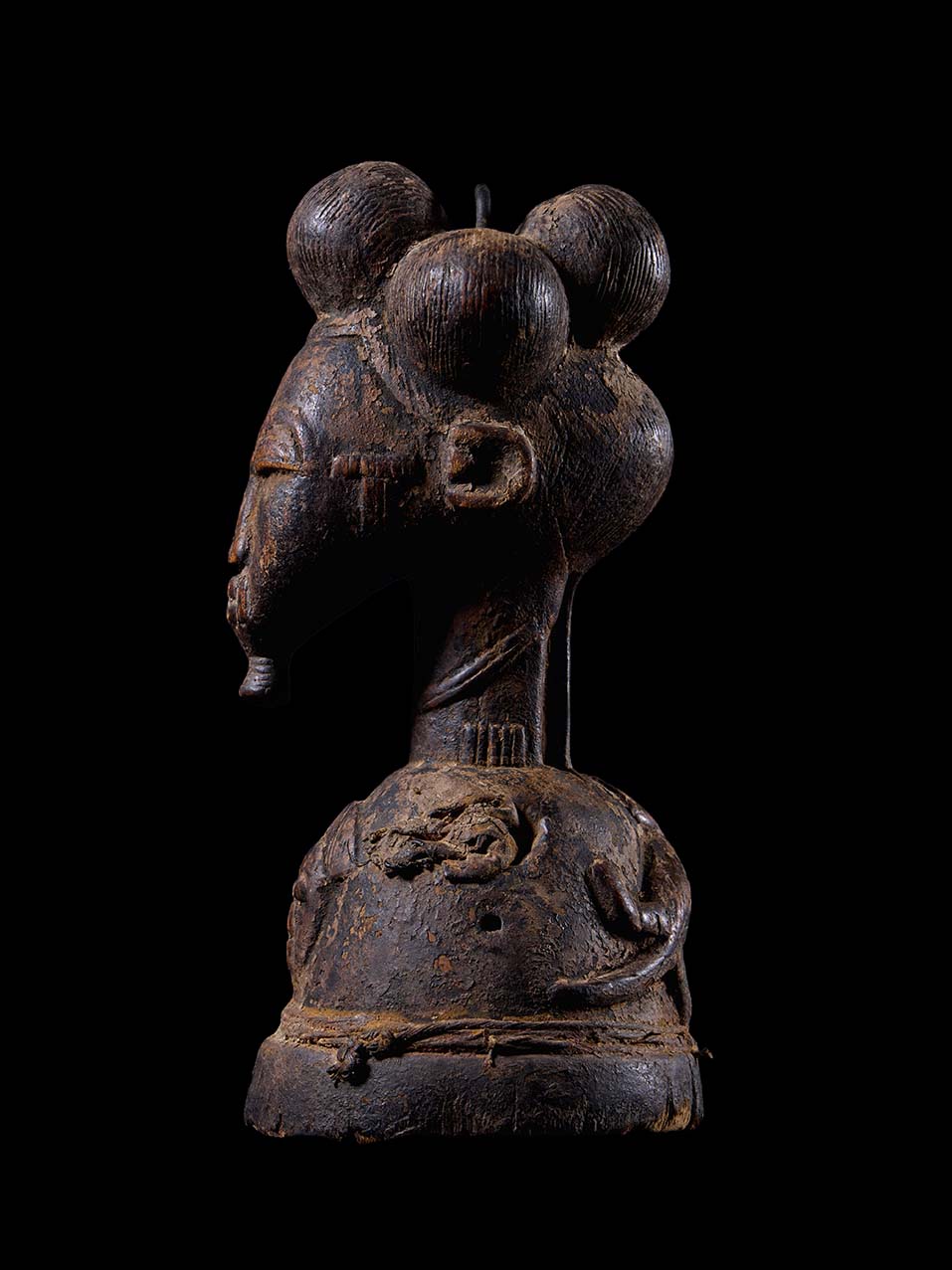
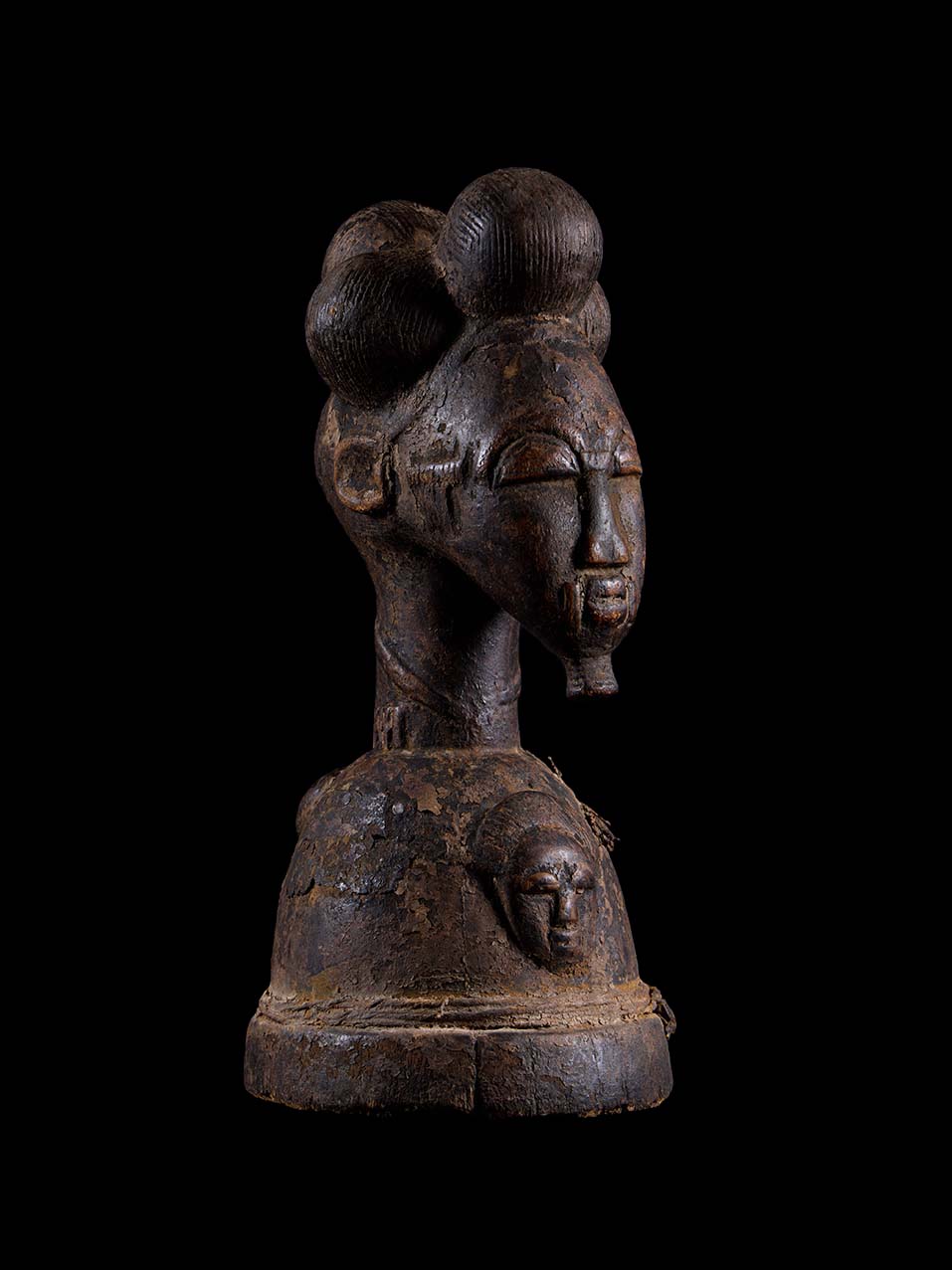
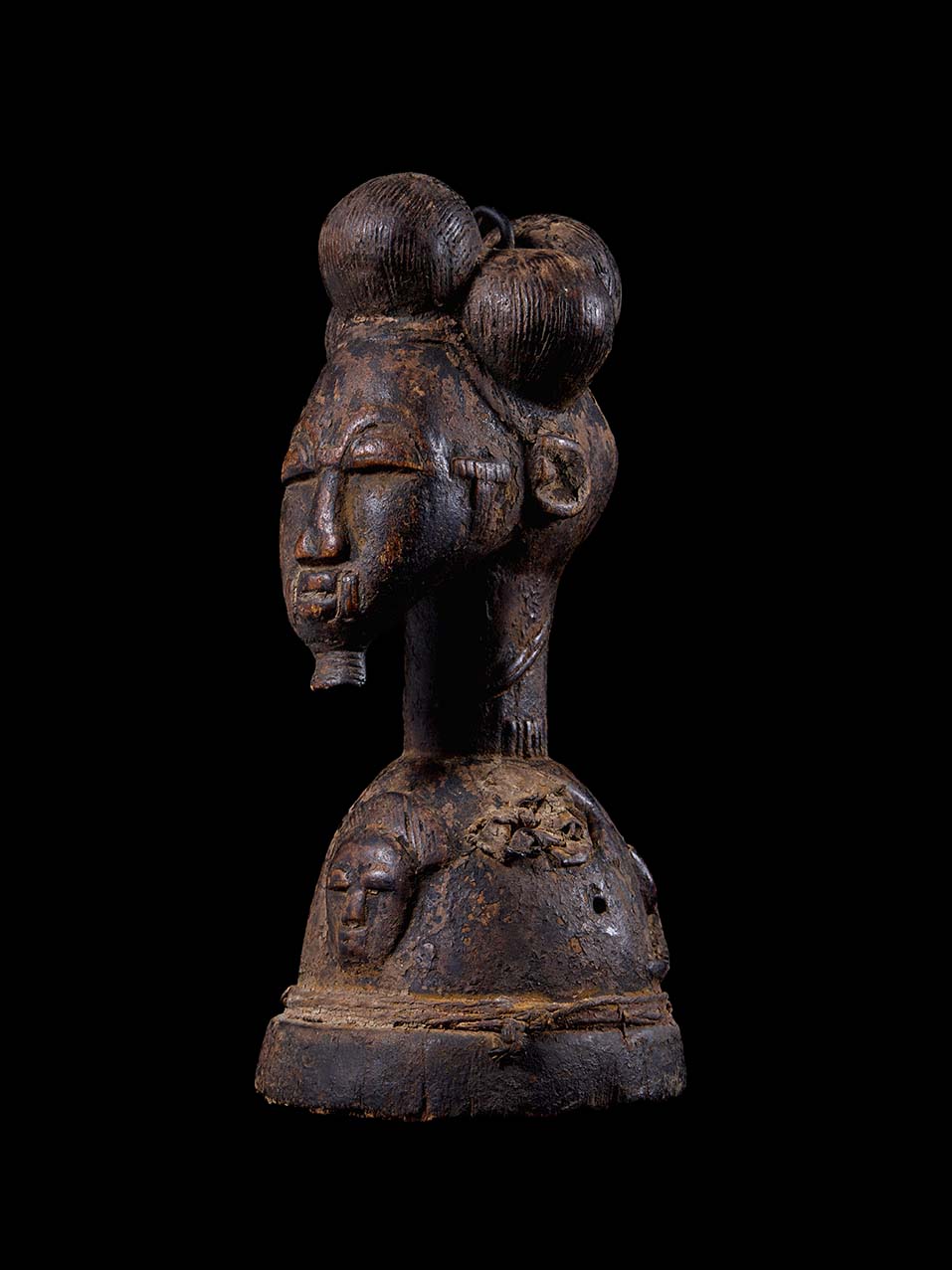
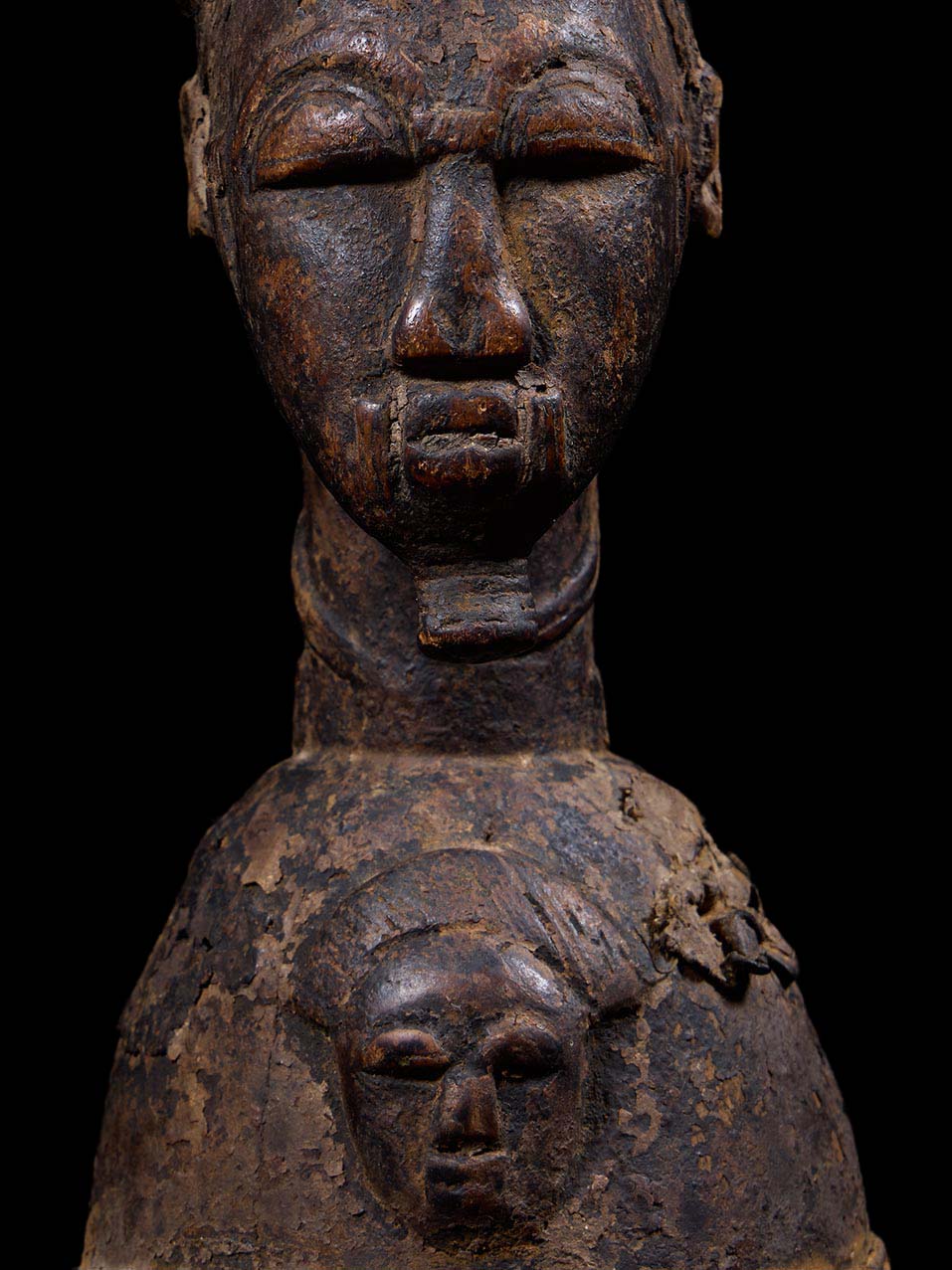
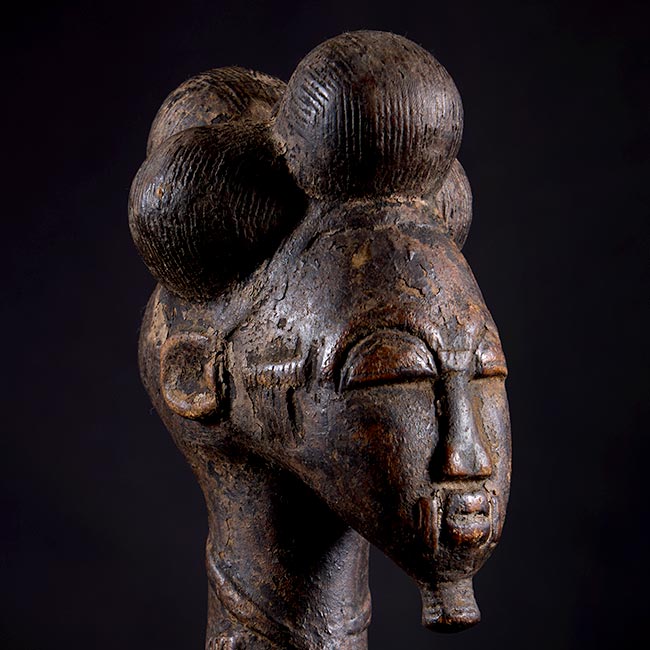
This Asye Usu shrine figure from the Baule people of Côte d’Ivoire serves as a ritual vessel for powerful nature spirits. Unlike household figures, this is a “working” object used by a diviner (komien); its thick, crusty patina is the result of years of sacrificial offerings like palm wine and egg, intended to appease the unpredictable spirits of the wild. To entice these chaotic spirits to inhabit the wood and aid the community, the artist has carved an idealized human form featuring a refined, multi-lobed coiffure, an elongated neck signaling health, and downcast eyes representing nini, or inner calm.
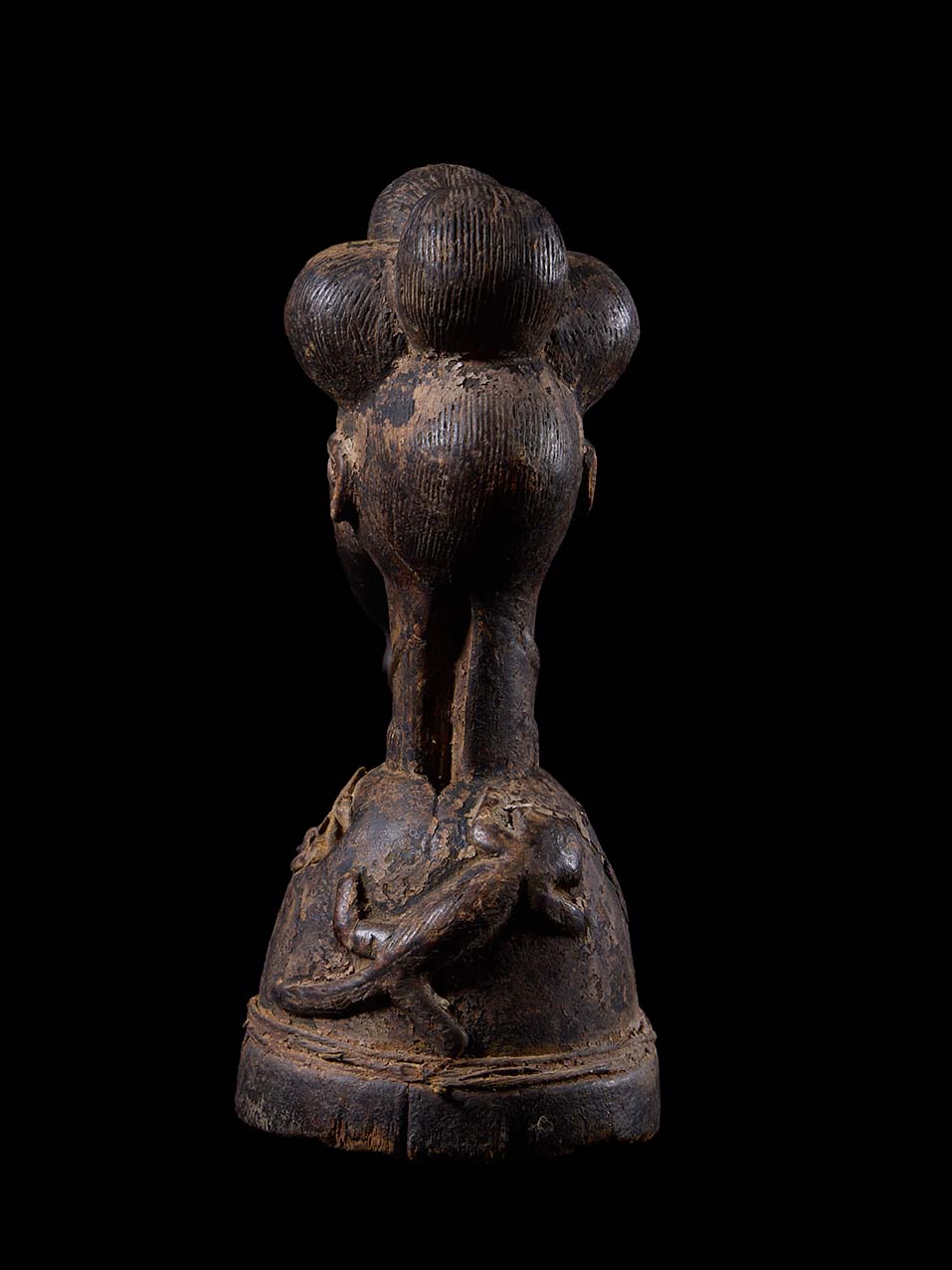
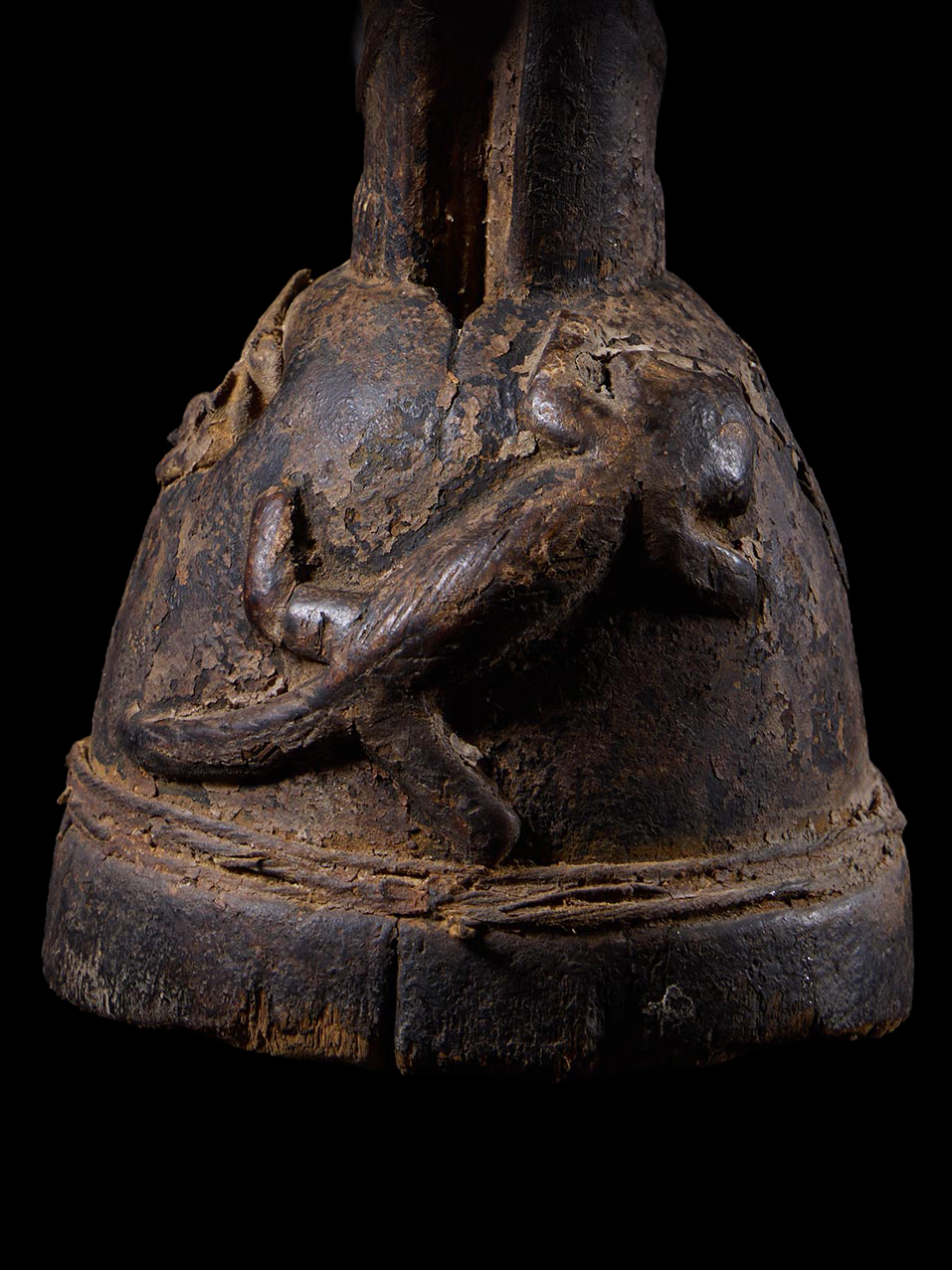
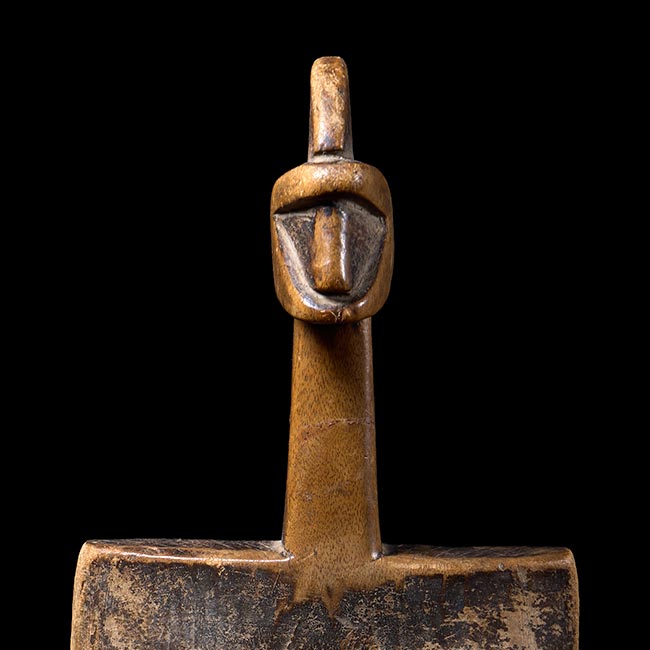
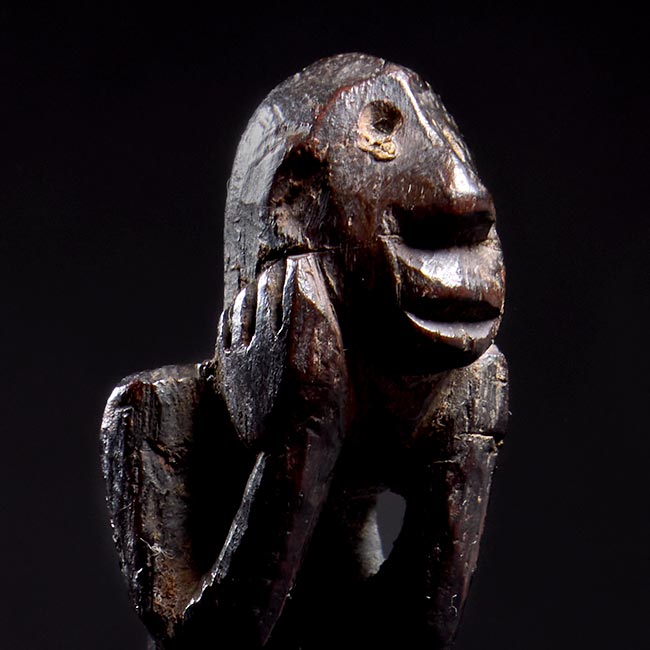
A distinctive highlight of this piece is the small mask-like face and lizard carved in relief on the base. This secondary face—likely a reference to a Mblo portrait mask—symbolically “tames” the wild spirit by grounding it in human culture and artistic refinement. Together with the lizard, which represents the spirit’s origin in the “bush,” these motifs create a bridge between the human village and the supernatural realm.
Size
Height: 11 ¼ in / 28.6 cm
Item
IN 4-4-26 / Price on request
Gallery
Shrine Figure
Baule, Ivory Coast
19th-early 20th c.
Provenance: Roy Sieber collection, Bloomington, IN
This Asye Usu shrine figure from the Baule people of Côte d’Ivoire serves as a ritual vessel for powerful nature spirits. Unlike household figures, this is a “working” object used by a diviner (komien); its thick, crusty patina is the result of years of sacrificial offerings like palm wine and egg, intended to appease the unpredictable spirits of the wild. To entice these chaotic spirits to inhabit the wood and aid the community, the artist has carved an idealized human form featuring a refined, multi-lobed coiffure, an elongated neck signaling health, and downcast eyes representing nini, or inner calm.
A distinctive highlight of this piece is the small mask-like face and lizard carved in relief on the base. This secondary face—likely a reference to a Mblo portrait mask—symbolically “tames” the wild spirit by grounding it in human culture and artistic refinement. Together with the lizard, which represents the spirit’s origin in the “bush,” these motifs create a bridge between the human village and the supernatural realm.
Size
Height: 11 ¼ in / 28.6 cm
Item
IN 4-4-26 / Price on request
Gallery