


Granary Door
Toraja, Sulawesi, Indonesia
19th c.
Provenance: Old American collection
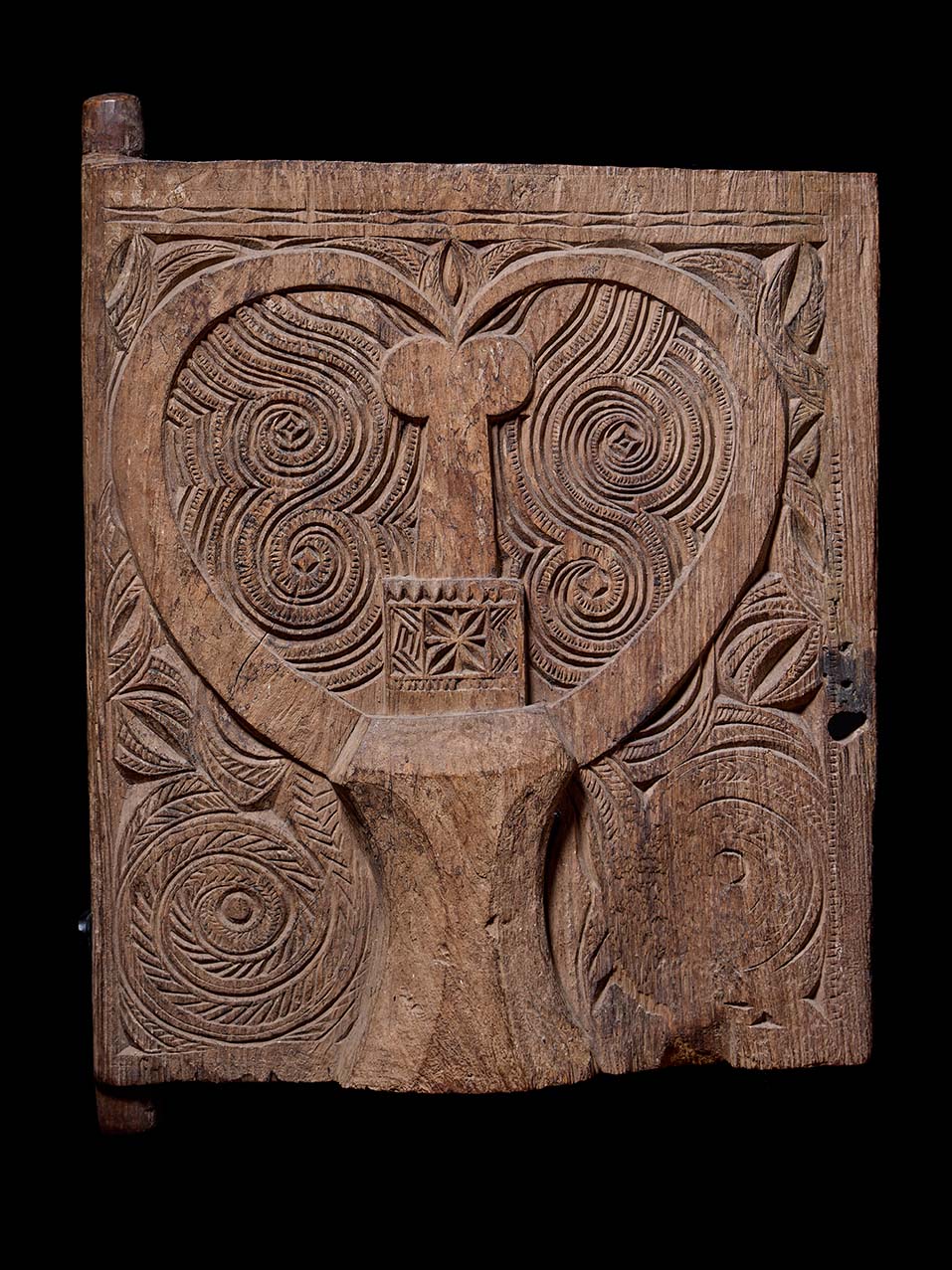
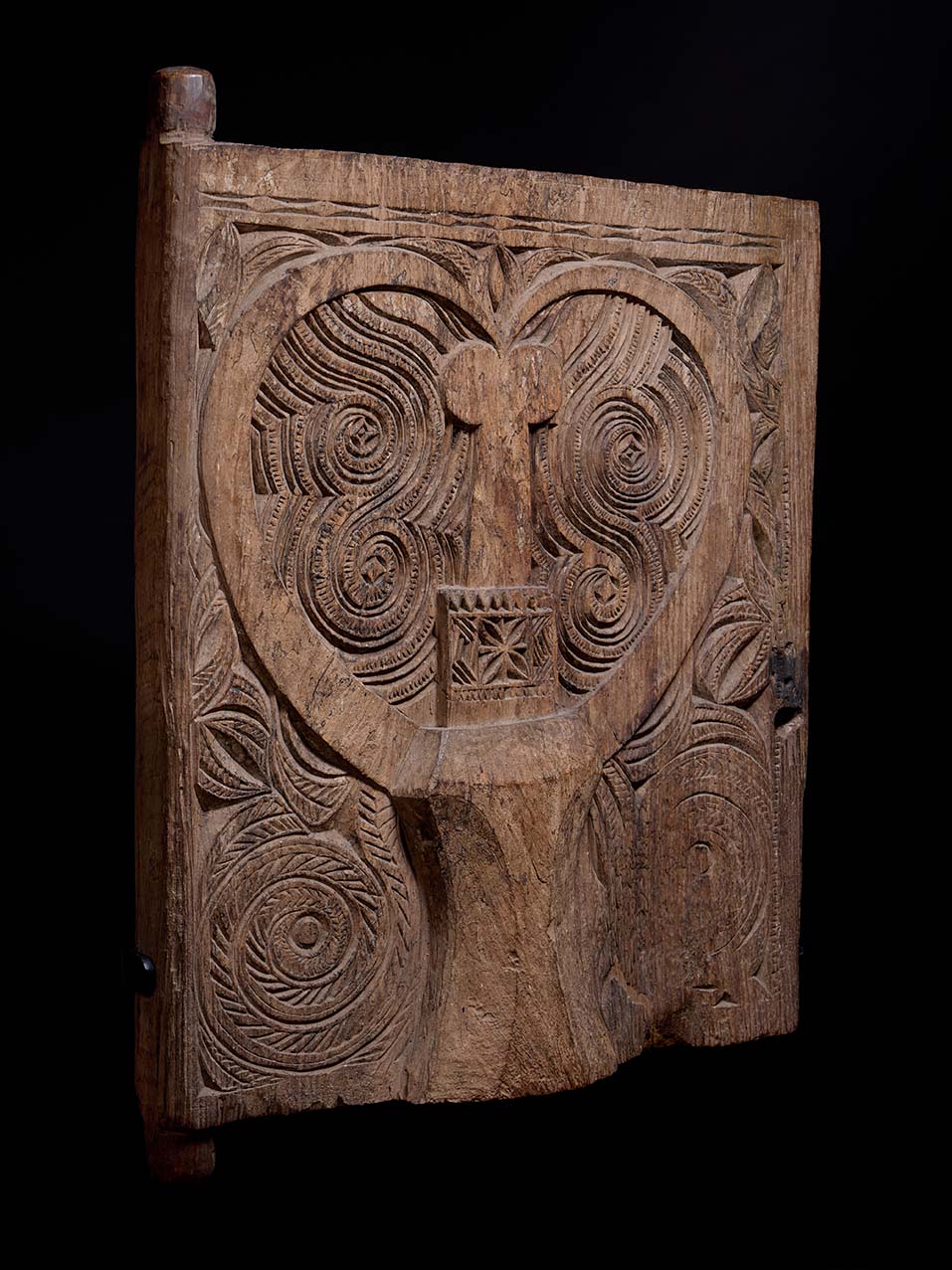
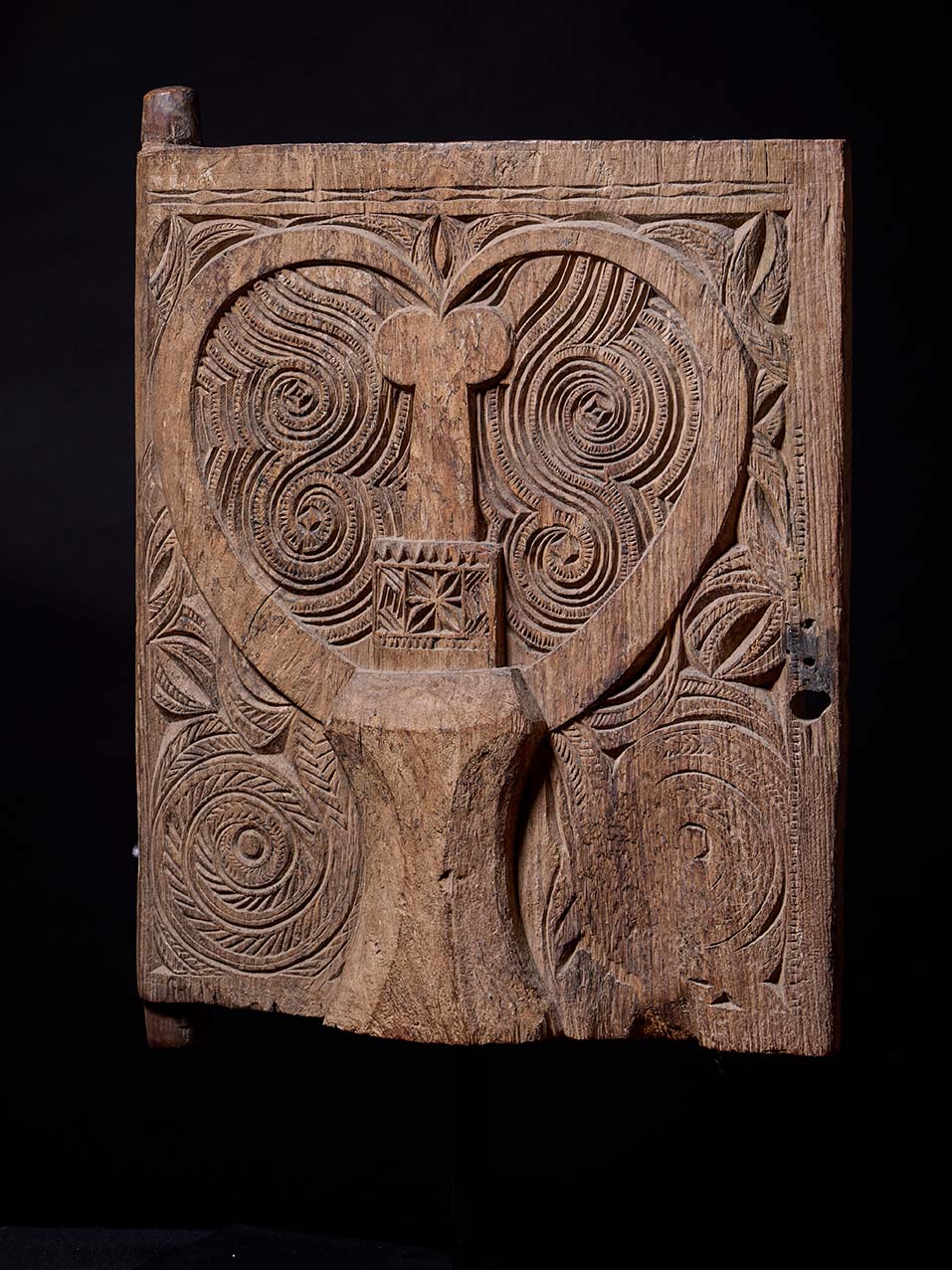
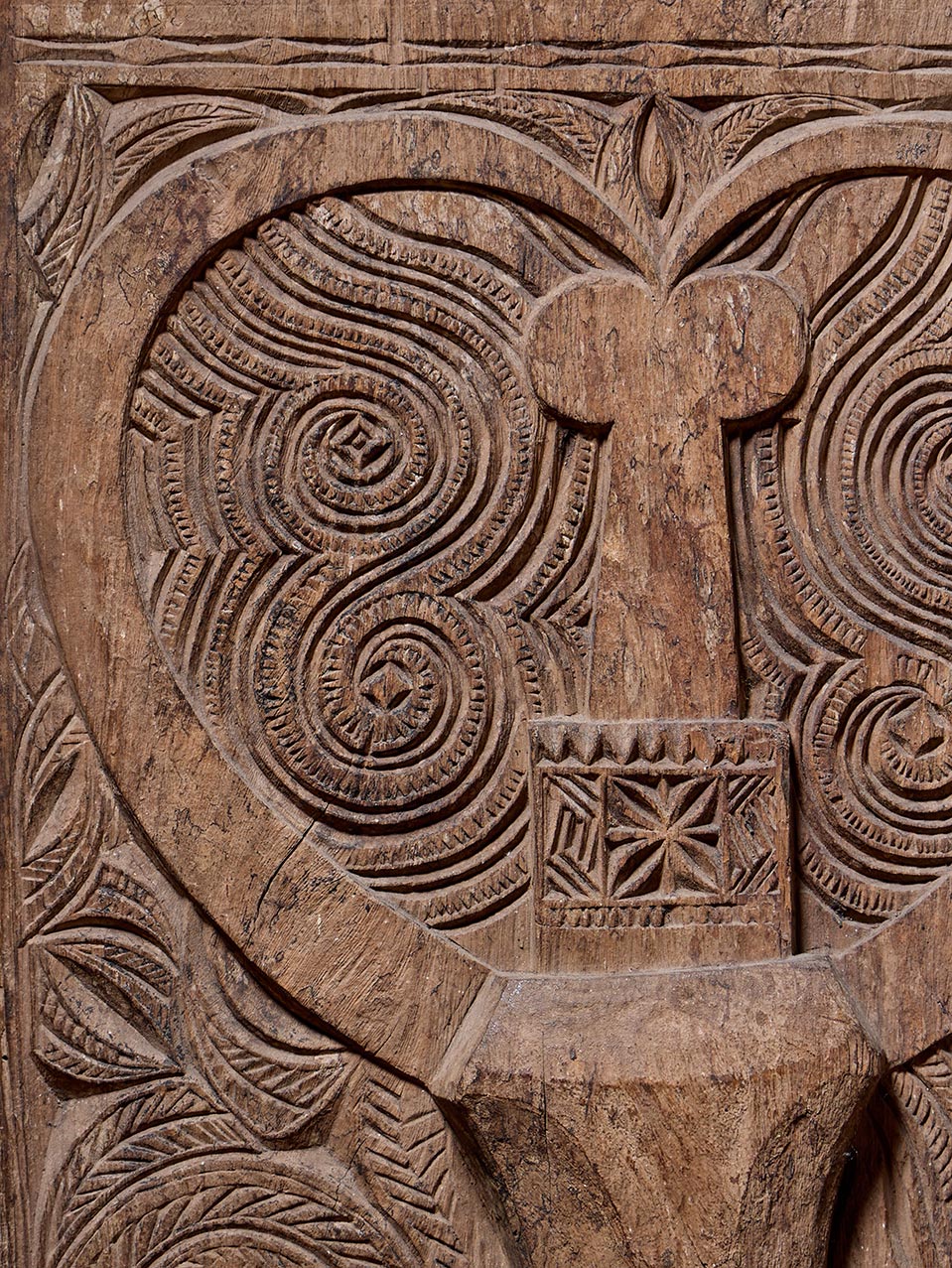
The Toraja of Sulawesi are masters of graphic carving, and this granary door is a powerful example of their visual language. The design is dominated by a stylized buffalo head whose sweeping horns frame a dense field of spirals and flowing geometric motifs. These swirling patterns—common in Toraja carving—suggest vitality, movement, and abundance, echoing the life-giving role of the rice stored behind the door.
At the center sits a small architectural element that anchors the composition, while the horns create a bold, heart-shaped silhouette that pulls the eye inward. The water-like spirals radiate outwards, creating a hypnotic rhythm across the surface.
The buffalo is among the most important symbols in Toraja culture. It represents wealth, status, and spiritual power. Buffalo are central to ceremonial life, particularly funeral rituals, where they serve as the ultimate expression of prestige and connection between the living and the ancestral world. Here, the buffalo motif becomes both guardian and emblem of prosperity for the household’s stored rice.
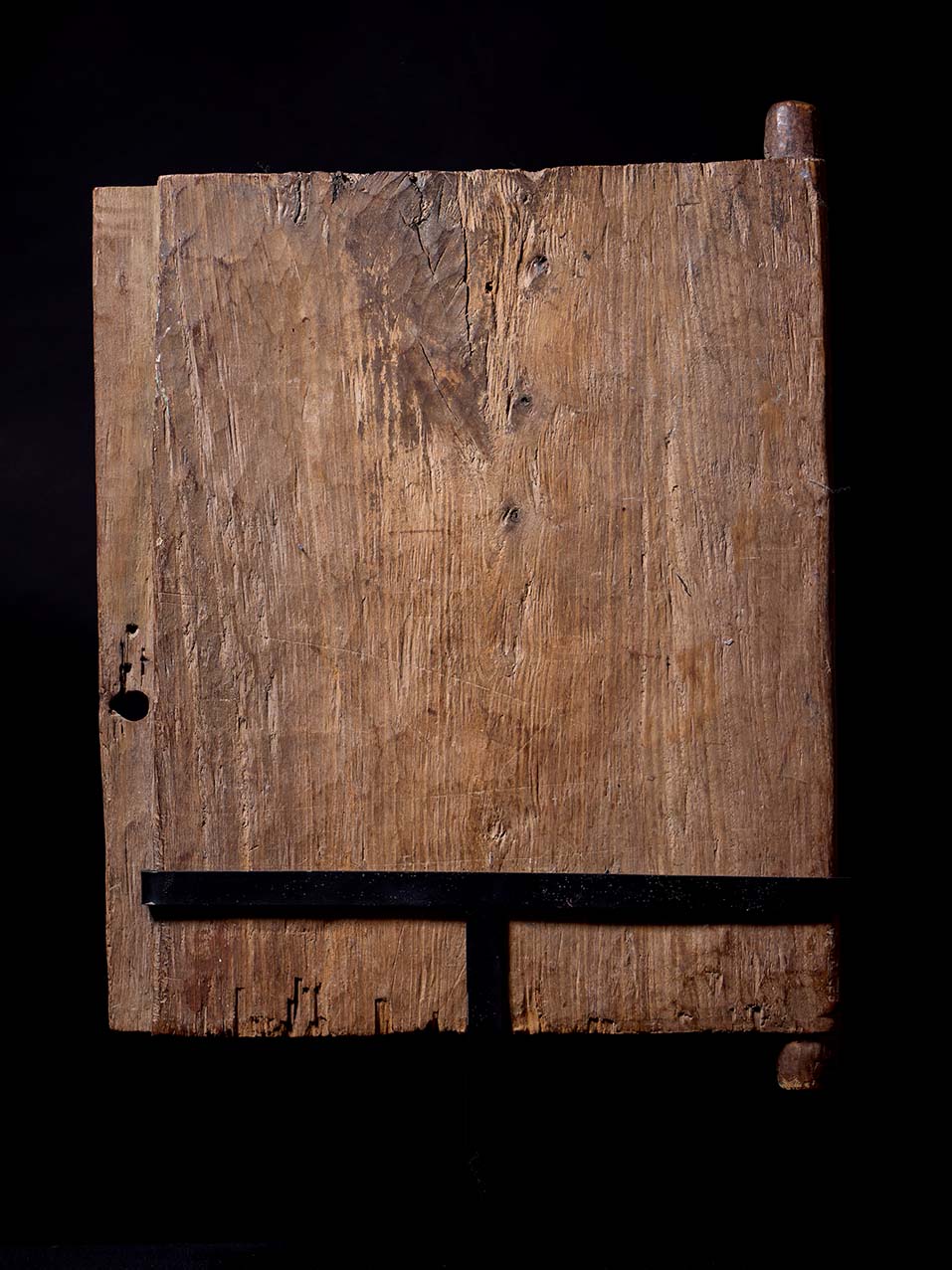
One of my favorite aspects of this piece is the wear along the lower edge. Over many years—likely generations—the door was opened and closed countless times. That repeated movement gradually softened and rounded the bottom area, creating a subtle erosion in the wood. It’s a quiet but powerful record of use, a reminder that this object was not simply decorative but part of daily life. Patina and wear like this tells a story you cannot replicate.
Granary Door
Toraja, Sulawesi, Indonesia
19th c.
Provenance: Old American collection
The Toraja of Sulawesi are masters of graphic carving, and this granary door is a powerful example of their visual language. The design is dominated by a stylized buffalo head whose sweeping horns frame a dense field of spirals and flowing geometric motifs. These swirling patterns—common in Toraja carving—suggest vitality, movement, and abundance, echoing the life-giving role of the rice stored behind the door.
At the center sits a small architectural element that anchors the composition, while the horns create a bold, heart-shaped silhouette that pulls the eye inward. The water-like spirals radiate outwards, creating a hypnotic rhythm across the surface.
The buffalo is among the most important symbols in Toraja culture. It represents wealth, status, and spiritual power. Buffalo are central to ceremonial life, particularly funeral rituals, where they serve as the ultimate expression of prestige and connection between the living and the ancestral world. Here, the buffalo motif becomes both guardian and emblem of prosperity for the household’s stored rice.
One of my favorite aspects of this piece is the wear along the lower edge. Over many years—likely generations—the door was opened and closed countless times. That repeated movement gradually softened and rounded the bottom area, creating a subtle erosion in the wood. It’s a quiet but powerful record of use, a reminder that this object was not simply decorative but part of daily life. Patina and wear like this tells a story you cannot replicate.