



Chi Wara Headdress
Bamana (Bambara), Mali
Early–mid 20th century
Wood, fiber, beads
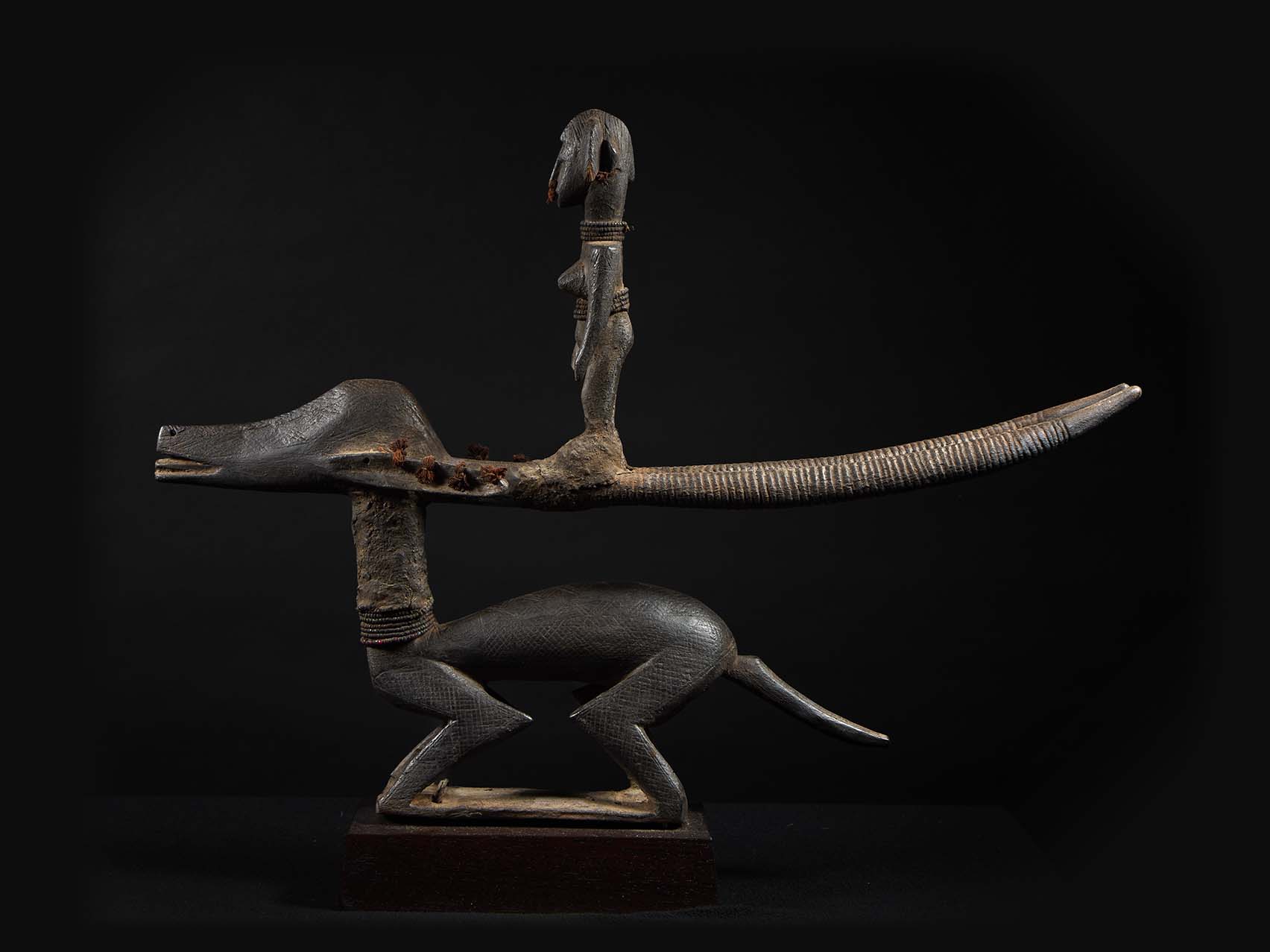
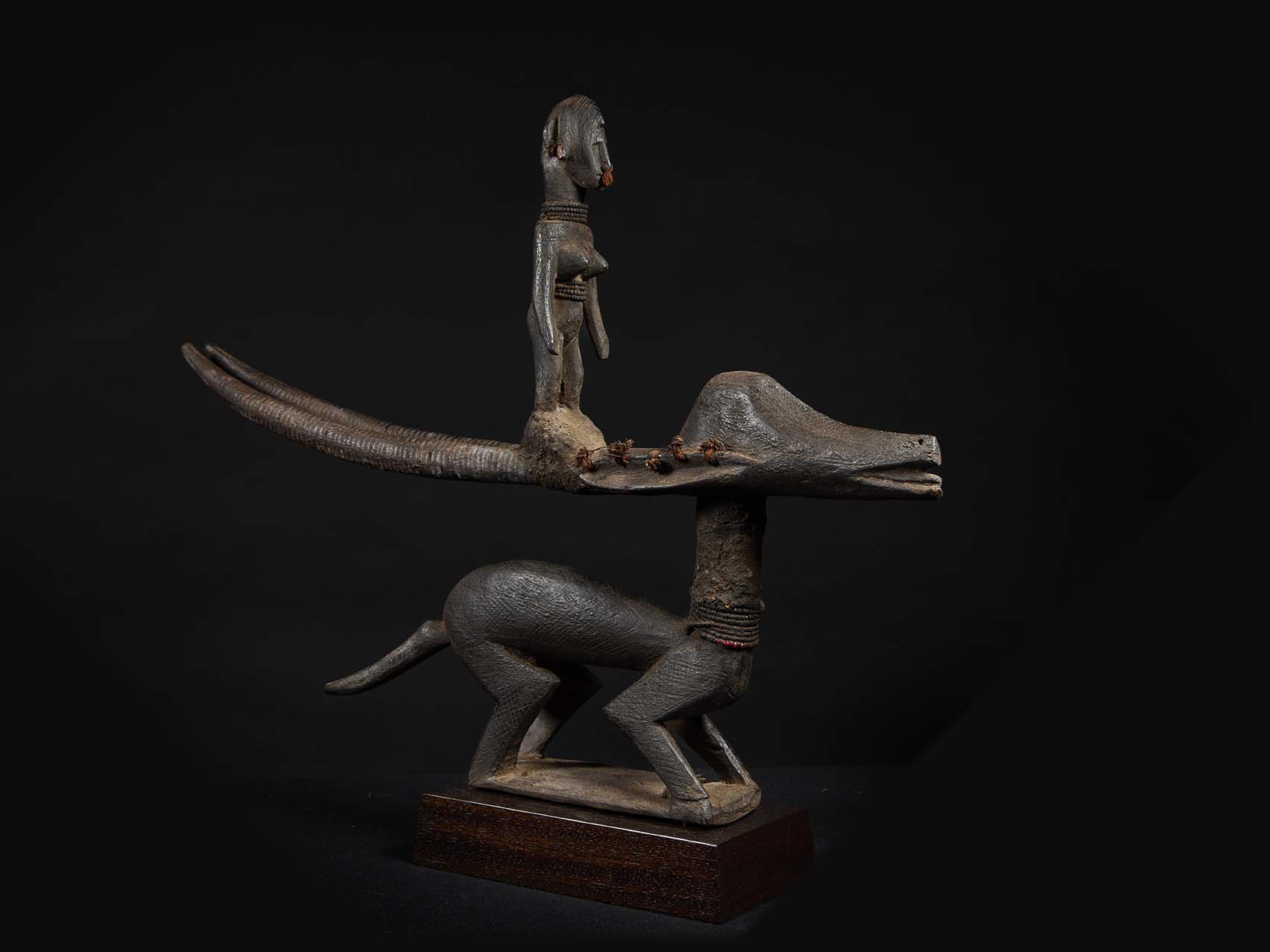
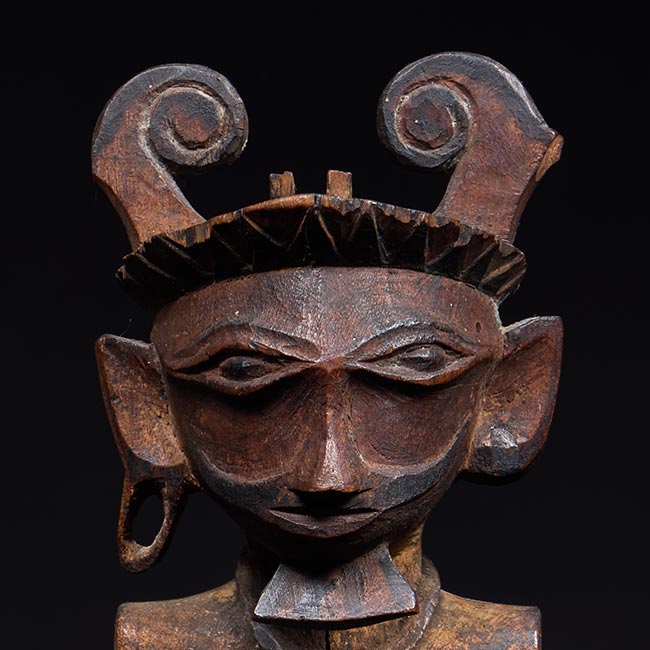
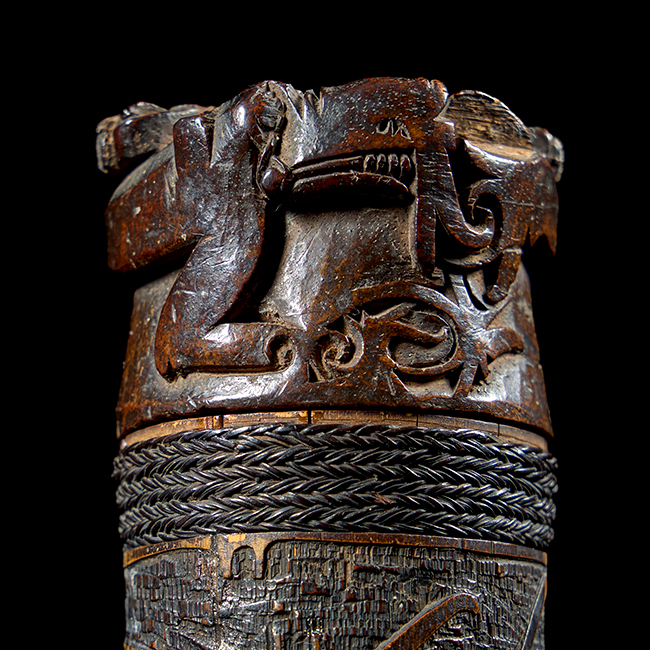
The Chi Wara is among the most celebrated sculptural forms of West Africa, created by the Bamana people of Mali to honor the mythical being who first taught humanity the art of agriculture. Worn atop the head during planting and harvest ceremonies, Chi Wara headdresses transformed dancers into embodiments of spiritual and natural forces associated with fertility, hard work, and abundance. While many examples combine antelope and human elements, this striking composition is particularly unusual, featuring a long-horned antelope-like creature surmounted by a standing female figure. The female ancestor symbolizes continuity, fertility, and the transmission of knowledge across generations, reinforcing the agricultural themes at the heart of Bamana belief.
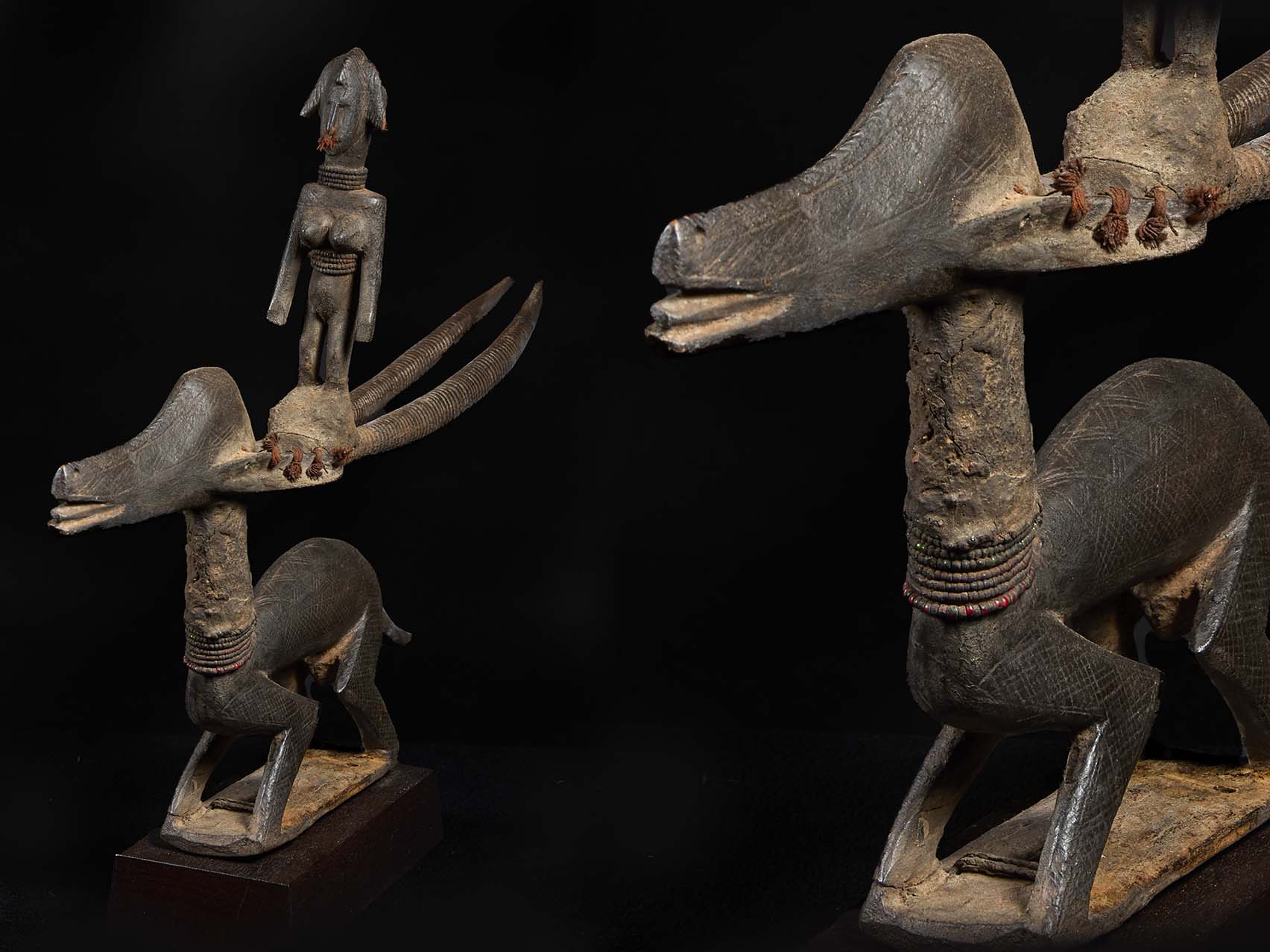
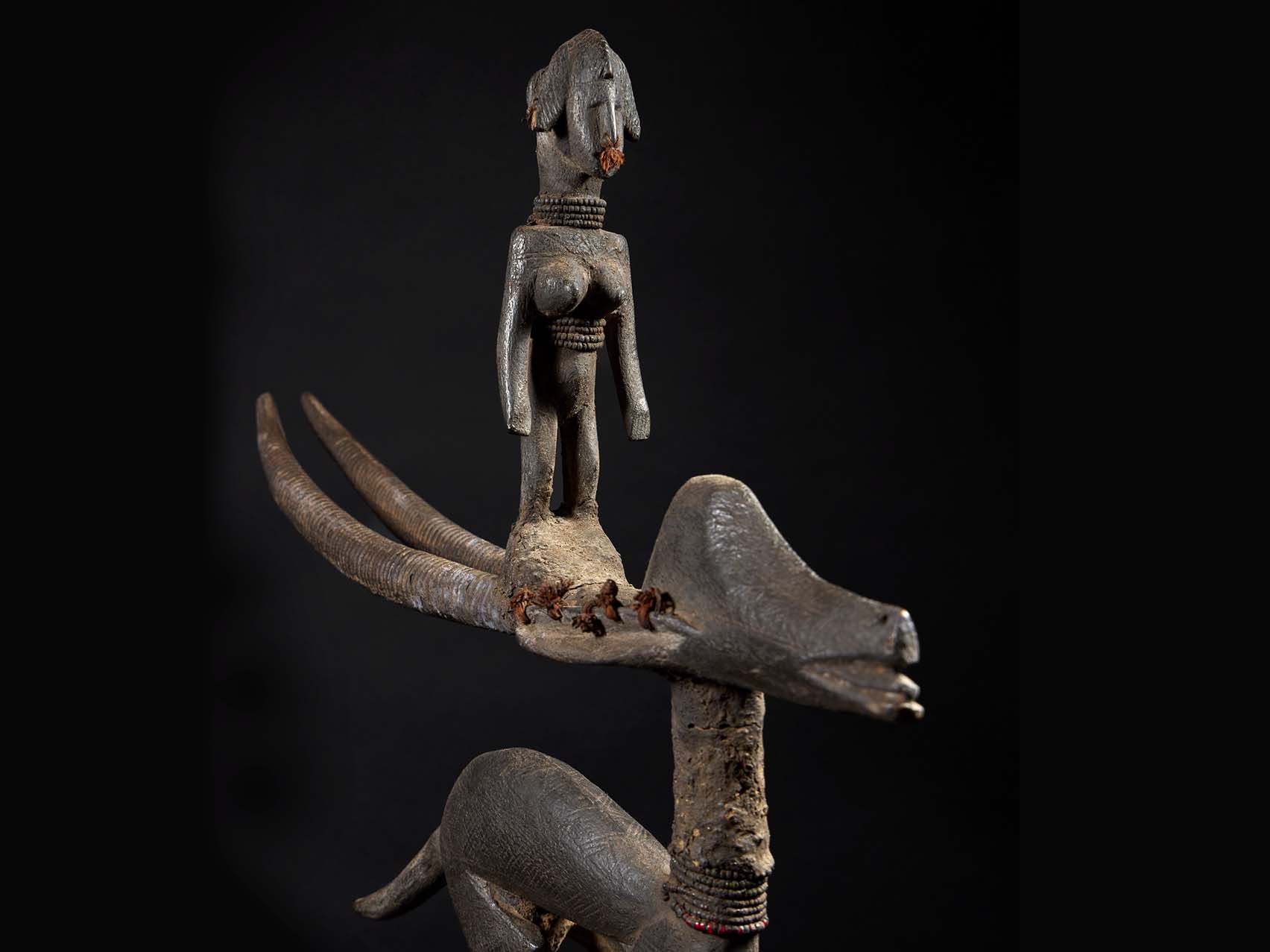
This example possesses a remarkable sculptural elegance. The elongated horns sweep dramatically through space, creating a powerful sense of movement and balance, while the animal’s attenuated body and alert posture convey vitality and purpose. The standing female figure, adorned with beadwork and carved with confident simplicity, introduces a compelling vertical counterpoint to the horizontal composition. Richly worn surfaces, traces of ritual use, and the harmonious relationship between human and animal forms give the sculpture an unmistakable presence. More than a ceremonial object, it is a sophisticated work of art that distills Bamana cosmology into a single dynamic and memorable image.
Length: 22 ½ in / 57.2 cm

Chi Wara Headdress
Bamana (Bambara), Mali
Early–mid 20th century
Wood, fiber, beads
The Chi Wara is among the most celebrated sculptural forms of West Africa, created by the Bamana people of Mali to honor the mythical being who first taught humanity the art of agriculture. Worn atop the head during planting and harvest ceremonies, Chi Wara headdresses transformed dancers into embodiments of spiritual and natural forces associated with fertility, hard work, and abundance. While many examples combine antelope and human elements, this striking composition is particularly unusual, featuring a long-horned antelope-like creature surmounted by a standing female figure. The female ancestor symbolizes continuity, fertility, and the transmission of knowledge across generations, reinforcing the agricultural themes at the heart of Bamana belief.
This example possesses a remarkable sculptural elegance. The elongated horns sweep dramatically through space, creating a powerful sense of movement and balance, while the animal’s attenuated body and alert posture convey vitality and purpose. The standing female figure, adorned with beadwork and carved with confident simplicity, introduces a compelling vertical counterpoint to the horizontal composition. Richly worn surfaces, traces of ritual use, and the harmonious relationship between human and animal forms give the sculpture an unmistakable presence. More than a ceremonial object, it is a sophisticated work of art that distills Bamana cosmology into a single dynamic and memorable image.
Length: 22 ½ in / 57.2 cm