




Amulet Mask
Lower Sepik River region, Papua New Guinea
Early 20th c.
Wood with traces of ochre pigment
Provenance: Ernst Heinrich, Bad Cannstatt
Loed and Mia Van Bussel, Amsterdam
Aldo and Hannie van Eyck, The Netherlands
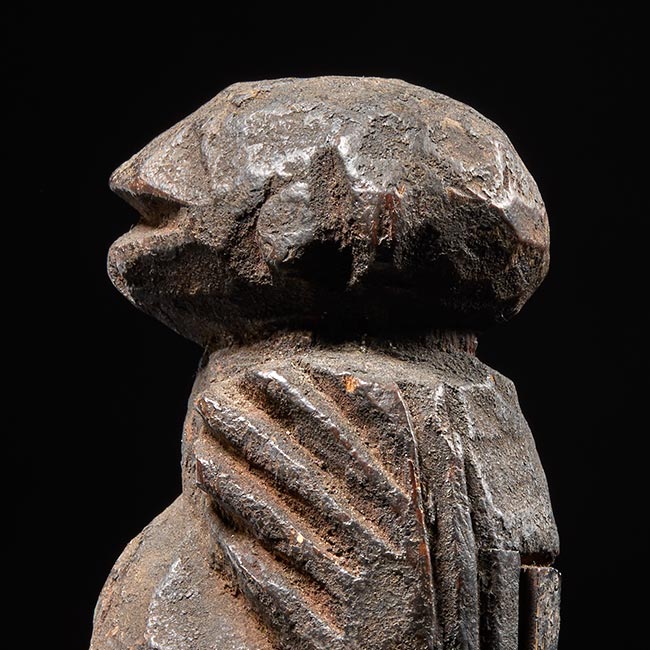
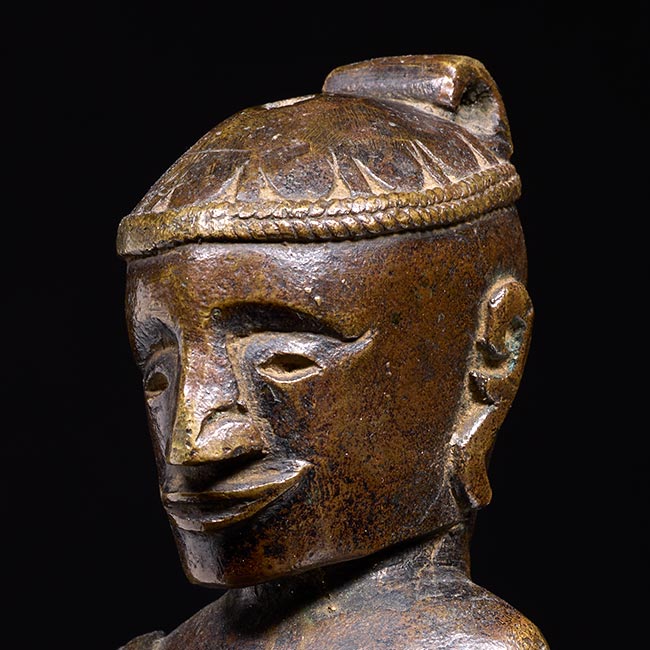
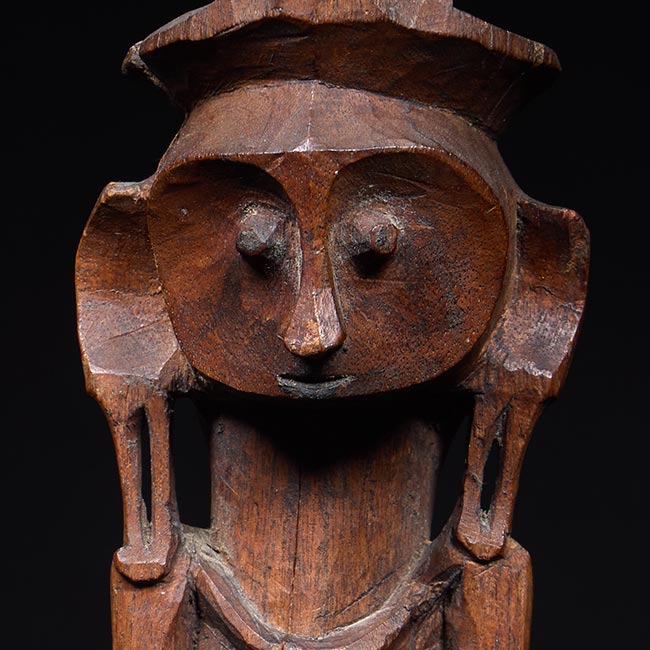
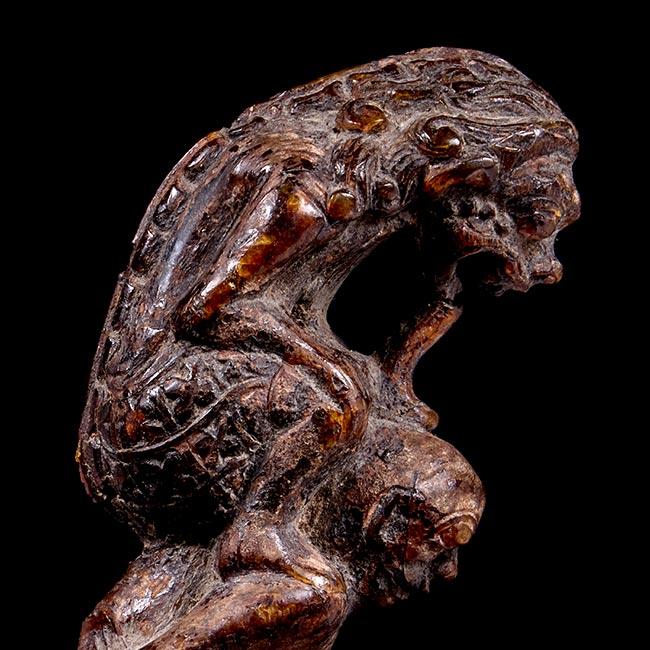
This small amulet mask originates from the Murik Lakes in lower Sepik River region, an area renowned for its highly expressive sculptural traditions and the use of carved objects as personal and spiritual protectors. Such amulets were worn on the body or kept close attached to bags, serving as conduits for ancestral presence and protective forces.
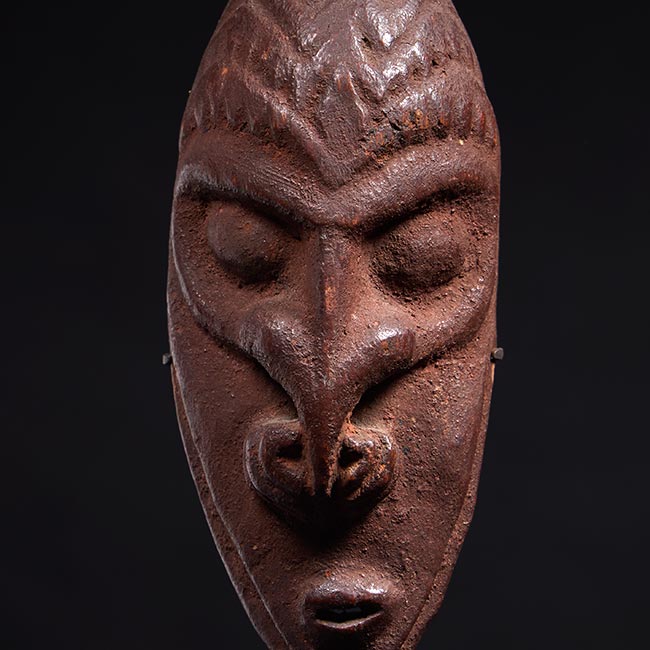
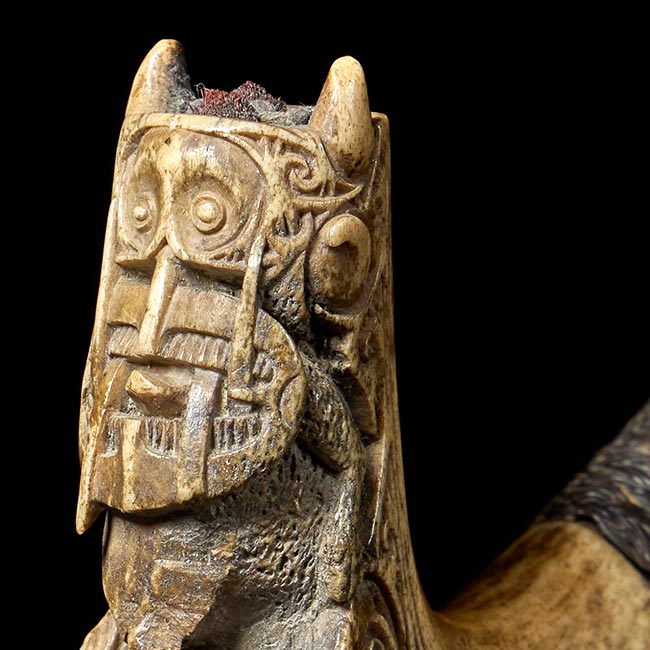
The mask is powerfully modeled, with an elongated face animated by extended, pursed lips and a sharply defined, arrow-shaped nose pierced to receive a carved nose ornament. The facial planes are subtly asymmetrical—a hallmark of early Sepik carving—giving the piece a heightened sense of vitality and immediacy. Tool marks indicate it was carved using non-metal implements, lending the surface a softened, organic quality that speaks to its age.
A deep, lustrous patina covers the surface, built up through time, handling, and ritual use. Traces of old ochre pigment remain visible, seemingly fused into the wood rather than resting on top of it, reinforcing the impression of long use and great age. Despite its modest scale, the mask possesses a strong and commanding presence, exemplifying the sculptural intensity for which the Lower Sepik region is celebrated.
Size
Height: 6 ¾ in / 17.1 cm
Item
IN 2-8-26 / Price on request
Gallery

Amulet Mask
Lower Sepik River region, Papua New Guinea
Early 20th c.
Wood with traces of ochre pigment
Provenance: Ernst Heinrich, Bad Cannstatt
Loed and Mia Van Bussel, Amsterdam
Aldo and Hannie van Eyck, The Netherlands
This small amulet mask originates from the Murik Lakes in lower Sepik River region, an area renowned for its highly expressive sculptural traditions and the use of carved objects as personal and spiritual protectors. Such amulets were worn on the body or kept close attached to bags, serving as conduits for ancestral presence and protective forces.
The mask is powerfully modeled, with an elongated face animated by extended, pursed lips and a sharply defined, arrow-shaped nose pierced to receive a carved nose ornament. The facial planes are subtly asymmetrical—a hallmark of early Sepik carving—giving the piece a heightened sense of vitality and immediacy. Tool marks indicate it was carved using non-metal implements, lending the surface a softened, organic quality that speaks to its age.
A deep, lustrous patina covers the surface, built up through time, handling, and ritual use. Traces of old ochre pigment remain visible, seemingly fused into the wood rather than resting on top of it, reinforcing the impression of long use and great age. Despite its modest scale, the mask possesses a strong and commanding presence, exemplifying the sculptural intensity for which the Lower Sepik region is celebrated.
Size
Height: 6 ¾ in / 17.1 cm
Item
IN 2-8-26 / Price on request
Gallery