




Adu Zatua Figure
Central Nias, Indonesia
19th century
Wood
Provenance: Aldo and Hannie van Eyck, The Netherlands
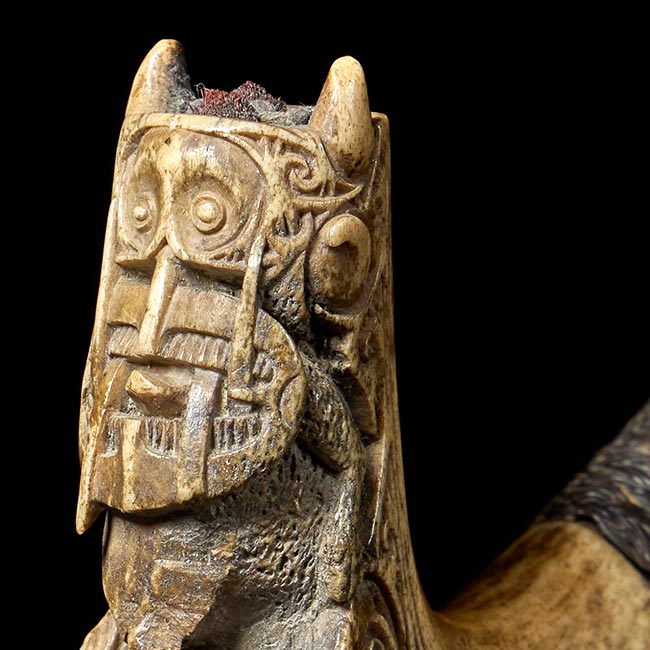
This finely carved Adu Zatua ancestor figure from Nias exemplifies the island’s highly distinctive sculptural language, balancing expressive abstraction with restrained elegance. Created as a vessel for ancestral presence, such figures were central to domestic ritual life, embodying lineage, protection, and continuity between the living and the dead.
The figure is defined by its elongated proportions and strongly cubist conception of the body. Long, attenuated arms descend vertically and fan outward with graceful restraint, terminating in delicately joined hands held before the torso. The compact legs and block-like feet anchor the sculpture, creating a poised yet architectural stance.
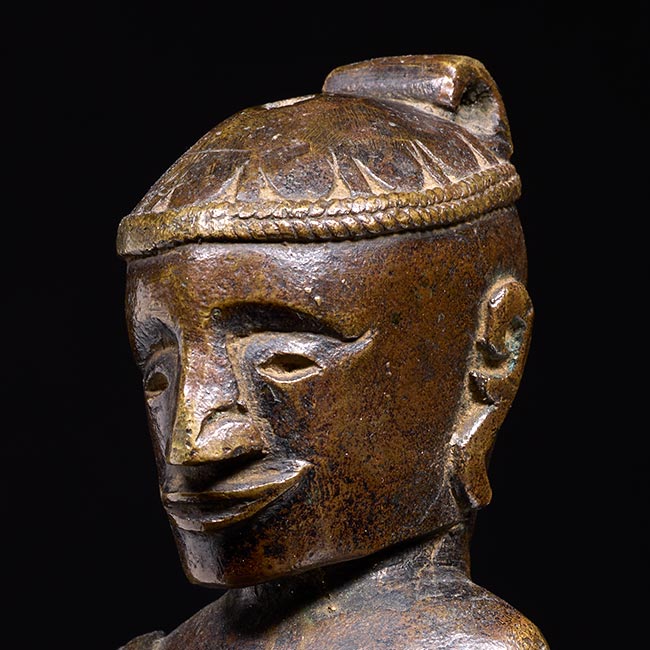
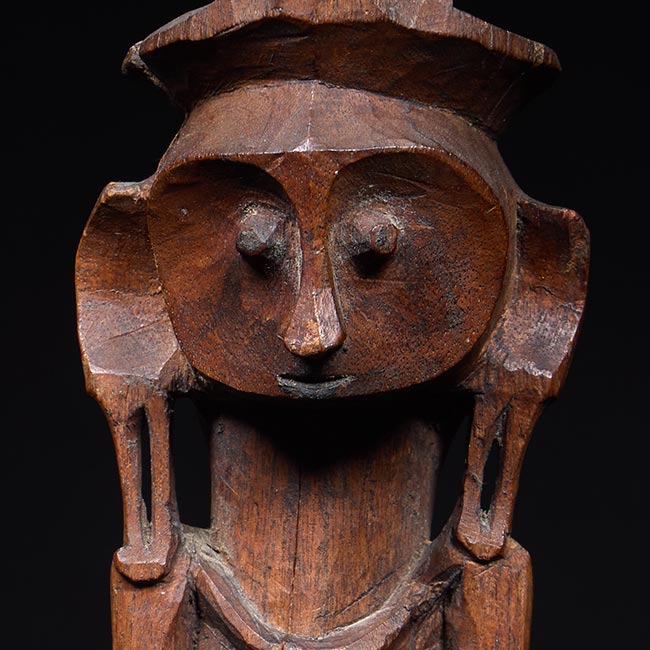
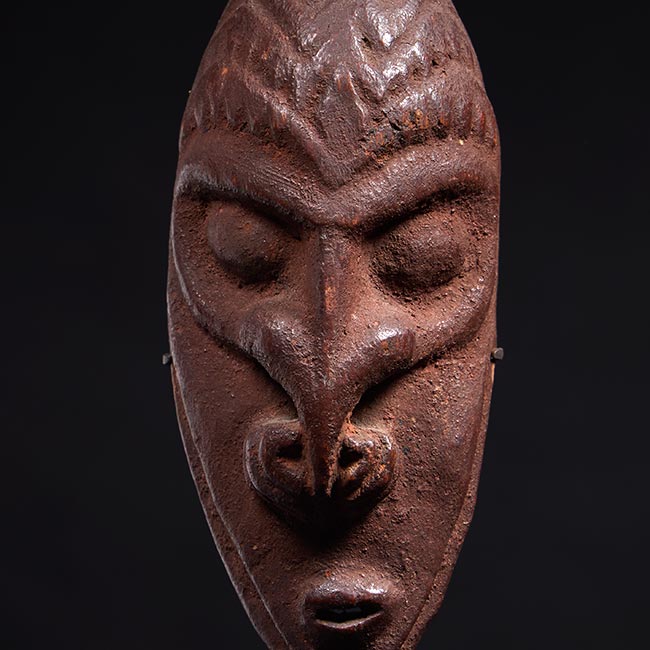
The head is particularly expressive: a softly concave face framed by curved, projecting ears and elongated earlobes that flow seamlessly into the shoulders. This fluid transition between head and body reinforces the sculpture’s sculptural unity.
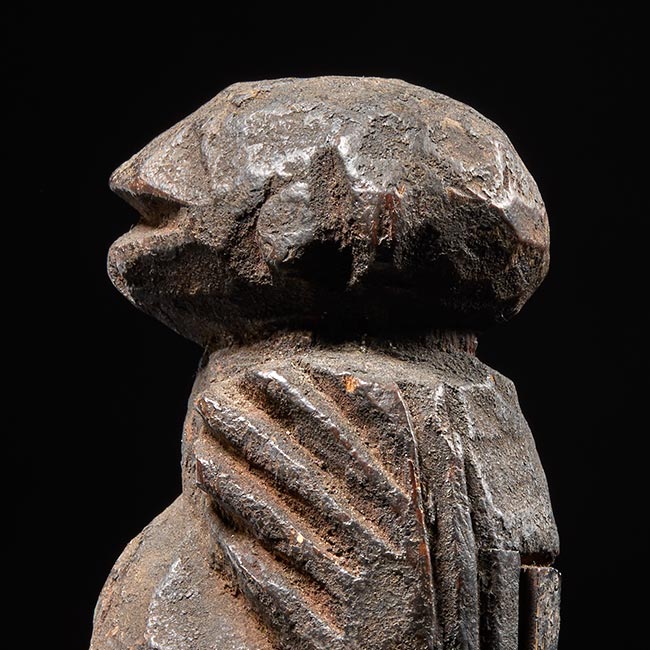
The surface retains a warm, time-softened patina, with visible tool marks that enhance the rhythmic play of planes and volumes.
Size
Height: 10 in / 25.4 cm
Item
IN 2-3-26 / Price on request
Gallery

Adu Zatua Figure
Central Nias, Indonesia
19th century
Wood
Provenance: Aldo and Hannie van Eyck, The Netherlands
This finely carved Adu Zatua ancestor figure from Nias exemplifies the island’s highly distinctive sculptural language, balancing expressive abstraction with restrained elegance. Created as a vessel for ancestral presence, such figures were central to domestic ritual life, embodying lineage, protection, and continuity between the living and the dead.
The figure is defined by its elongated proportions and strongly cubist conception of the body. Long, attenuated arms descend vertically and fan outward with graceful restraint, terminating in delicately joined hands held before the torso. The compact legs and block-like feet anchor the sculpture, creating a poised yet architectural stance.
The head is particularly expressive: a softly concave face framed by curved, projecting ears and elongated earlobes that flow seamlessly into the shoulders. This fluid transition between head and body reinforces the sculpture’s sculptural unity.
The surface retains a warm, time-softened patina, with visible tool marks that enhance the rhythmic play of planes and volumes.
Size
Height: 10 in / 25.4 cm
Item
IN 2-3-26 / Price on request
Gallery