



Akua’ba Figure (Fertility Doll)
Ashanti (Asante), Ghana
Early–mid 20th century
Wood with beads
Published: “Akua’ba Asante Wednesday Child”, fig. 2904
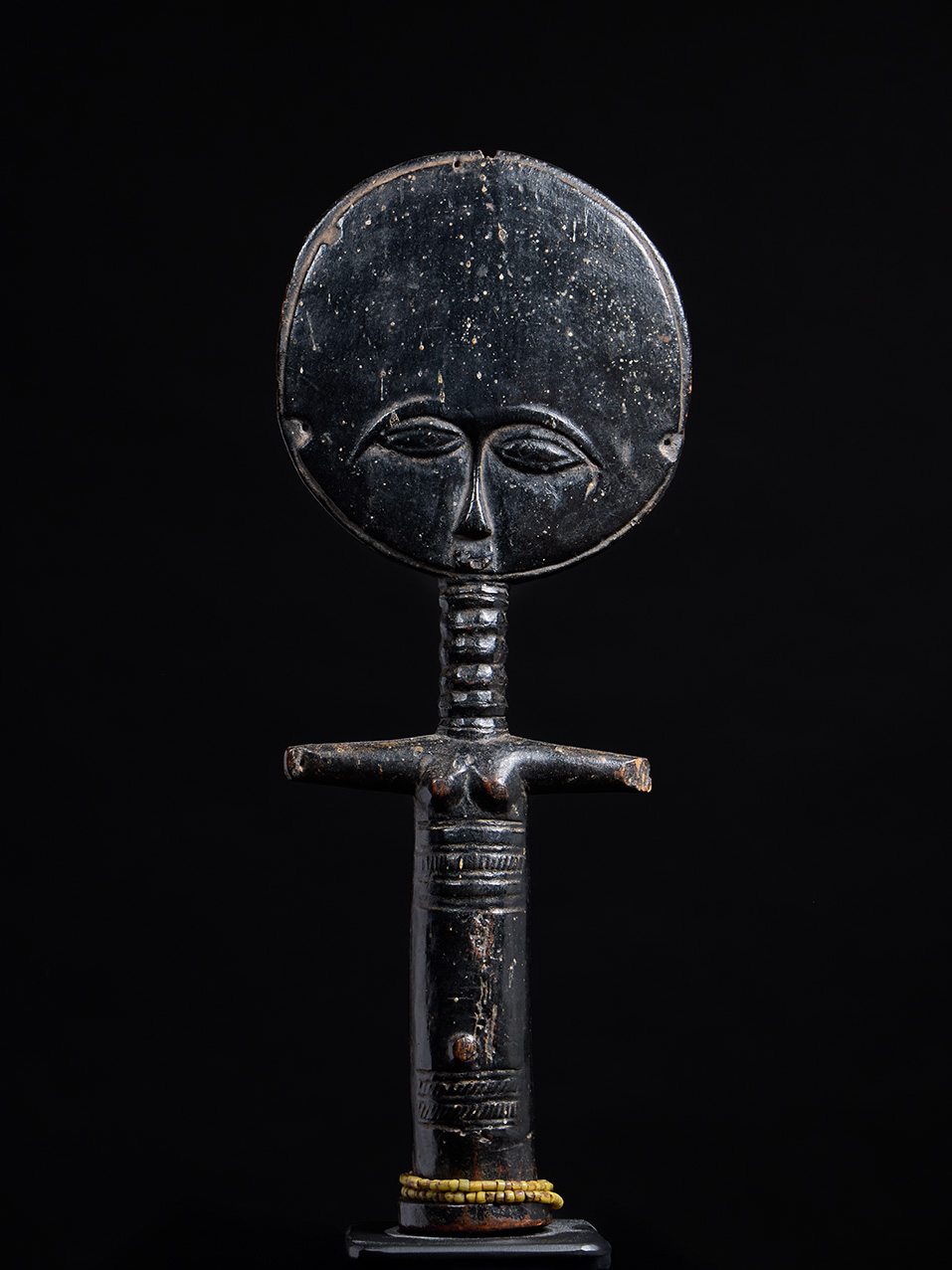
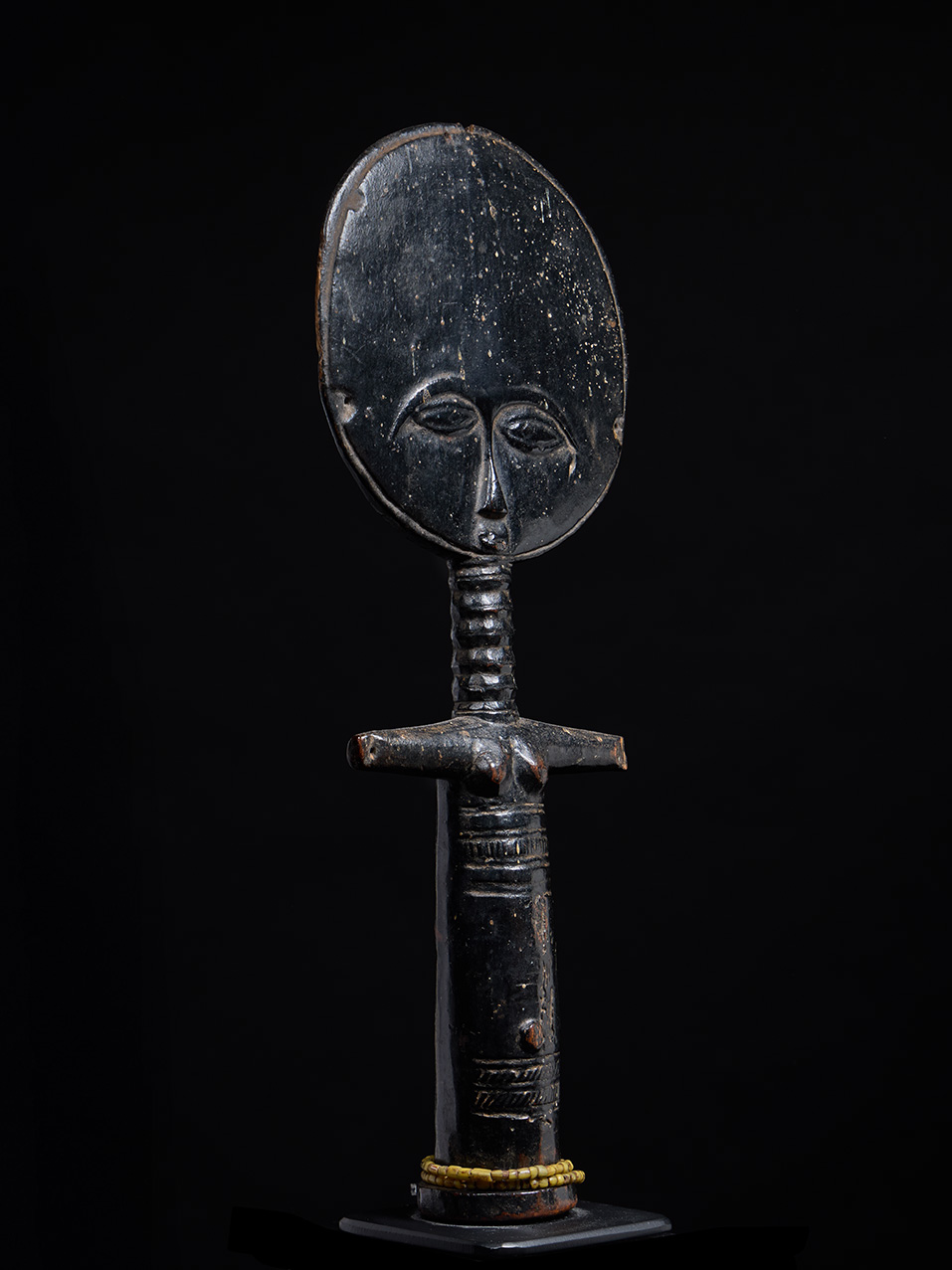
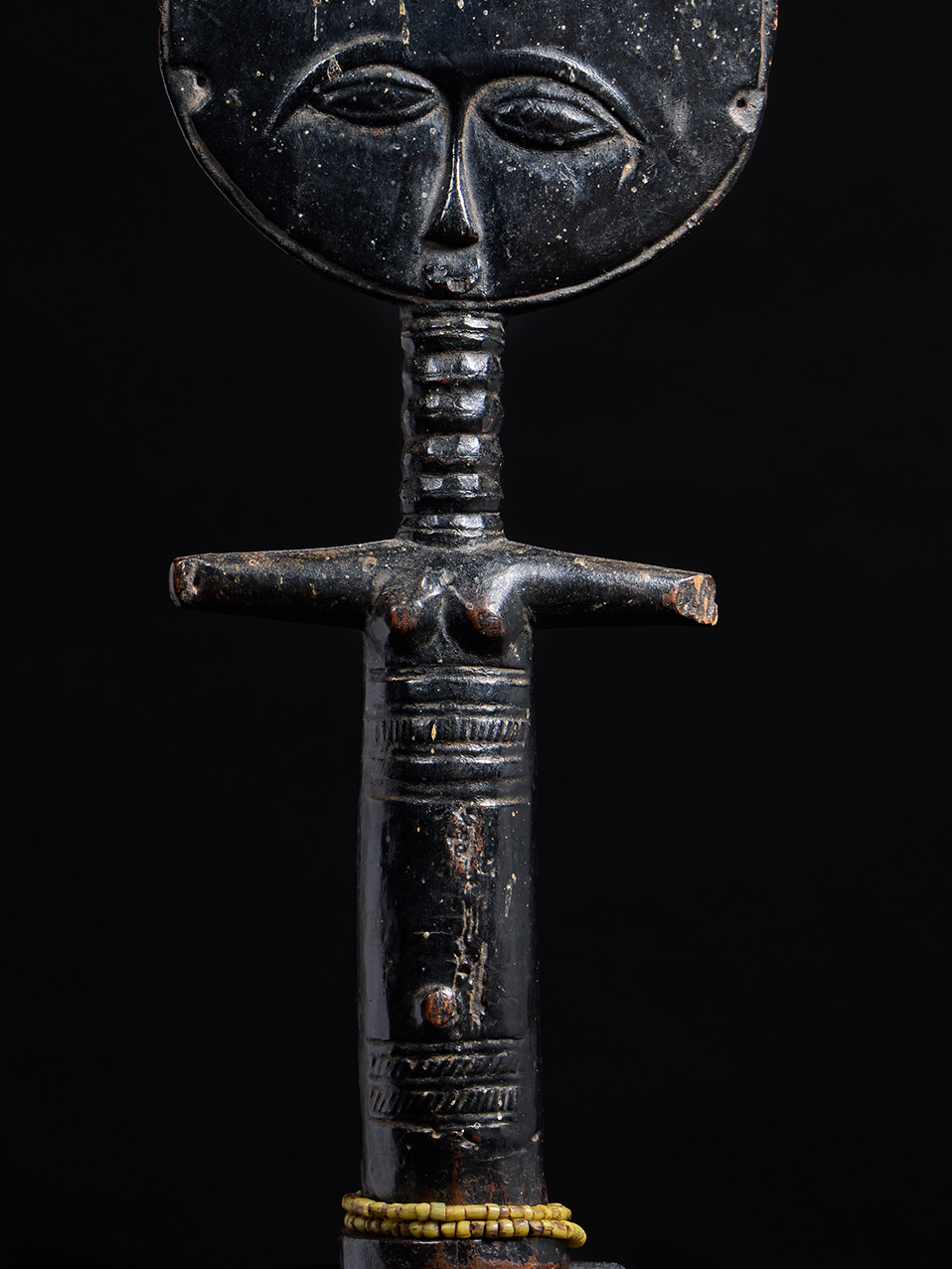
This classic Akua’ba figure was carved for use by Ashanti women as a fertility aid and idealized image of beauty. Such figures were carried on the back like an infant or kept close to the body, believed to encourage conception and ensure the birth of a healthy, beautiful child. Beyond their ritual role, Akua’ba figures also functioned as cultural statements, expressing Ashanti ideals of femininity, harmony, and balance.
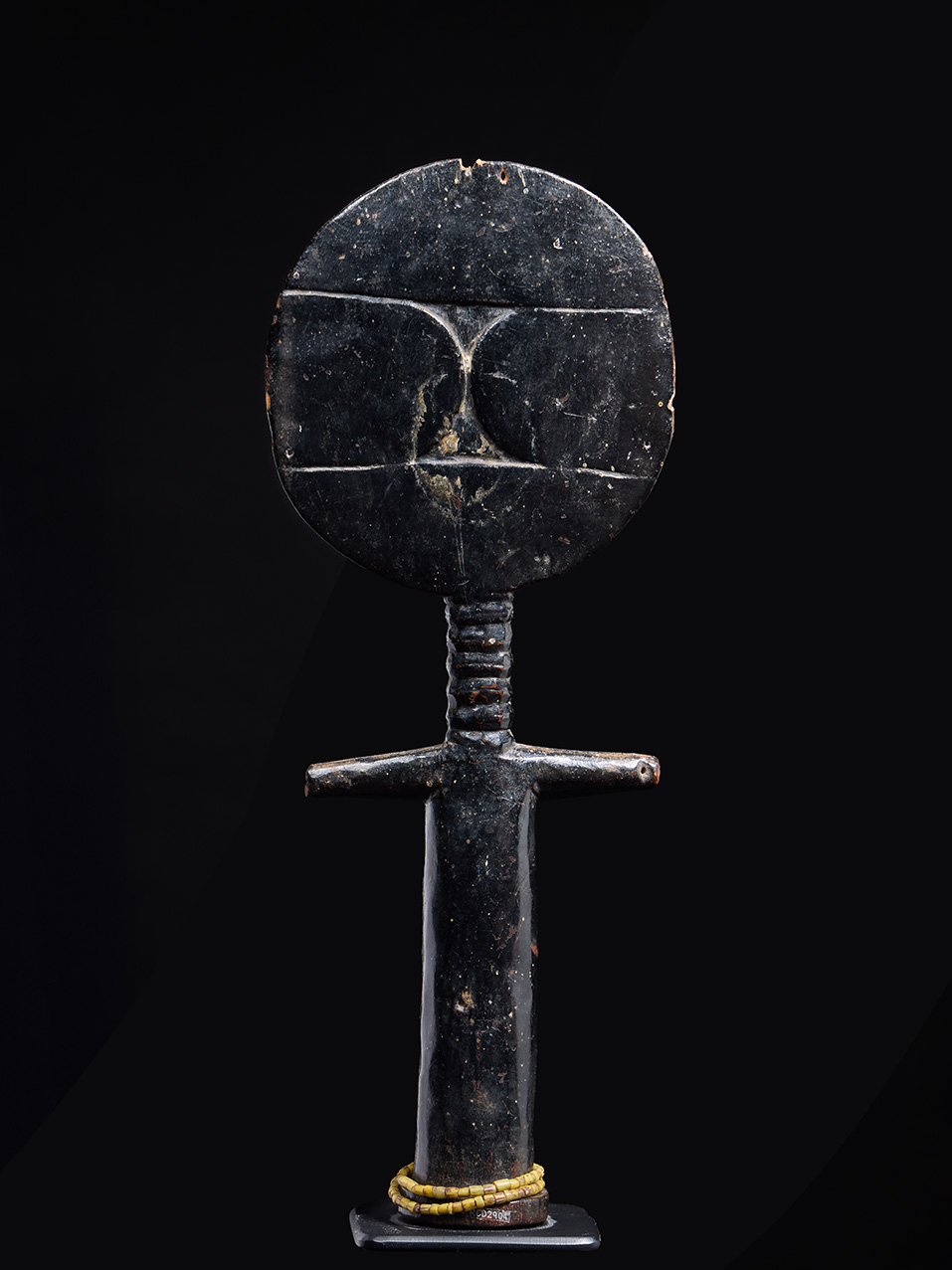
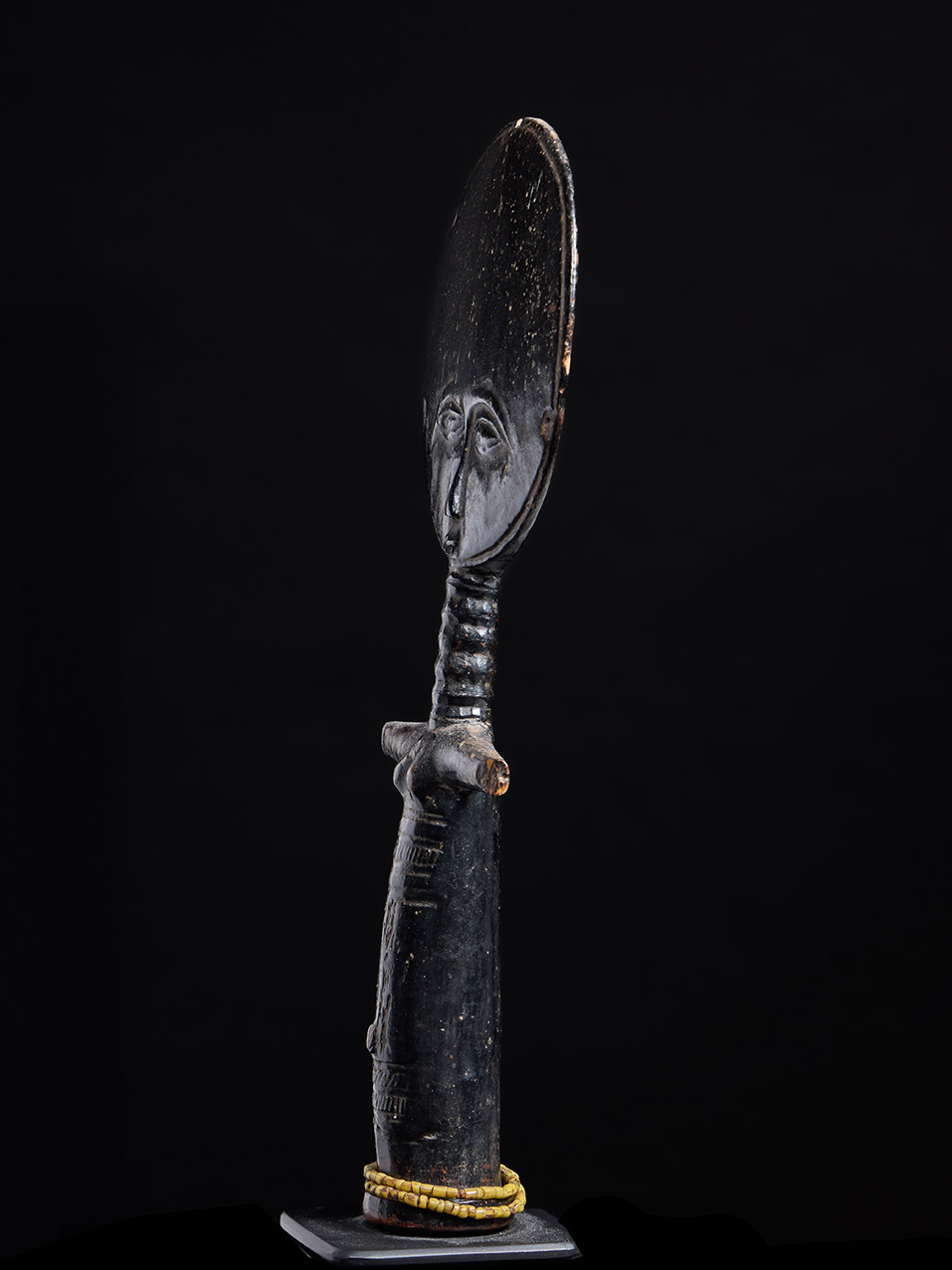
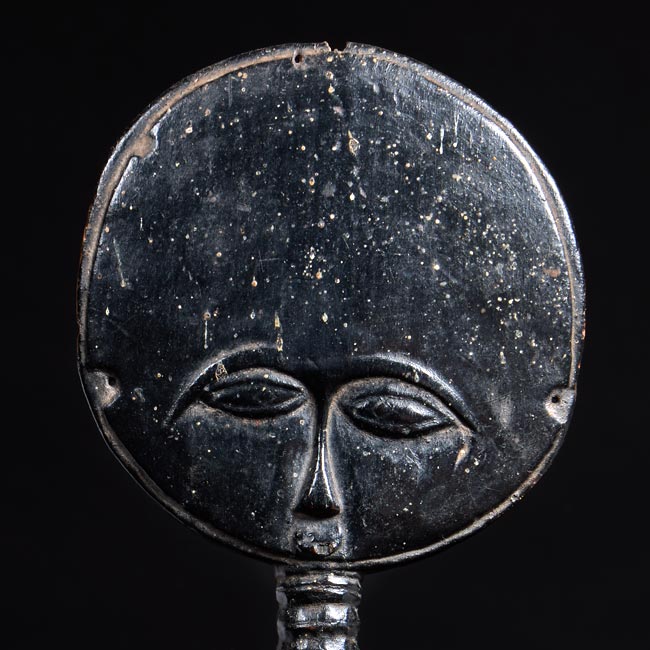
The figure displays the iconic Ashanti aesthetic: a large, flattened circular head symbolizing beauty and well-being, a long cylindrical neck ringed with incised bands, and a compact, stylized body reduced to essential forms. The facial features are serene and restrained, conveying calm and composure rather than overt expression.
The surface bears a beautifully worn patina, the result of years of handling and ritual use. The wood has softened to a deep, lustrous tone, with subtle abrasions and smoothing that testify to the figure’s long life and authenticity. At the base, a strand of old European glass trade beads remains intact—an important and evocative detail that situates the figure historically within early trade networks and enhances its visual and cultural richness.
Size
Height: 12 in / 30.5 cm
Item
IN 1-8-26 / Price on request
Gallery
Akua’ba Figure (Fertility Doll)
Ashanti (Asante), Ghana
Early–mid 20th century
Wood with beads
Published: “Akua’ba Asante Wednesday Child”, fig. 2904
This classic Akua’ba figure was carved for use by Ashanti women as a fertility aid and idealized image of beauty. Such figures were carried on the back like an infant or kept close to the body, believed to encourage conception and ensure the birth of a healthy, beautiful child. Beyond their ritual role, Akua’ba figures also functioned as cultural statements, expressing Ashanti ideals of femininity, harmony, and balance.
The figure displays the iconic Ashanti aesthetic: a large, flattened circular head symbolizing beauty and well-being, a long cylindrical neck ringed with incised bands, and a compact, stylized body reduced to essential forms. The facial features are serene and restrained, conveying calm and composure rather than overt expression.
The surface bears a beautifully worn patina, the result of years of handling and ritual use. The wood has softened to a deep, lustrous tone, with subtle abrasions and smoothing that testify to the figure’s long life and authenticity. At the base, a strand of old European glass trade beads remains intact—an important and evocative detail that situates the figure historically within early trade networks and enhances its visual and cultural richness.
Size
Height: 12 in / 30.5 cm
Item
IN 1-8-26 / Price on request
Gallery