



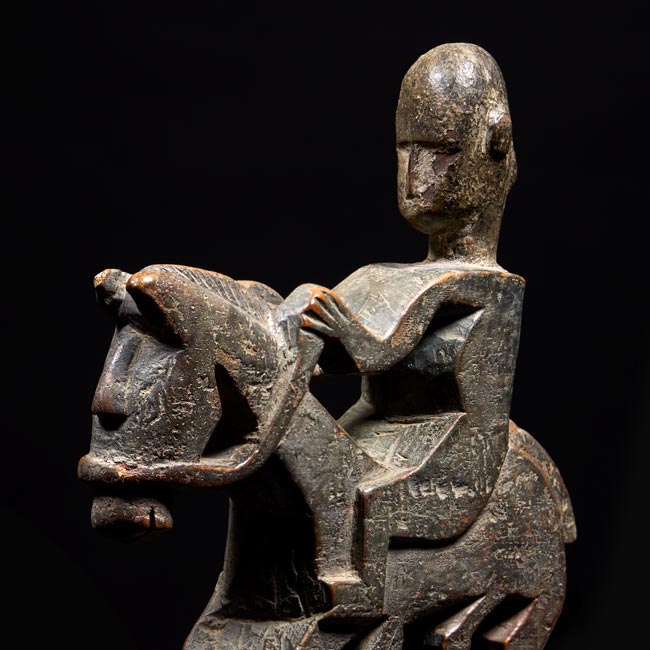
Headdress Figure
Giri people, Lower Ramu River, Madang Province, Papua New Guinea
19th–early 20th century
Wood, shell, pigment, fiber
Provenance: Marcia and John Friede collection, Rye, NY
“Powerful Magic: Miniature Sculptures from the Sepik River Region”, Bruce Frank Primitive Art, New York, 2013, fig. 15
“New Guinea Art: Masterpieces from the Jolika Collection of Marcia and John Friede, 2005, fig. 75.
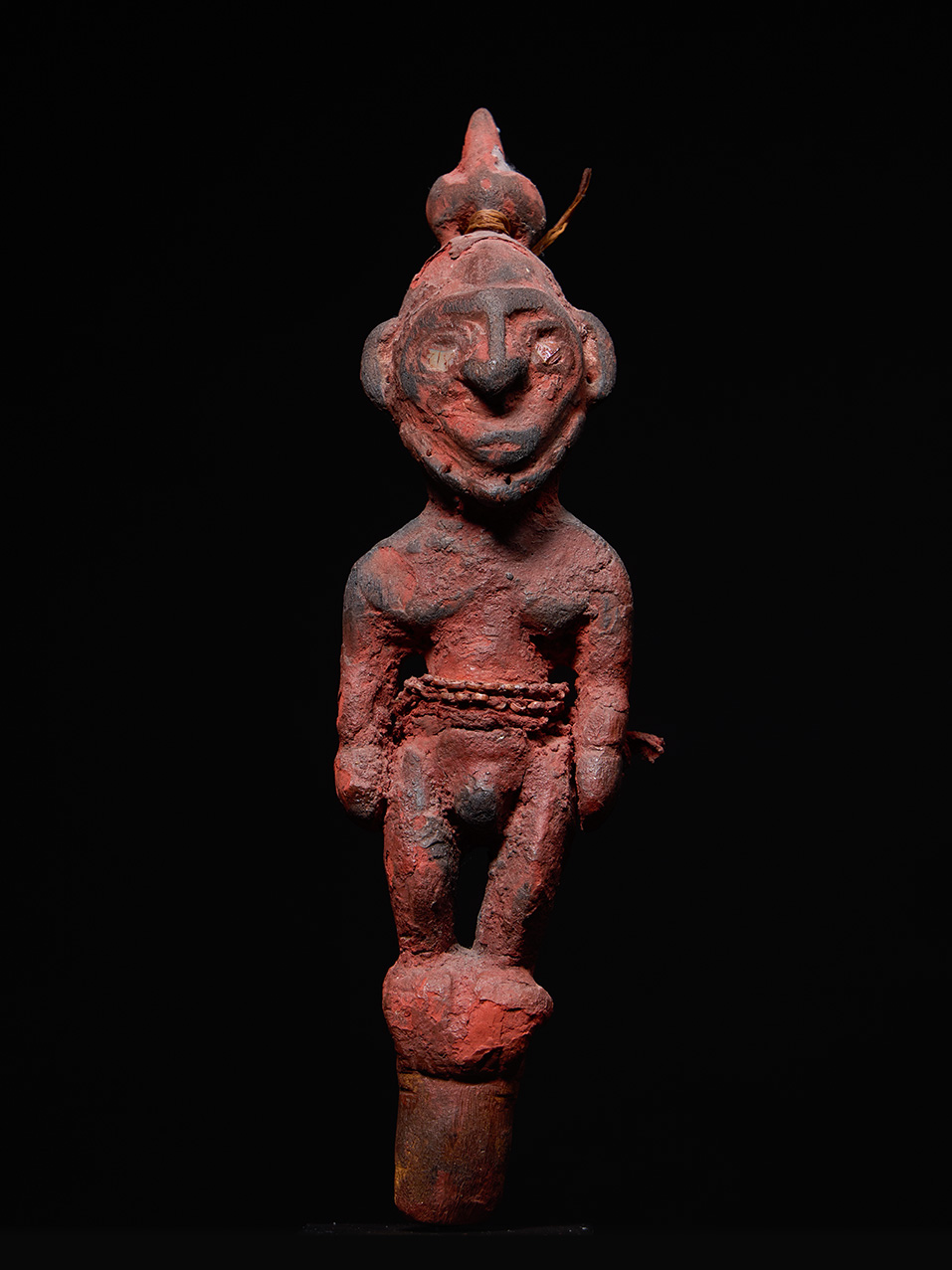
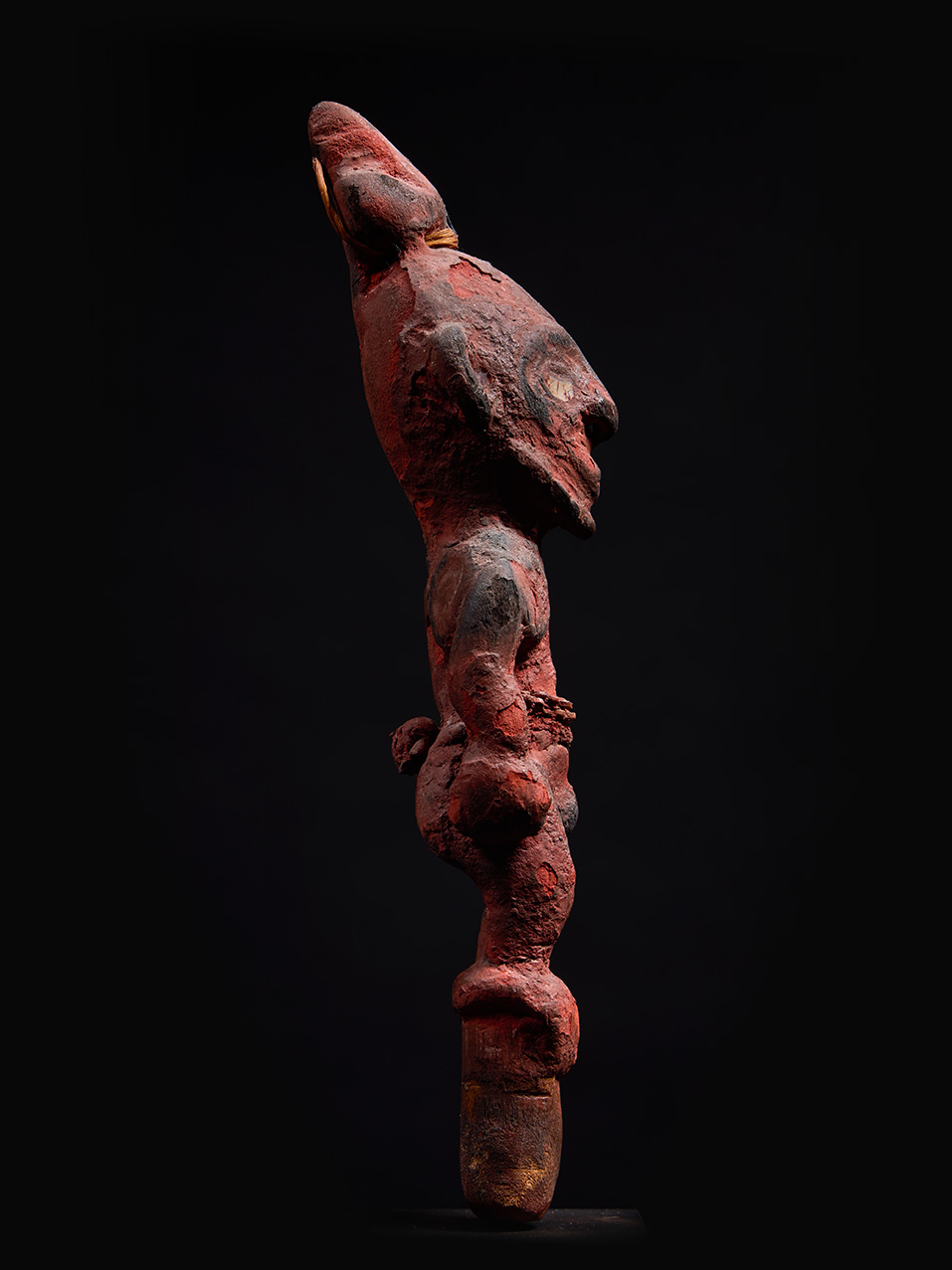
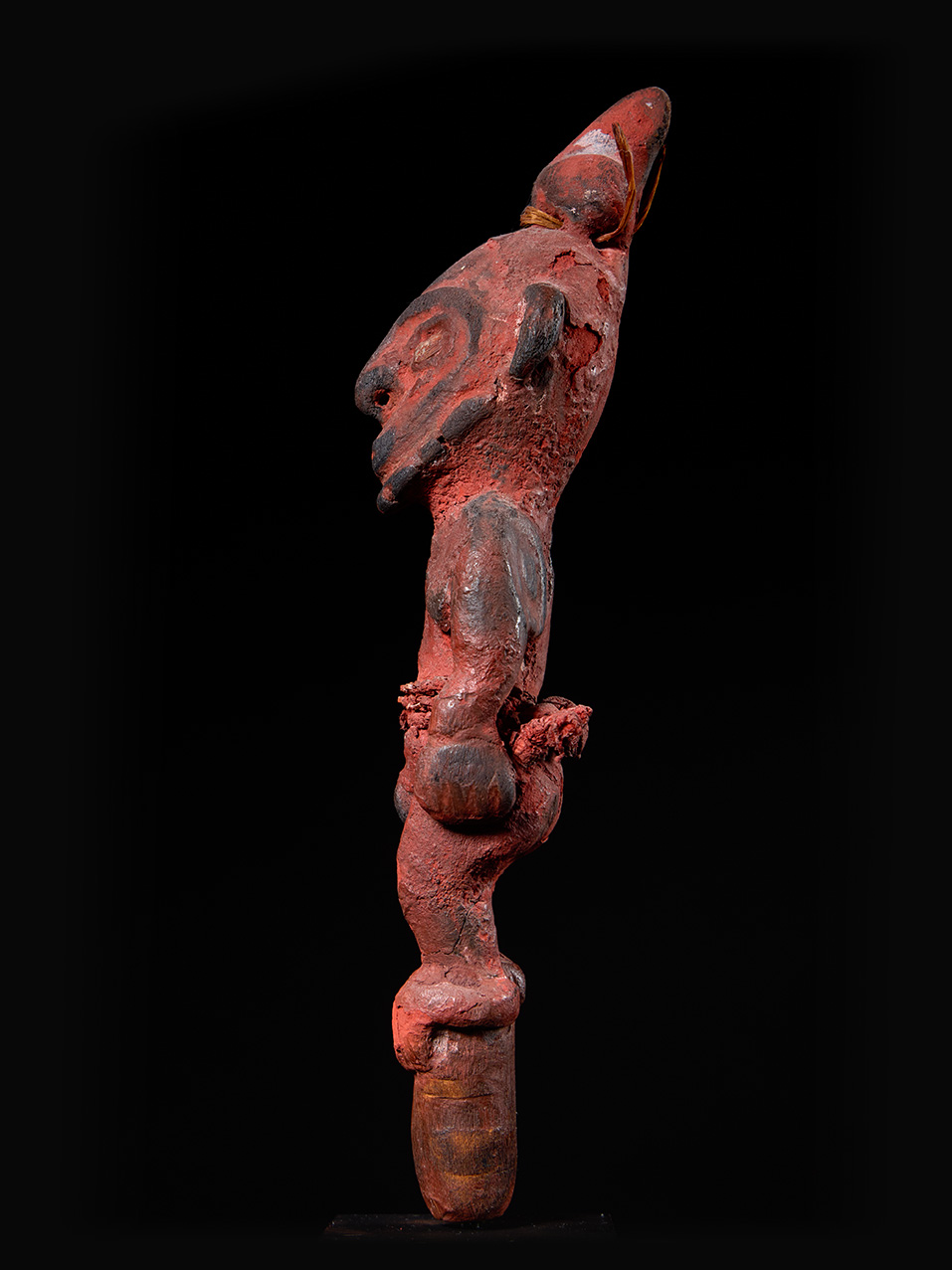
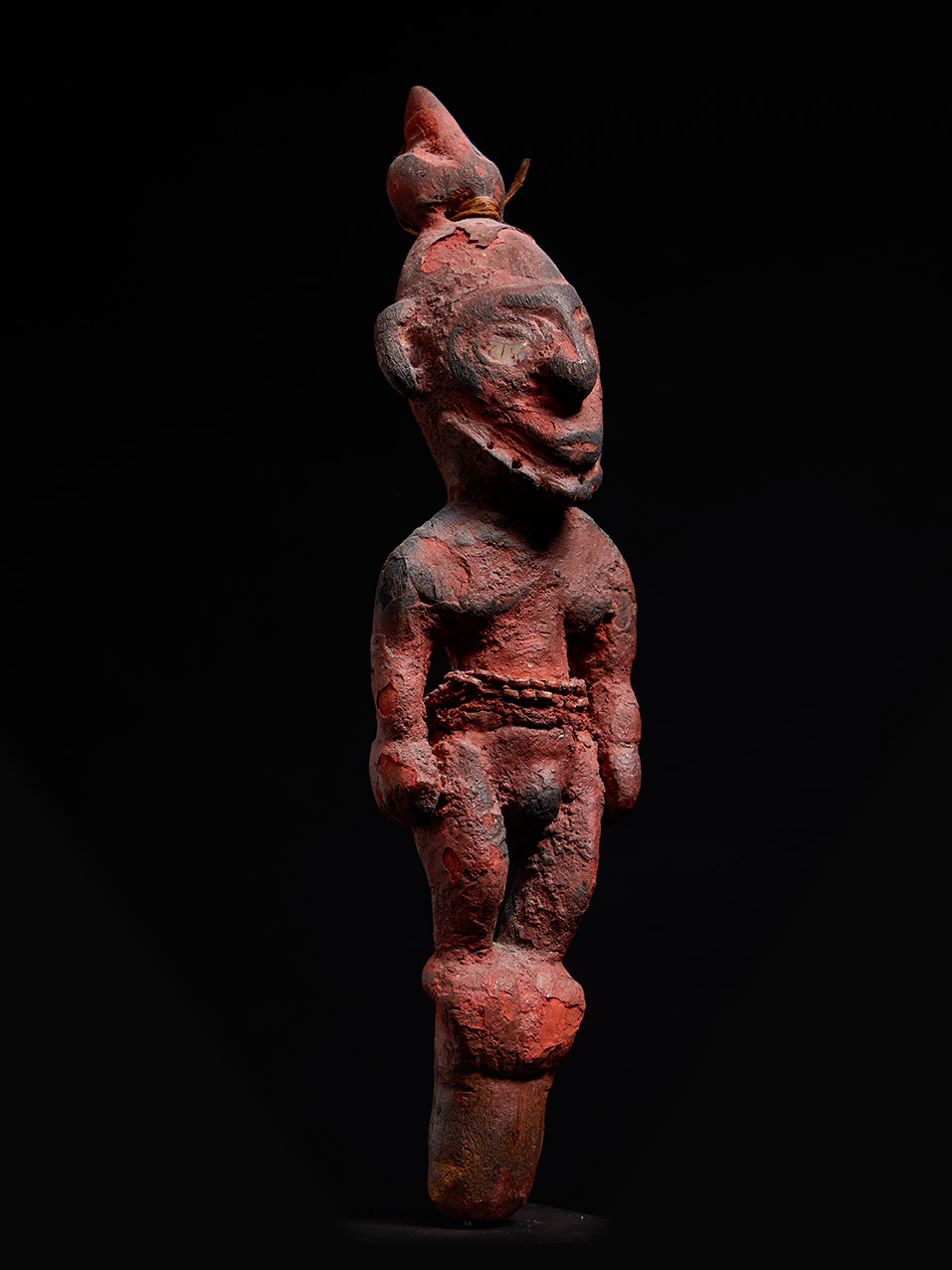
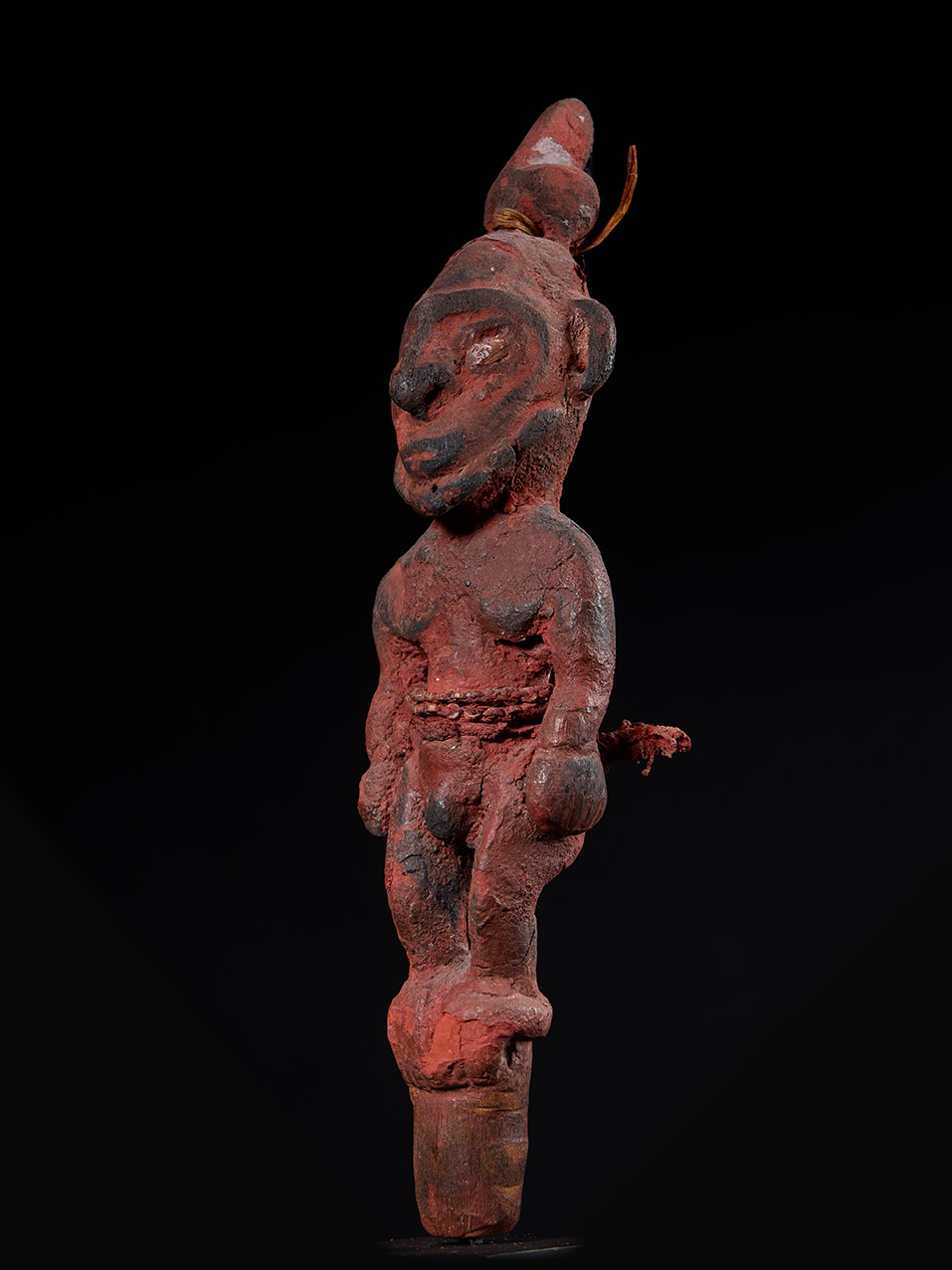
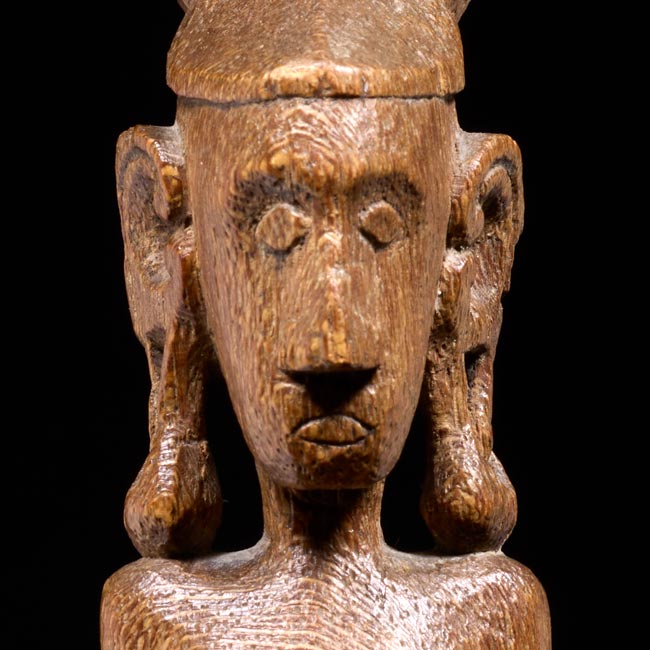
This compelling carved figure originates from the top of a ceremonial headdress worn by the Giri people of the Lower Ramu River region. Detached from its original assemblage, the figure now reads powerfully as an independent object—its scale and intensity closely resembling that of a personal amulet rather than a mere decorative element.
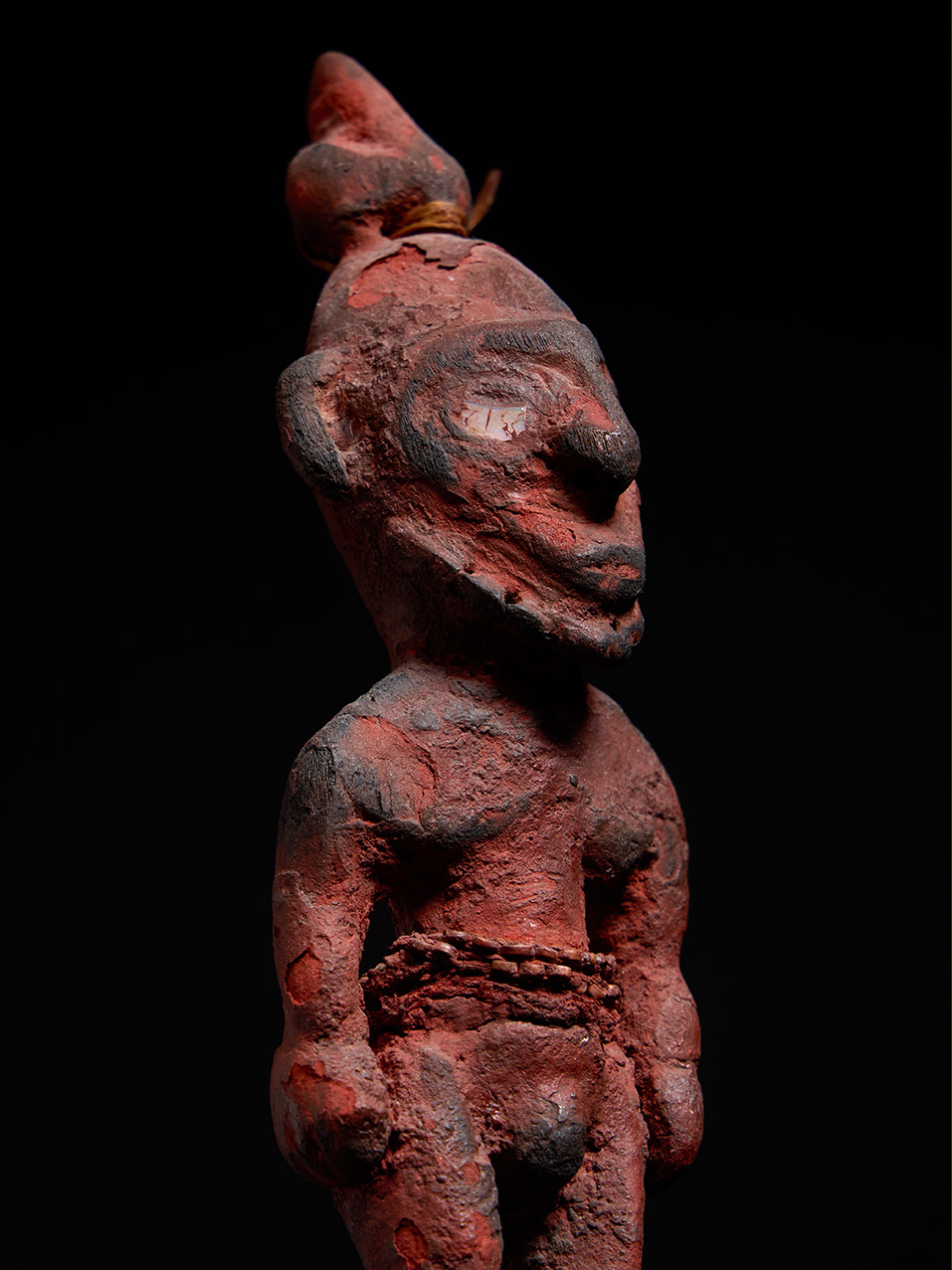
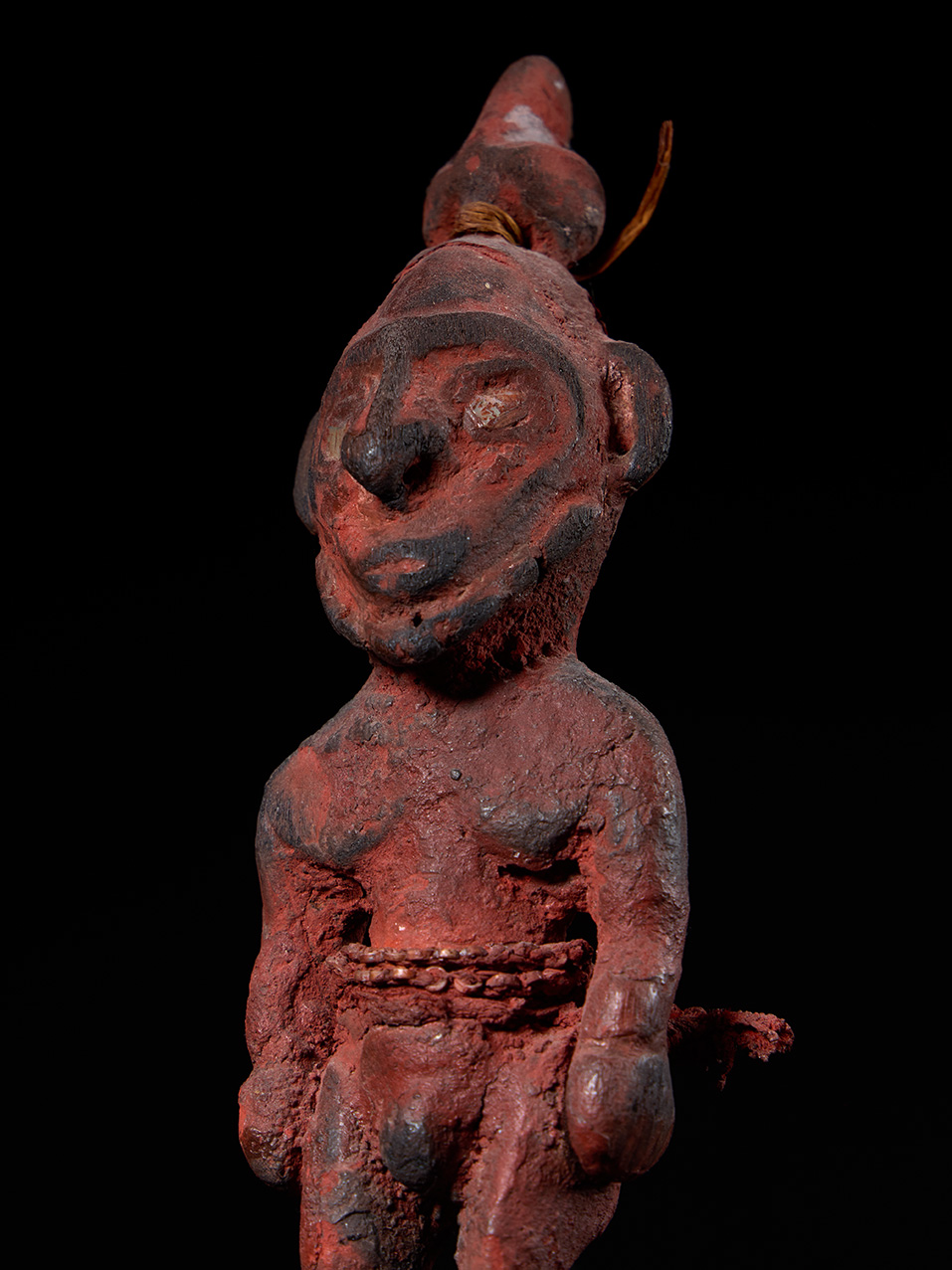
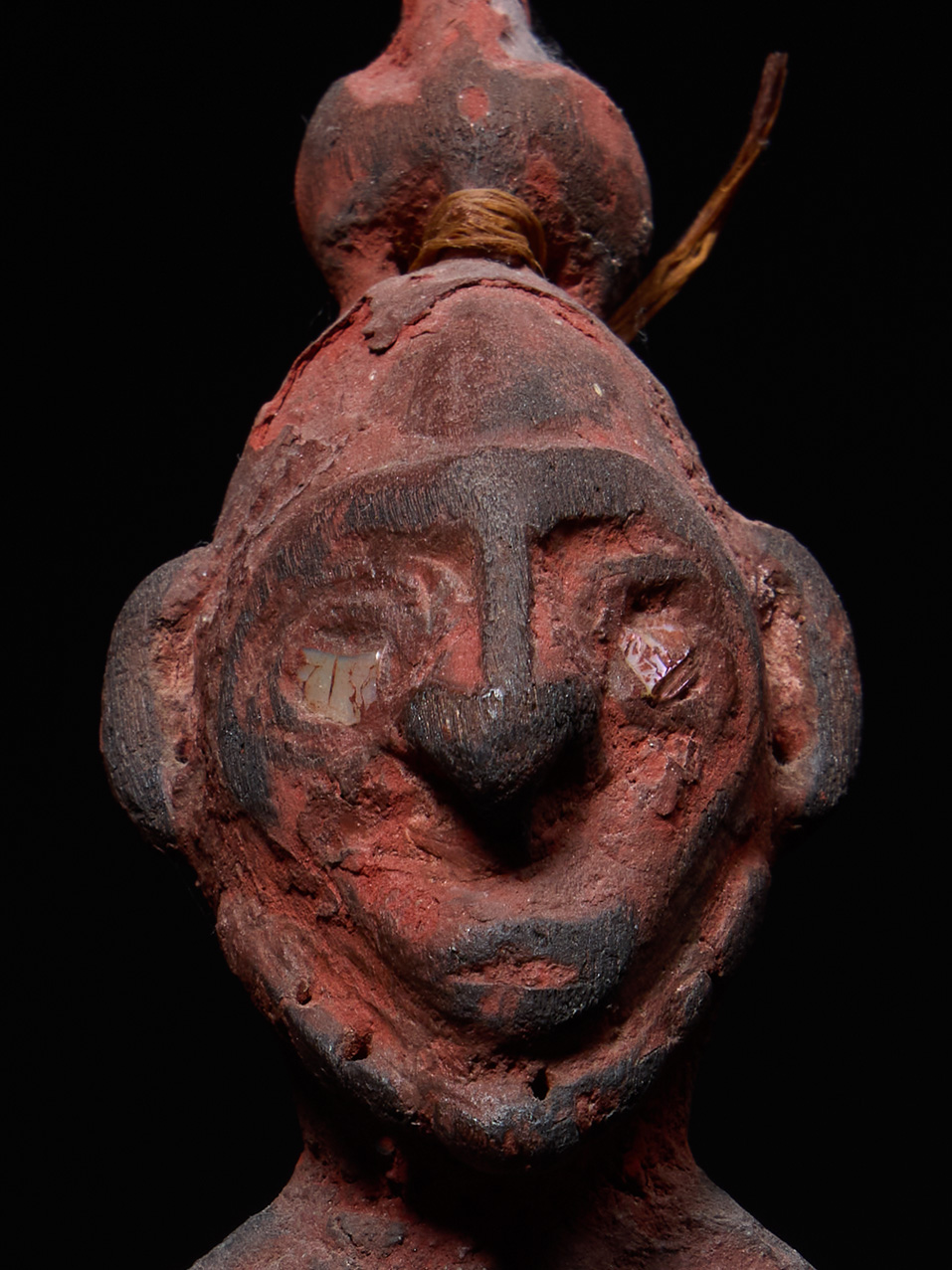
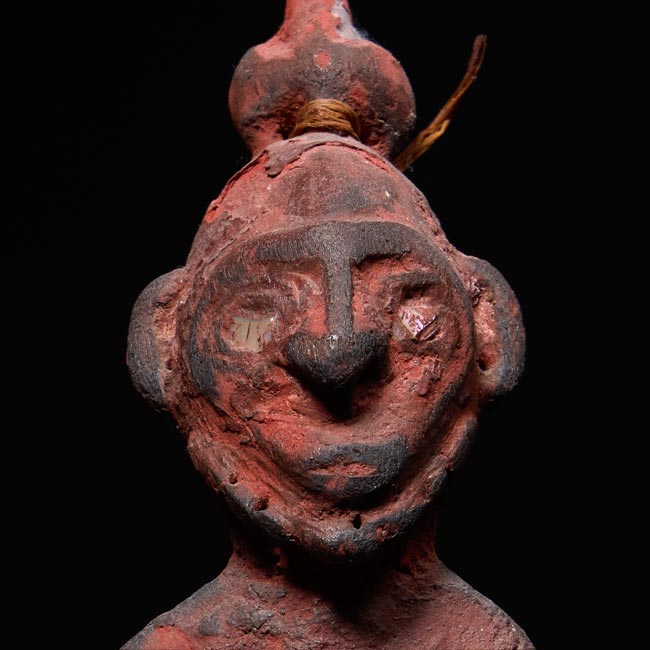
The figure’s commanding stance and assertive facial expression evoke the presence of a warrior or ancestral protector. Broad shoulders, compact limbs, and a forward-facing posture convey strength and vigilance. The eyes are inlaid with shell, lending the figure a striking, alert gaze that animates the form and heightens its spiritual authority.
Traces of old ochre pigment remain across the surface, particularly within recessed areas, bearing witness to ritual use and ceremonial handling. Over time, these pigments have merged with a deeply encrusted patina, creating a surface that is both tactile and visually complex. On the back of the figure, incised motifs interpreted as clan tattoo marks are clearly visible—graphic signs of identity, lineage, and social affiliation.
Piercings at the top of the head and through the elongated earlobes indicate the former attachment of feathers, fiber, or other organic elements, which would have animated the headdress in motion and further amplified its visual impact during ritual or ceremonial performance.
Size
Height: 8 ¼ in / 21 cm
Item
IN 1-6-26 / Price on request
Gallery
Headdress Figure
Giri people, Lower Ramu River, Madang Province, Papua New Guinea
19th–early 20th century
Wood, shell, pigment, fiber
Provenance: Marcia and John Friede collection, Rye, NY
“Powerful Magic: Miniature Sculptures from the Sepik River Region”, Bruce Frank Primitive Art, New York, 2013, fig. 15
“New Guinea Art: Masterpieces from the Jolika Collection of Marcia and John Friede, 2005, fig. 75.
This compelling carved figure originates from the top of a ceremonial headdress worn by the Giri people of the Lower Ramu River region. Detached from its original assemblage, the figure now reads powerfully as an independent object—its scale and intensity closely resembling that of a personal amulet rather than a mere decorative element.
The figure’s commanding stance and assertive facial expression evoke the presence of a warrior or ancestral protector. Broad shoulders, compact limbs, and a forward-facing posture convey strength and vigilance. The eyes are inlaid with shell, lending the figure a striking, alert gaze that animates the form and heightens its spiritual authority.
Traces of old ochre pigment remain across the surface, particularly within recessed areas, bearing witness to ritual use and ceremonial handling. Over time, these pigments have merged with a deeply encrusted patina, creating a surface that is both tactile and visually complex. On the back of the figure, incised motifs interpreted as clan tattoo marks are clearly visible—graphic signs of identity, lineage, and social affiliation.
Piercings at the top of the head and through the elongated earlobes indicate the former attachment of feathers, fiber, or other organic elements, which would have animated the headdress in motion and further amplified its visual impact during ritual or ceremonial performance.
Size
Height: 8 ¼ in / 21 cm
Item
IN 1-6-26 / Price on request
Gallery