



Gunpowder Container (Pulas)
Toba Batak, North Sumatra, Indonesia
19th century
Buffalo horn with pigment and fiber
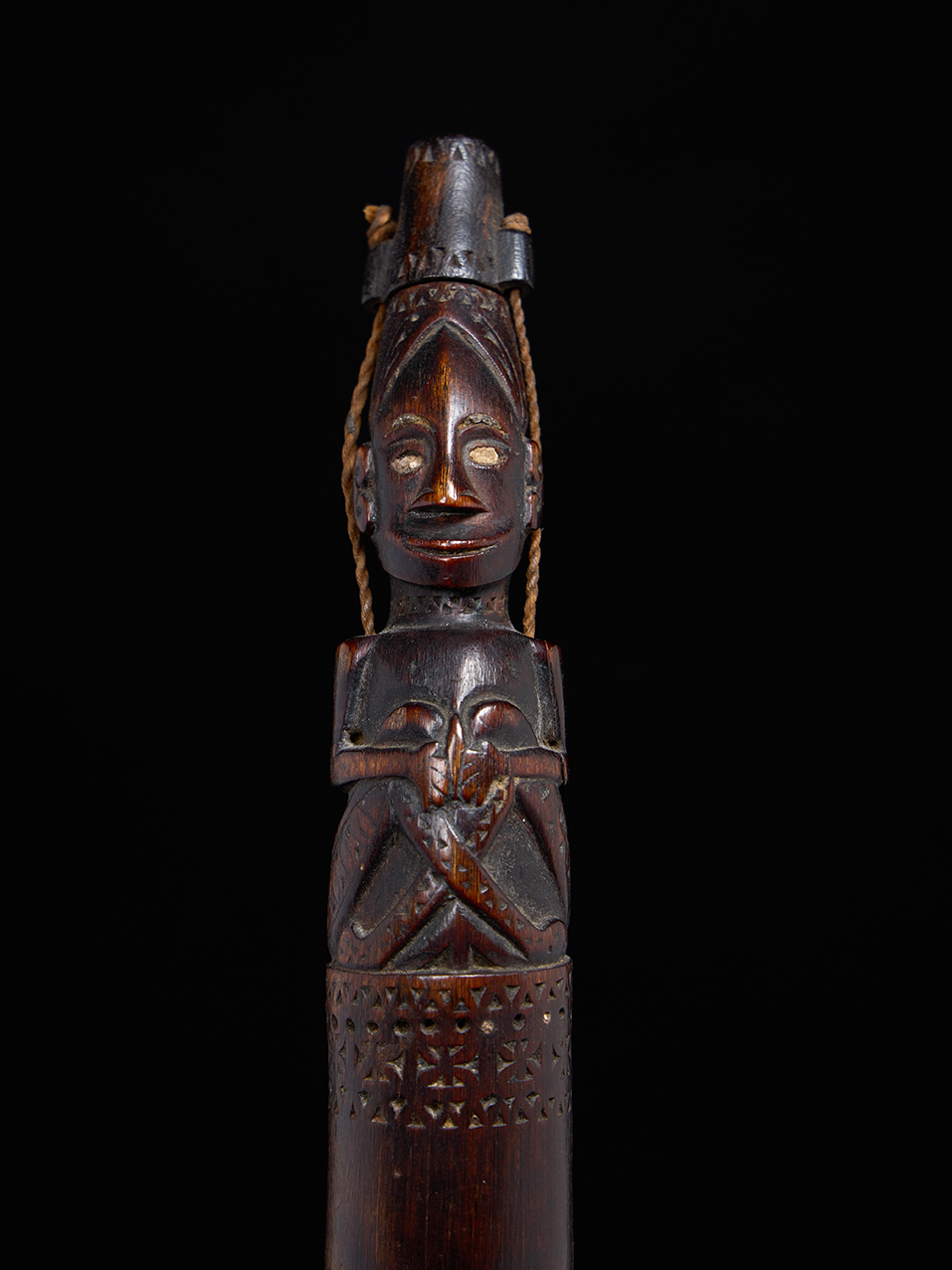
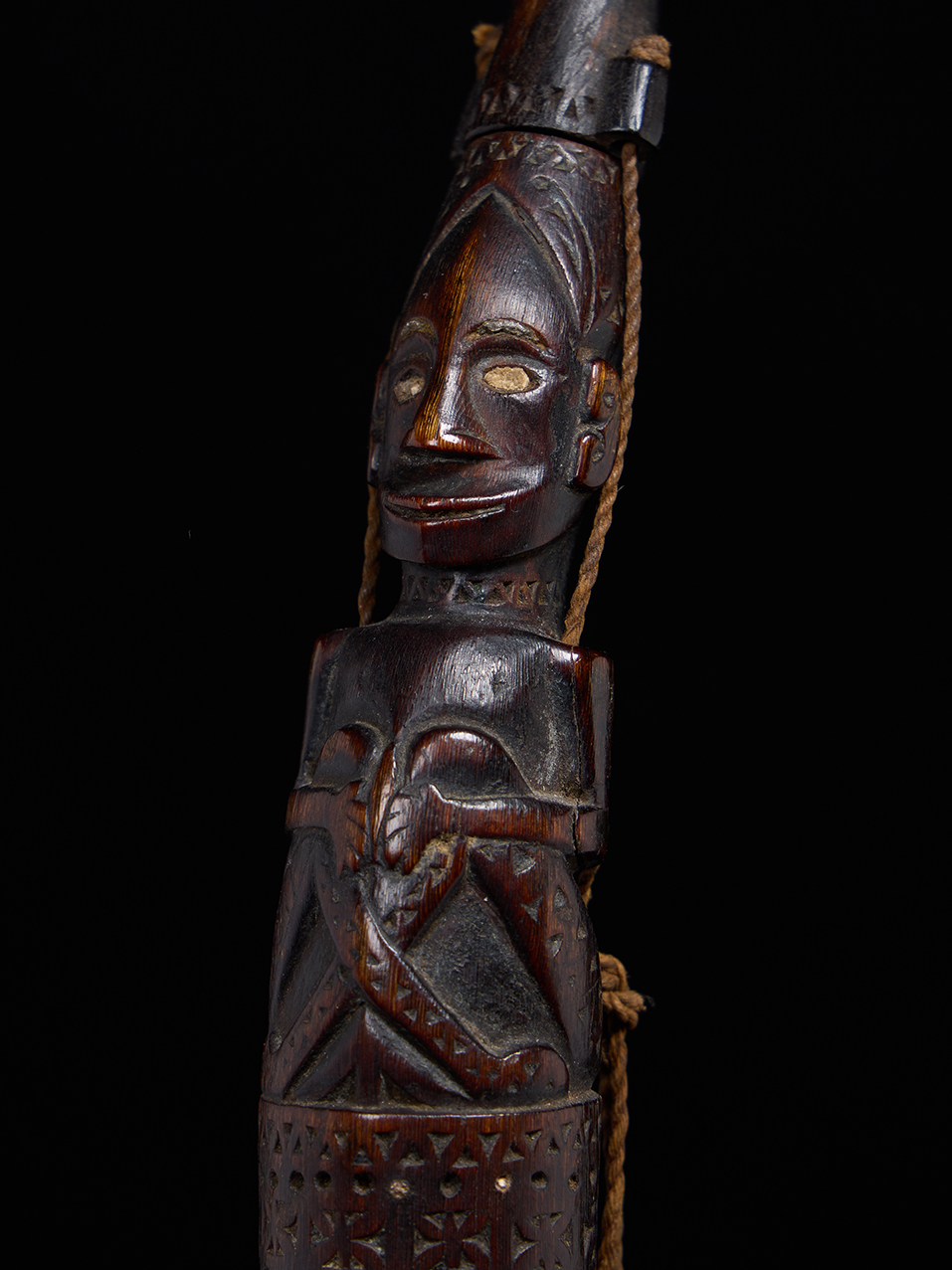
This finely carved gunpowder container originates from the Toba Batak of North Sumatra and was used to store black powder for flintlock firearms. Such containers were functional objects carried by men, yet they were also potent expressions of status, identity, and ancestral protection—often carved with human figures that served both symbolic and apotropaic roles.
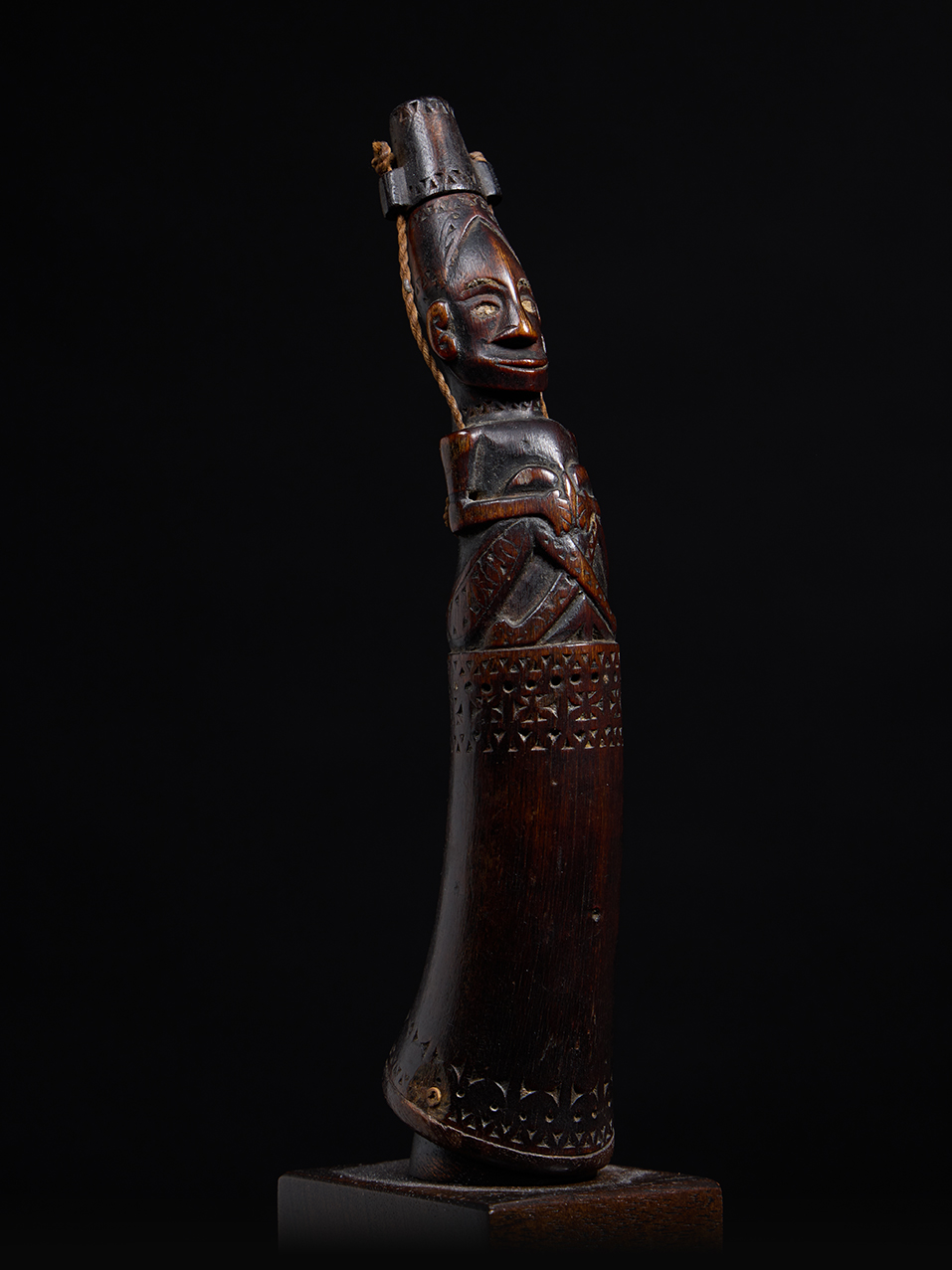
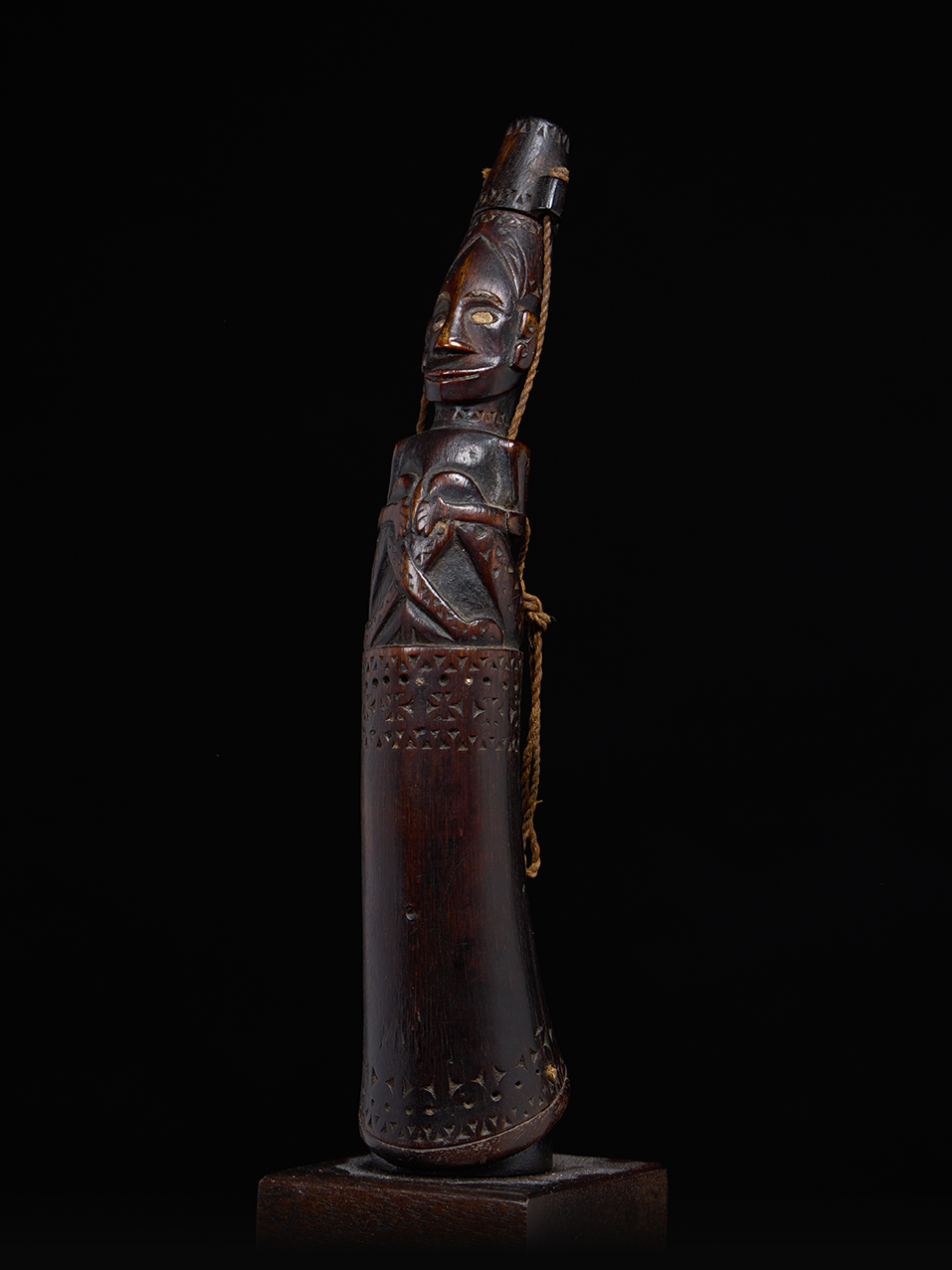
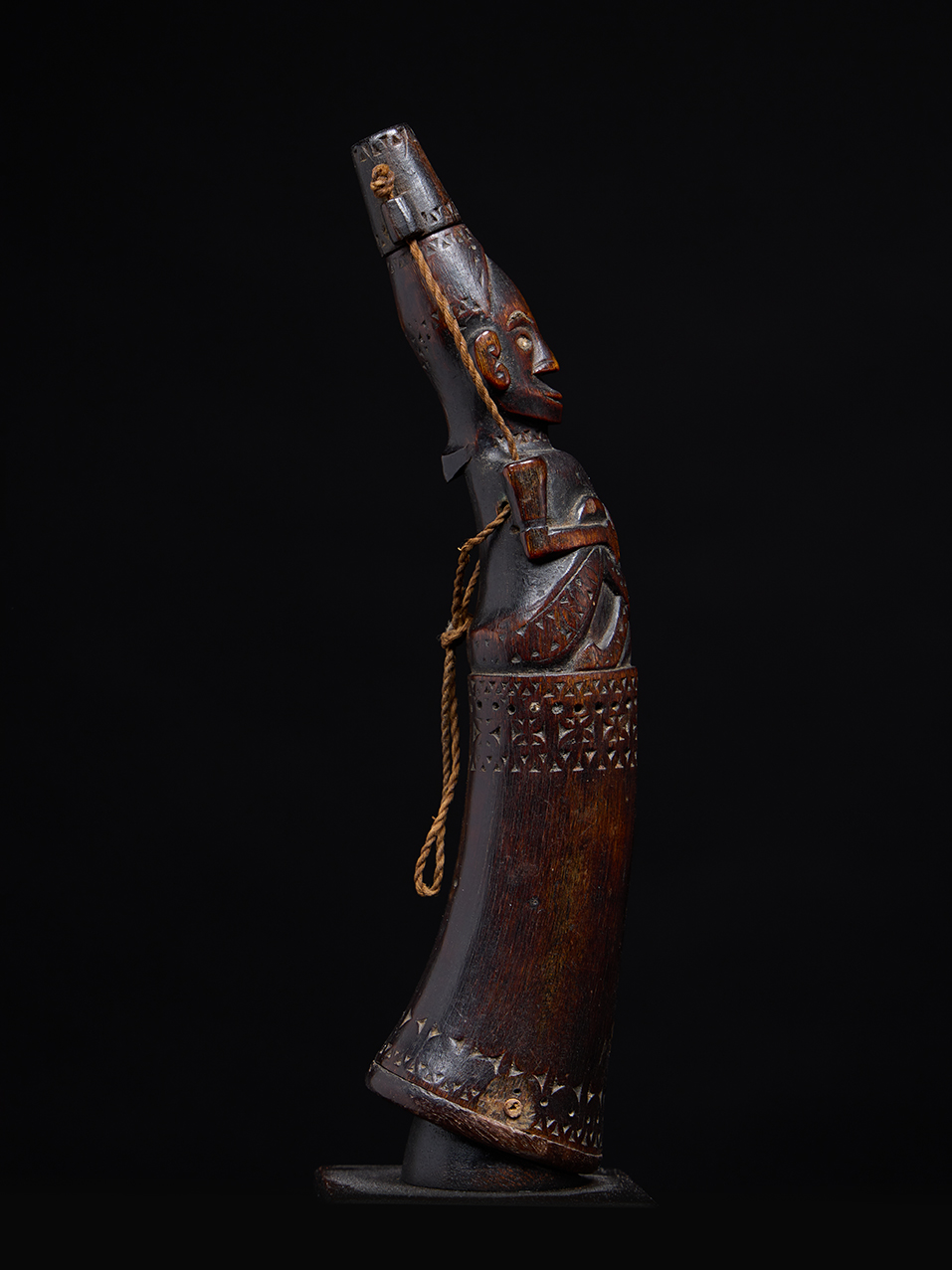
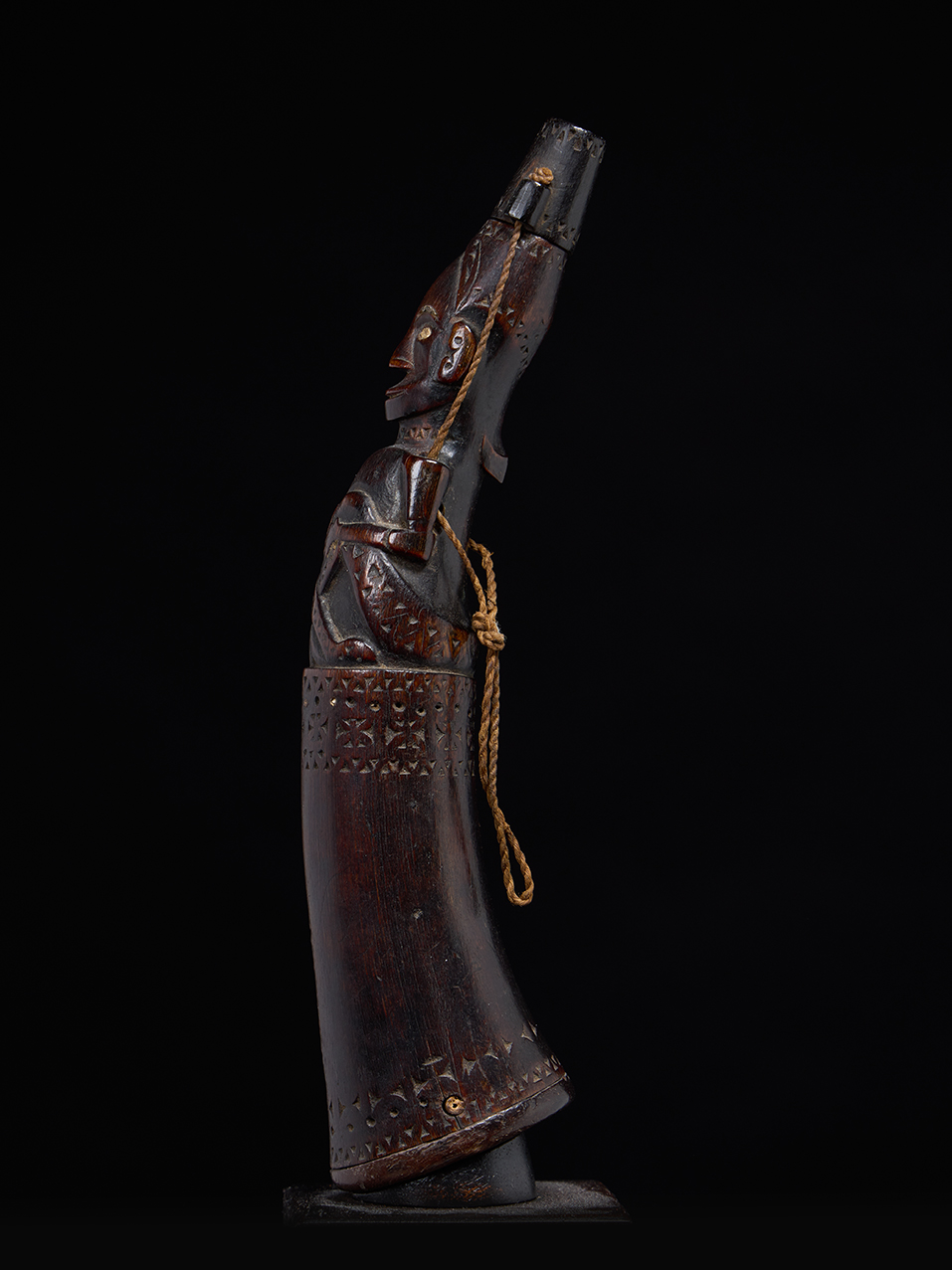
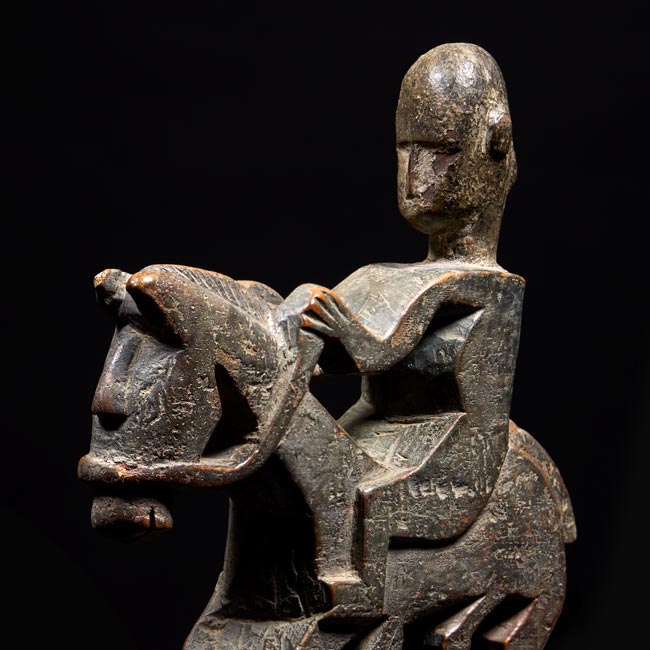
The vessel is sculpted in the form of a seated figure, its body elongated into a cylindrical container. The figure’s calm, frontal presence is emphasized by simplified but confident features: almond-shaped eyes, a prominent nose, and a composed mouth. The arms are bent and drawn inward, reinforcing a sense of containment and restraint appropriate to an object that held a dangerous and powerful substance. Incised geometric bands and punctuated motifs encircle the lower body, adding rhythmic texture and visual balance.
Particularly noteworthy is the survival of the original fitted cap at the top. These caps—often carved separately and secured by cordage—are rarely preserved, as they were easily lost through use or over time. Its presence here significantly enhances both the completeness and rarity of the object.
The surface displays a deep, lustrous patina developed through age and handling. On the underside, faint but legible painted inventory numbers, (175) remain visible—an important historical detail. Such markings are consistent with early European collection practices and strongly support the piece’s reputed provenance from an old German collection.
Gunpowder Container (Pulas)
Toba Batak, North Sumatra, Indonesia
19th century
Buffalo horn with pigment and fiber
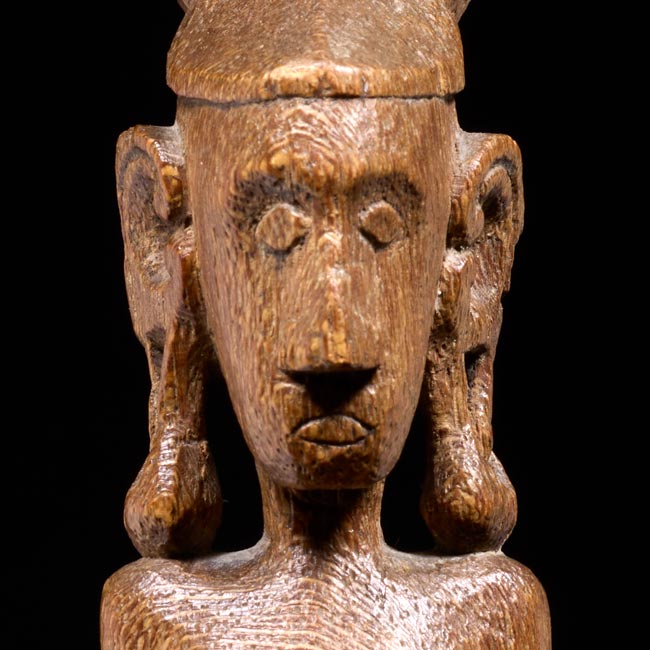
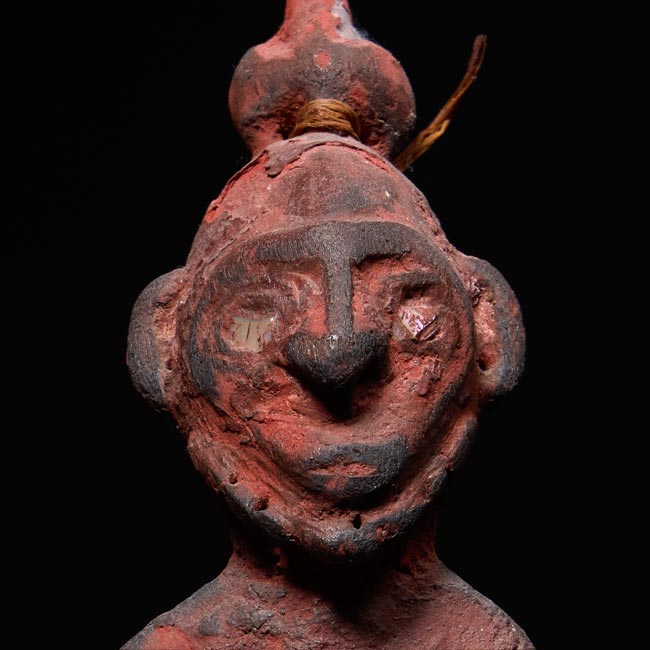
This finely carved gunpowder container originates from the Toba Batak of North Sumatra and was used to store black powder for flintlock firearms. Such containers were functional objects carried by men, yet they were also potent expressions of status, identity, and ancestral protection—often carved with human figures that served both symbolic and apotropaic roles.
The vessel is sculpted in the form of a seated figure, its body elongated into a cylindrical container. The figure’s calm, frontal presence is emphasized by simplified but confident features: almond-shaped eyes, a prominent nose, and a composed mouth. The arms are bent and drawn inward, reinforcing a sense of containment and restraint appropriate to an object that held a dangerous and powerful substance. Incised geometric bands and punctuated motifs encircle the lower body, adding rhythmic texture and visual balance.
Particularly noteworthy is the survival of the original fitted cap at the top. These caps—often carved separately and secured by cordage—are rarely preserved, as they were easily lost through use or over time. Its presence here significantly enhances both the completeness and rarity of the object.
The surface displays a deep, lustrous patina developed through age and handling. On the underside, faint but legible painted inventory numbers, (175) remain visible—an important historical detail. Such markings are consistent with early European collection practices and strongly support the piece’s reputed provenance from an old German collection.